
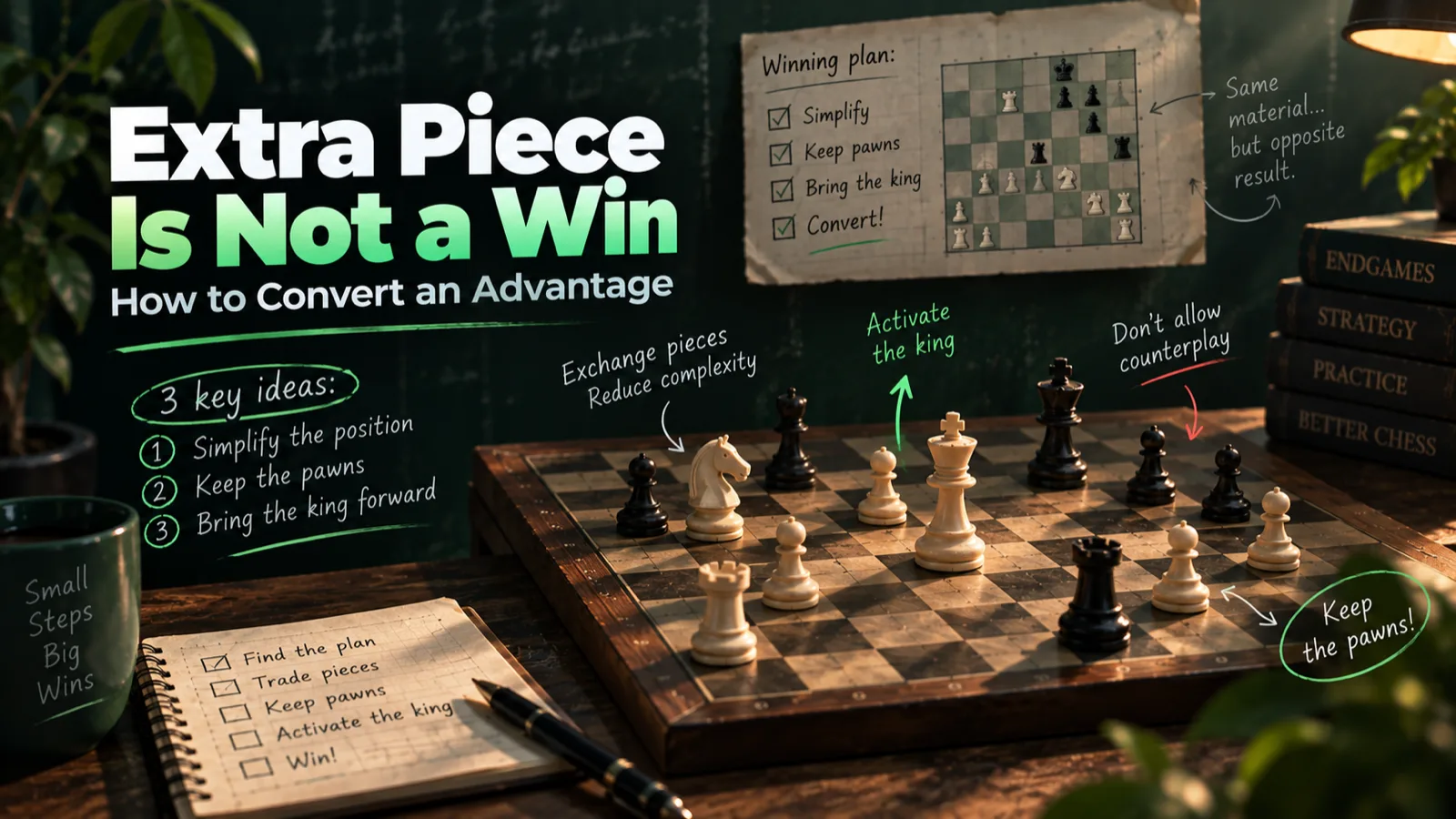
You won a knight on move twenty. The engine said +5, then +6, then you grabbed another pawn — and ten moves later you were mated on the back rank. The feeling is familiar: the piece was there, the win wasn't.
After hanging pieces, this is the most common complaint we hear: «I can't win a winning position.» The usual answer is «just play more carefully.» That's a wish, not advice. Converting is three concrete actions, and two of them feel wrong.
An advantage doesn't win by itself
The number on the engine's bar isn't a point on the scoreboard. It's a promise: play accurately and this becomes a win. Your opponent at minus six doesn't resign — they start playing for the only thing they have left, which is your mistake.
That's why the main rule of conversion sounds strange to a beginner: with an extra piece your job is to make the position simpler, not scarier. Most players do the exact opposite — they attack, grab pawns and keep as many pieces on the board as possible, «so there's something to attack with».
First: trade pieces, keep pawns
The arithmetic is simple. An extra knight on a full board is roughly a tenth more force. The same knight when only kings and three pawns each remain is twice the material your opponent has. Every trade makes your advantage heavier.
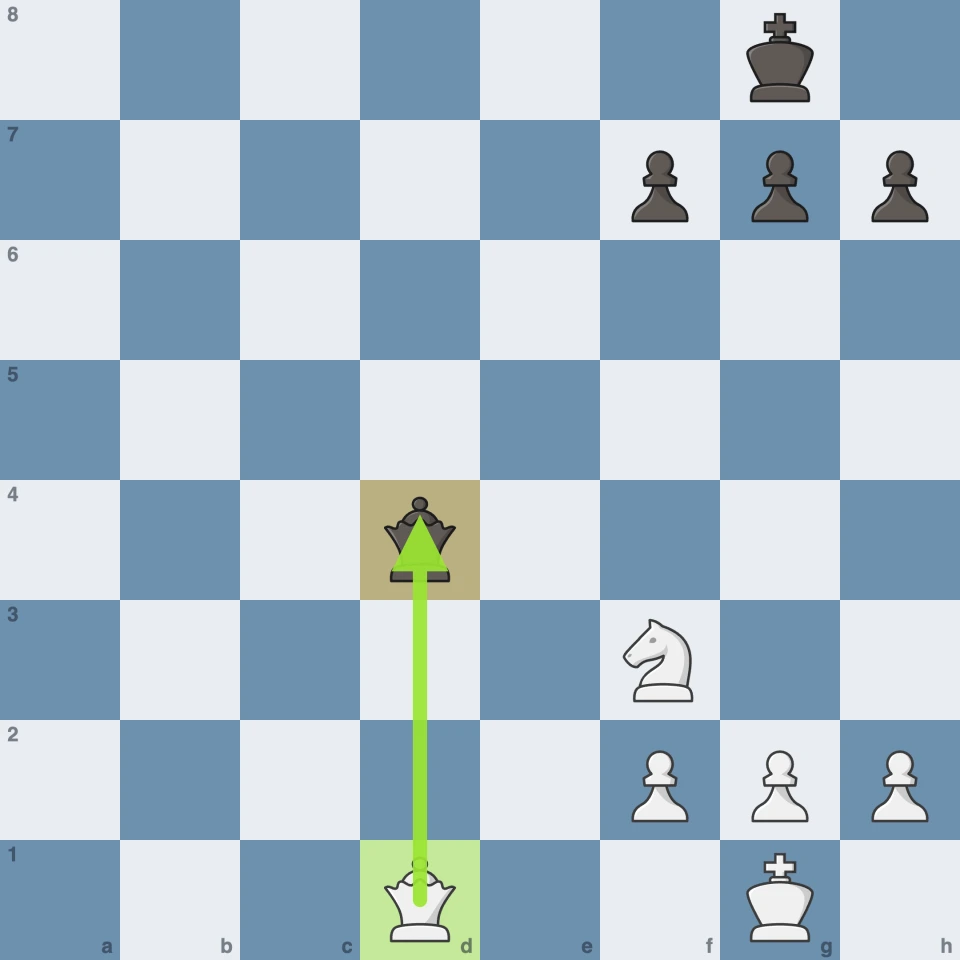
Pawns are the opposite: keep them. They're what promotes and ends the game. A knight without pawns mates nobody — that's not pedantry but a rule: king and knight against a lone king is a draw.
Second: kill counterplay before you collect more material
This is where most winning games die. Your opponent gets a passed pawn or a back-rank threat, and at that exact moment you take one more pawn, because it's hanging.
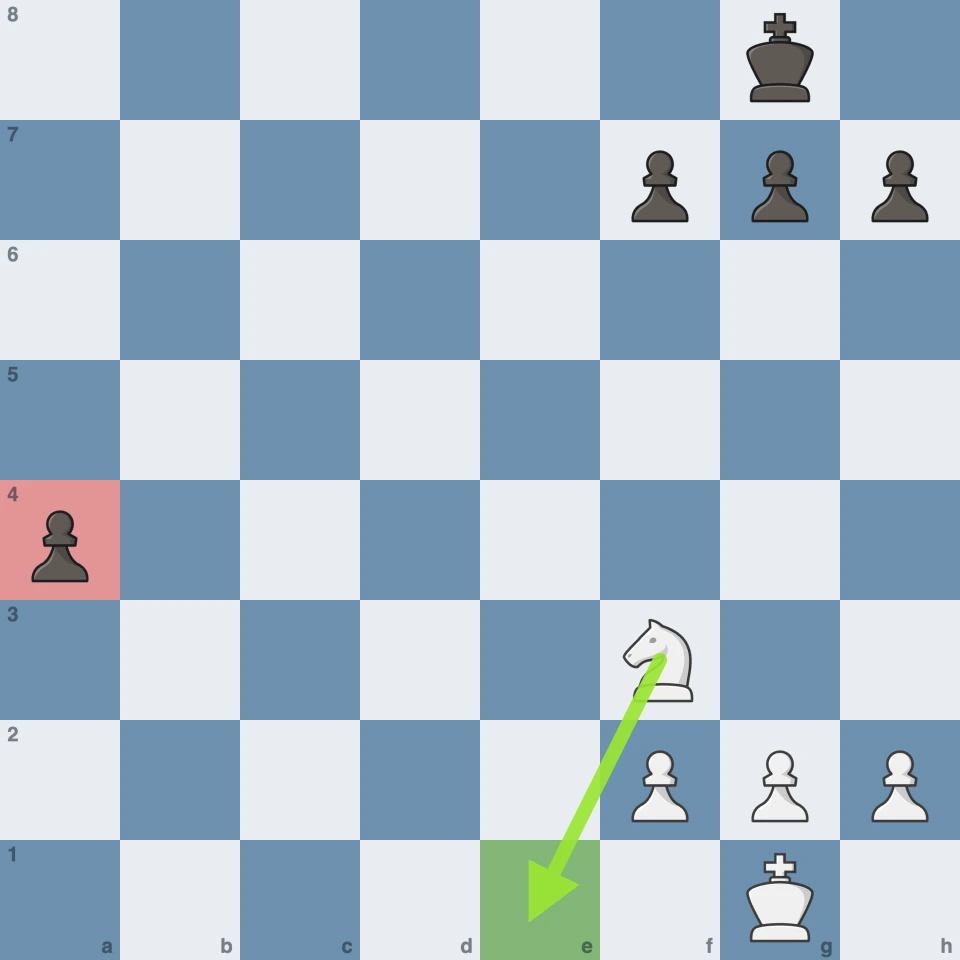
Look at that knight move. It looks like a retreat: the piece goes back to the first rank and attacks nothing. That's exactly what converting looks like — first you take away your opponent's hope, then you take everything else.
A one-second test before every move in a winning position: «what do they have besides hope?» If the answer is nothing, take the pawn. If there's a single real threat, deal with it first.
Third: walk your king in
While queens are on, the king hides. Once they're off, it becomes a fighting piece worth about as much as a minor one. Leaving it in the corner is expensive: you're effectively playing a piece down while believing you're a piece up.
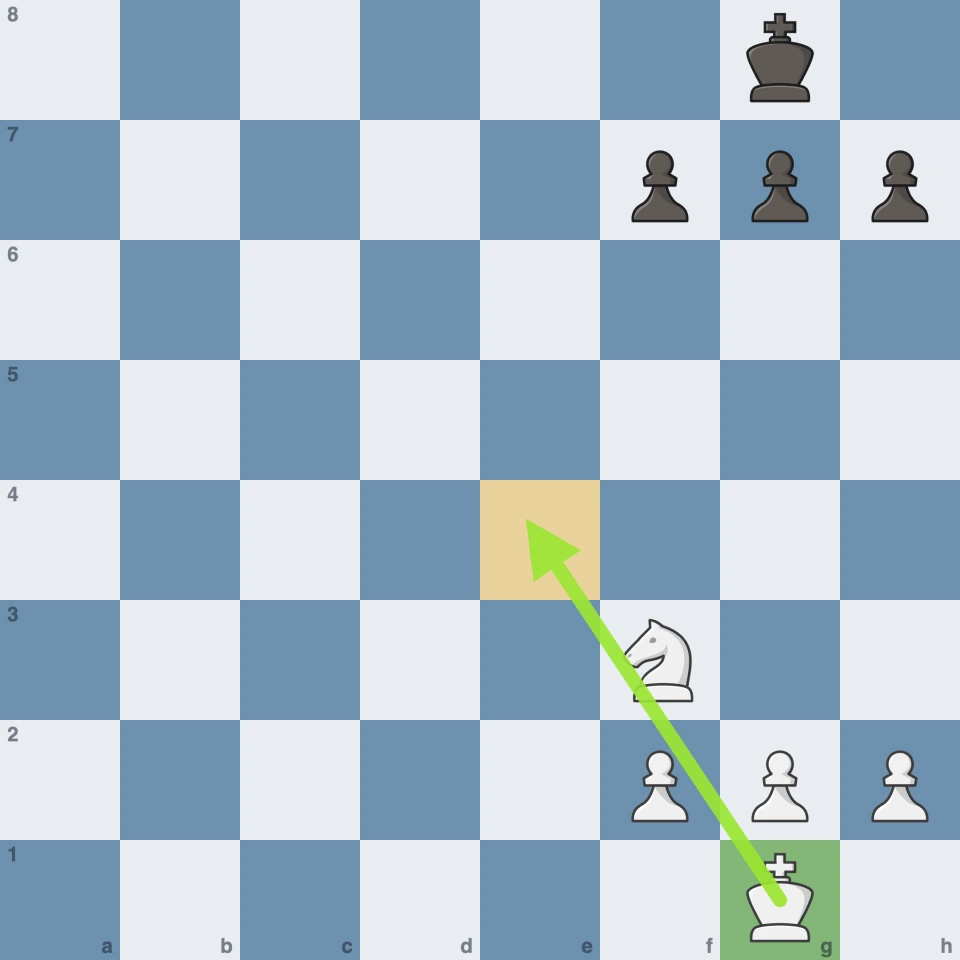
The route is boring, which is precisely why it's right: the king walks towards the opponent's pawns and supports its own. Without it no endgame technique works — we covered that in the piece on three endgames you must know.
Why this is hard psychologically
A trade feels like a loss. Giving up your queen in a winning position is uncomfortable: it seems as if the advantage leaves with her. What actually leaves is the one piece that could have turned the game around. More on that choice in the article about when to trade queens.
The second trap is greed. When you're ahead, every loose pawn looks free. It always has the same price — a tempo. Sometimes that tempo is enough to turn your win into a stalemate or a mate against you.
The short list
- There's a threat — answer it, even if the move looks like a retreat.
- No threats — trade pieces, starting with queens.
- No queens — bring the king to the centre and push the pawns.
The order matters more than any individual technique: while a threat is alive, no technique saves you.
Find the move where your win leaked out
The most useful thing is seeing your own move where the advantage started melting. It's usually not a blunder but a quiet «took another pawn» five moves before the disaster.
On 99chess the review draws an evaluation graph for the whole game — you can see the exact point where the line drops, and the coach explains in words what you gave away. You can upload games from chess.com or lichess too.
An extra piece doesn't win the game. The boring moves you were too proud to play do.