
CHESS BLOG
99Chess Blog
Practical ideas. Real improvement.
What is new in the trainer: releases, deep dives and the calls we make
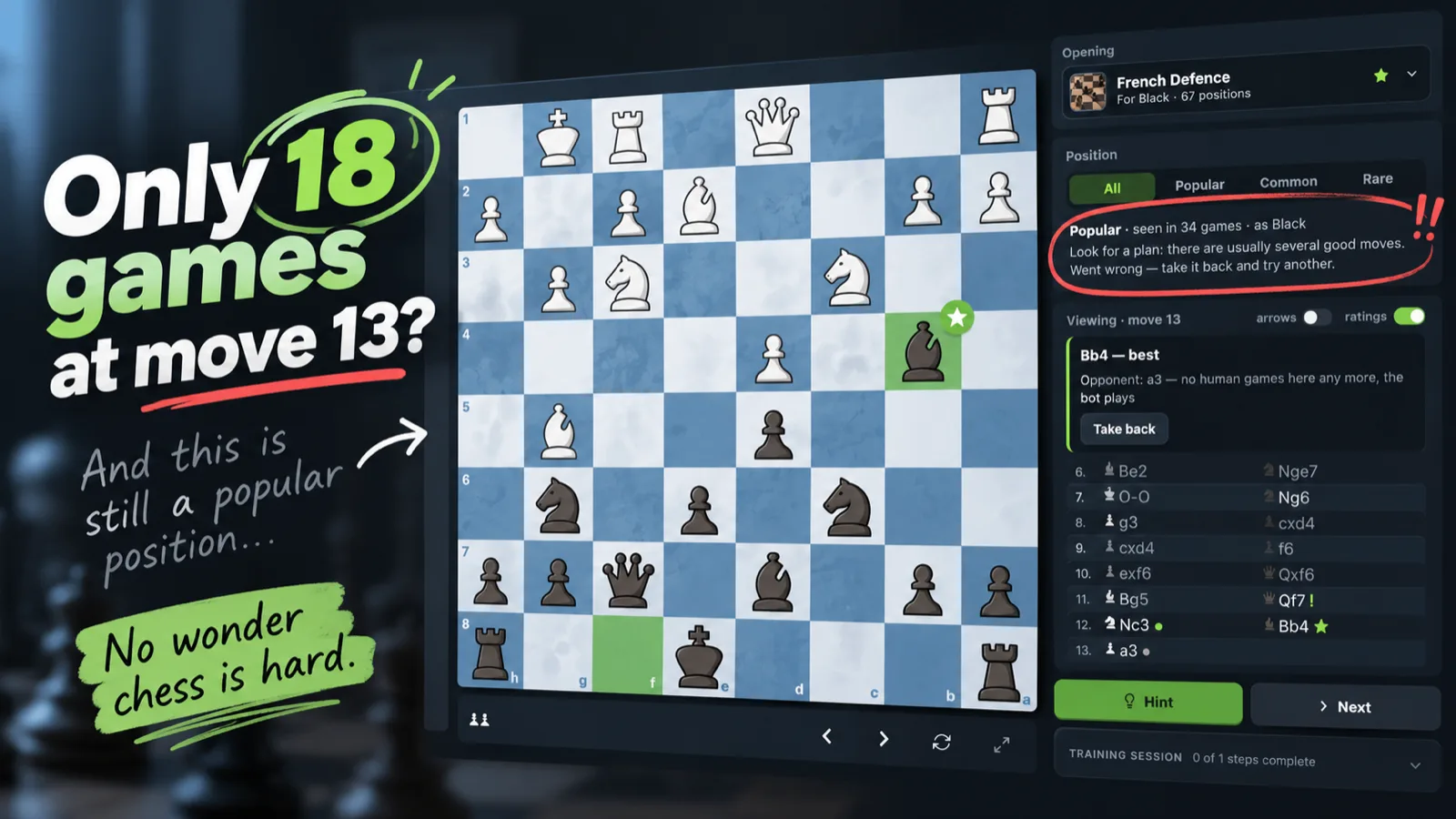 FeaturedOnly 18 Games at Move 13: Why You Can't Memorize the MiddlegameWhy you can't memorize the middlegame the way you learn an opening or an endgame: in the London System, 7.8 billion lichess games shrink to 26 by move 13. The numbers move by move, and what to train instead.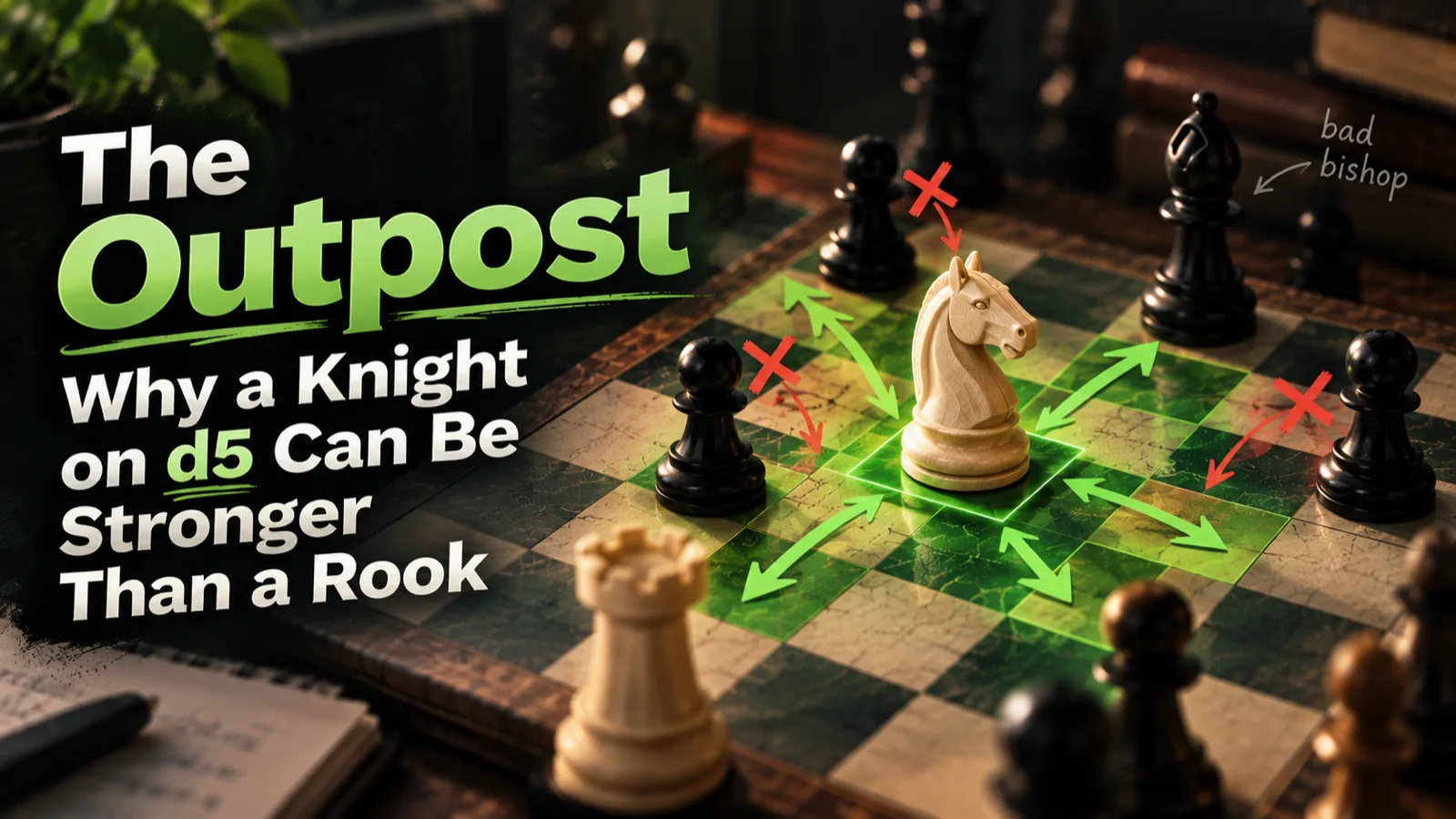
Bring your games and find out what to trainThe coach reviews them in plain words, finds the mistake you keep repeating and builds a program around it.
- Find your weak spots
- Drills from your mistakes
- Progress without cramming
Latest articles
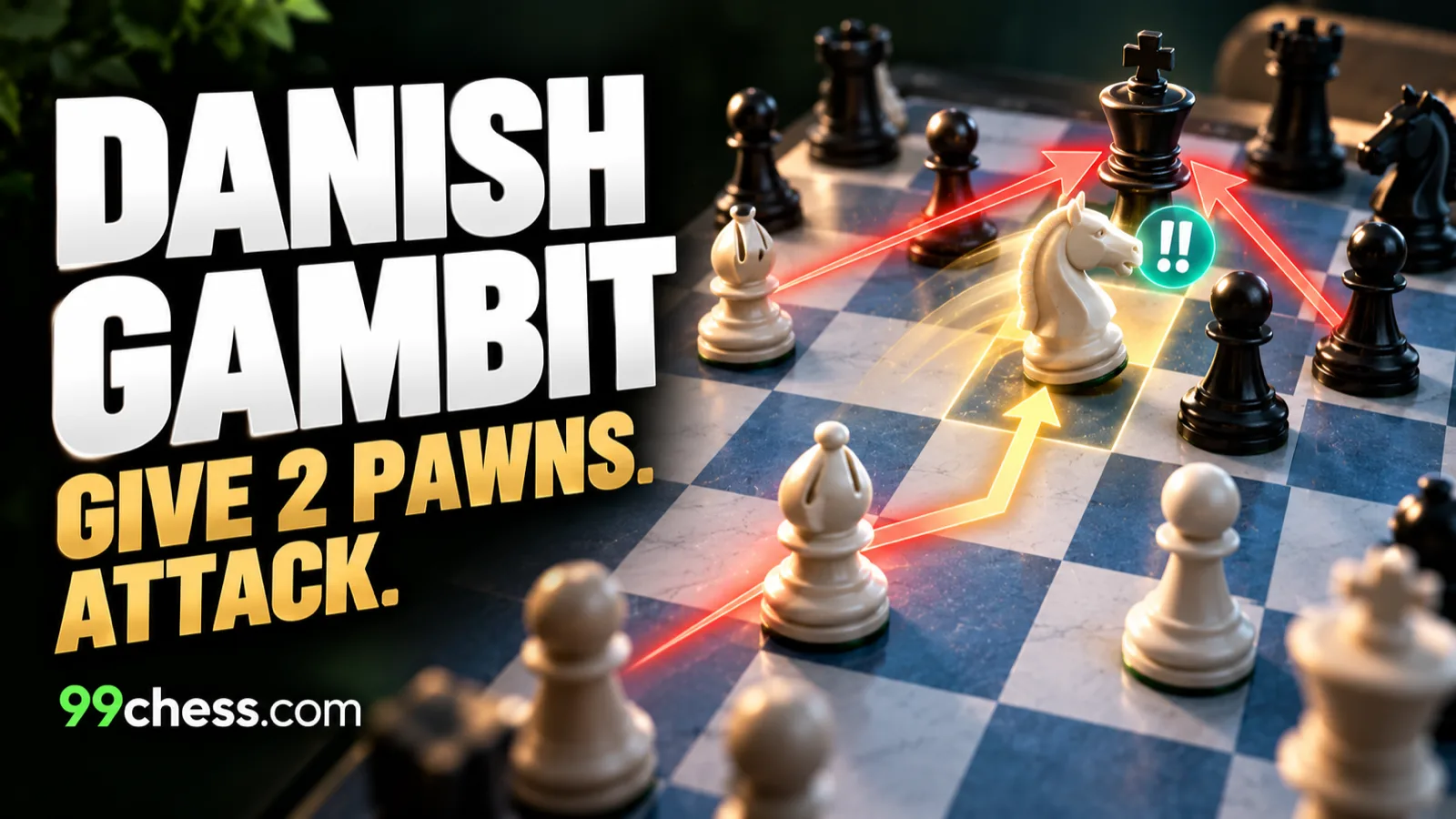 The Danish Gambit in 4 Minutes: Video LessonThe Danish Gambit gives away two pawns by move three, and White still wins 55% of Lichess games between 1200 and 1800. A short video lesson: the idea, the two main lines, and the knight sacrifice that punishes greed.Русский · Bahasa Indonesia · Português
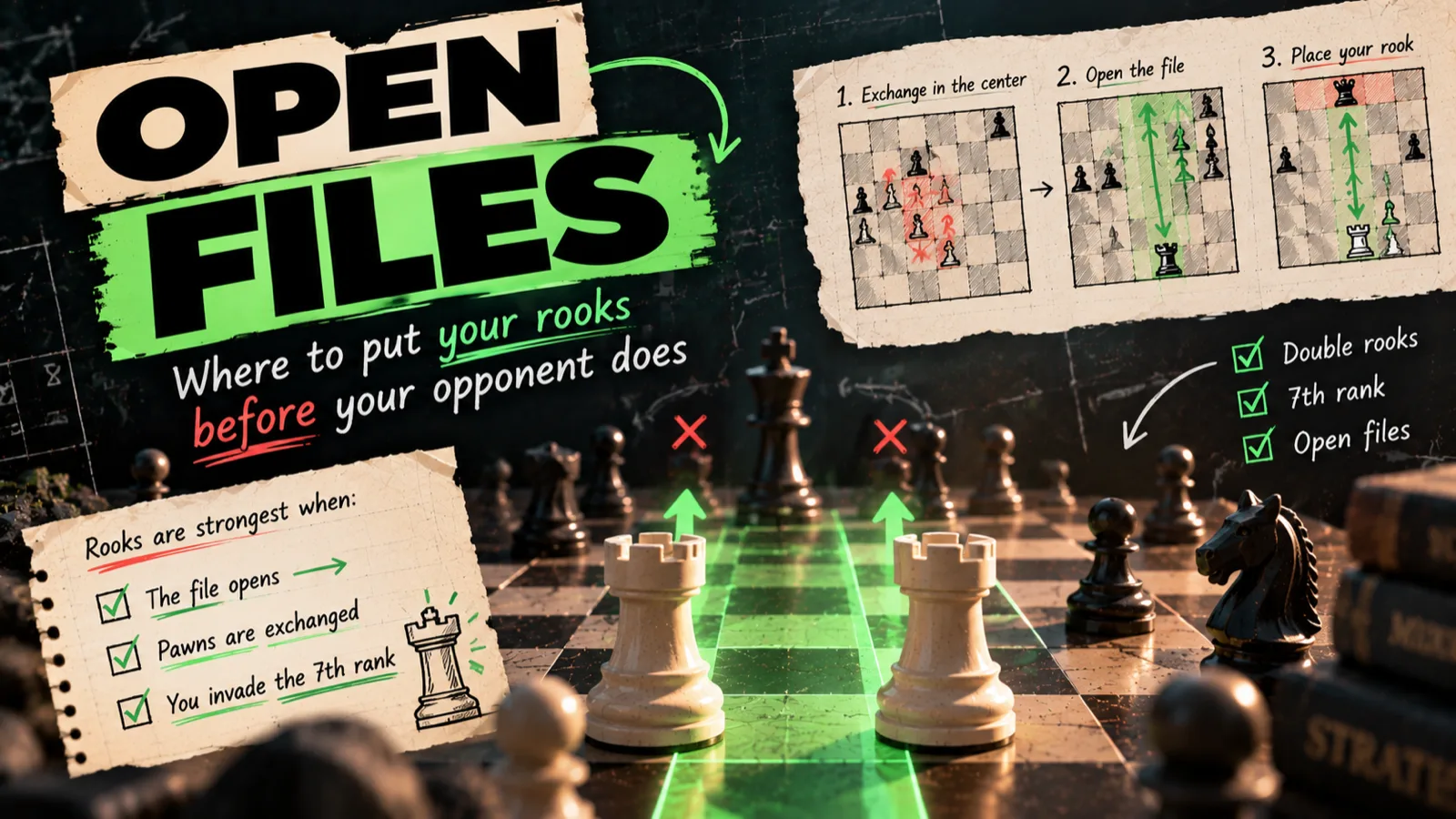 Open files in chess: where to put your rooks before your opponent doesOpen files in chess aren't where pawns are missing now, but where they're about to be traded. Where to put your rooks before a file opens, the one sign it's time, and how to double up and reach the seventh — with examples from master games.Русский · Bahasa Indonesia · Português
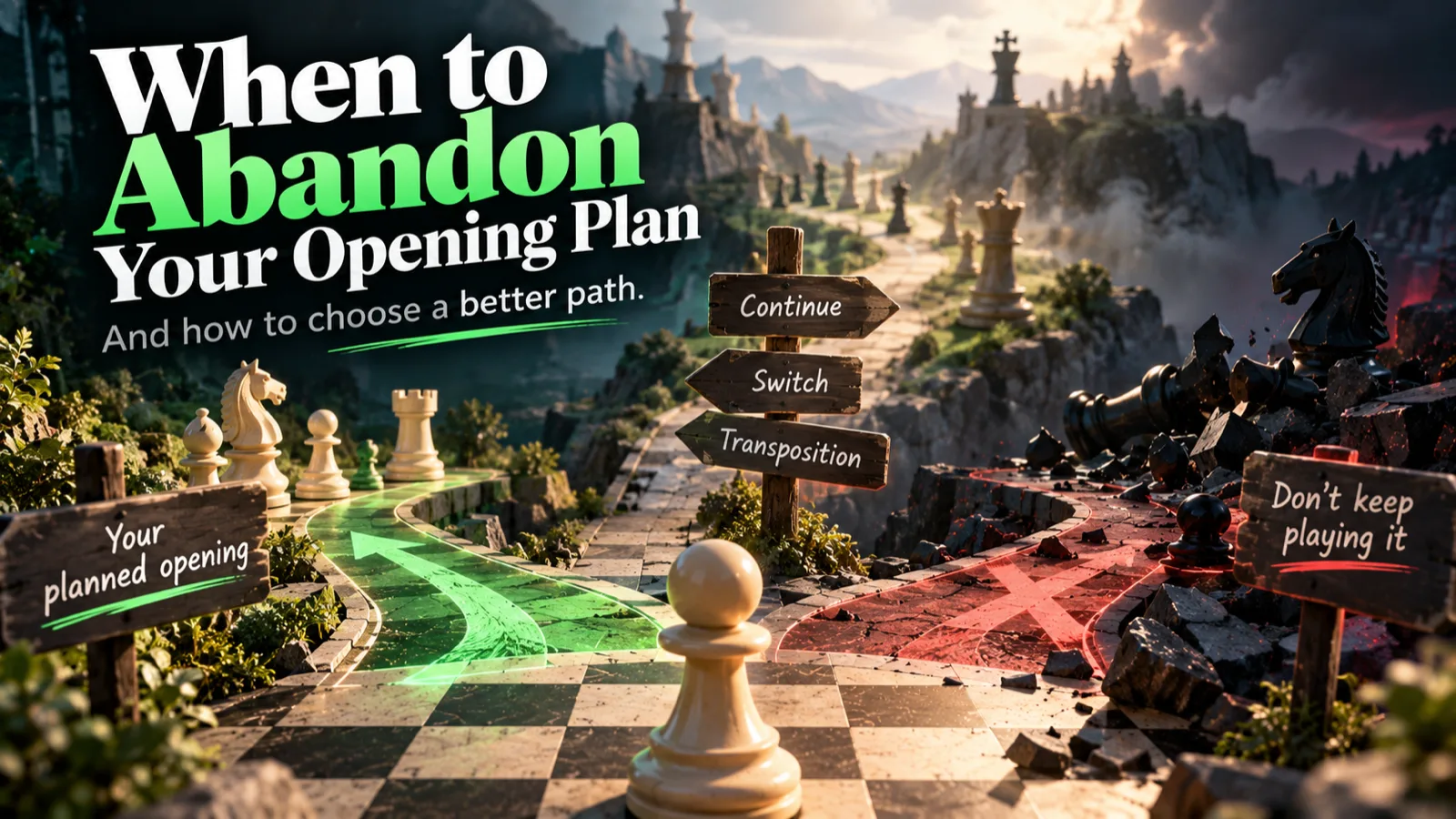 When Does the Opening End? How to Tell Your Setup Is Broken — and What to Do NextWhen does the opening end? Not on move ten — it ends when your opponent takes away what your setup stands on. Three warning signs from the Italian Game, checked with an engine, and three questions for when your opponent leaves your opening.Русский · Bahasa Indonesia · Português
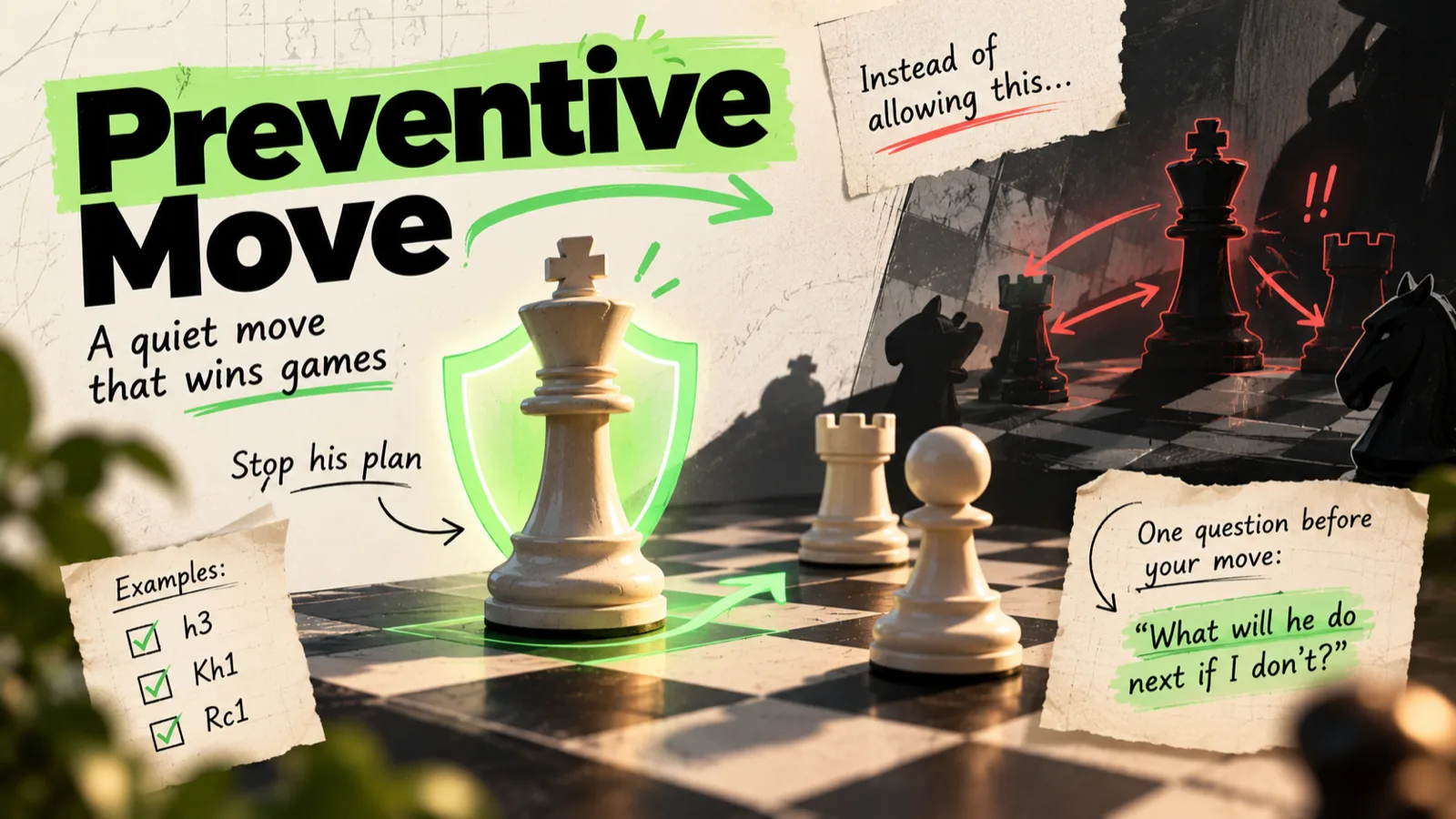 Prophylaxis in Chess: The Move That Does Nothing and Wins GamesProphylaxis in chess is a quiet move that takes away your opponent's next idea. One question to ask before every move, three standard quiet moves, and why prophylaxis isn't passivity.Русский · Bahasa Indonesia · Português
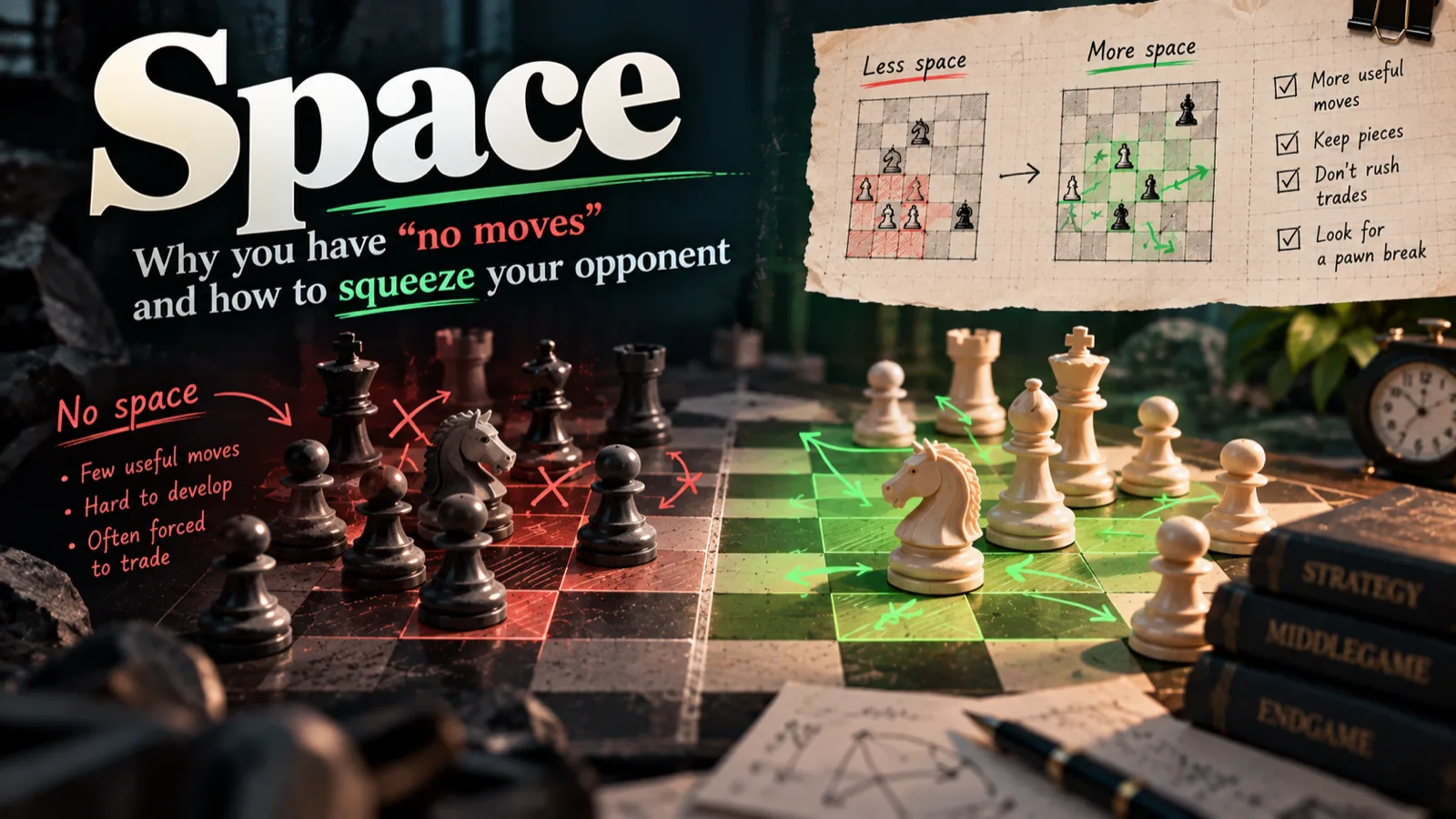 Space in Chess: Why You Have No Moves and How to Squeeze Your OpponentA space advantage isn't about pawns being further up the board — it's how many useful moves your pieces have: 9 against 17 in an ordinary French. How to spot a squeeze three moves early, the one pawn break that frees a cramped position, and how to squeeze without launching an attack that isn't there.Русский · Bahasa Indonesia · Português
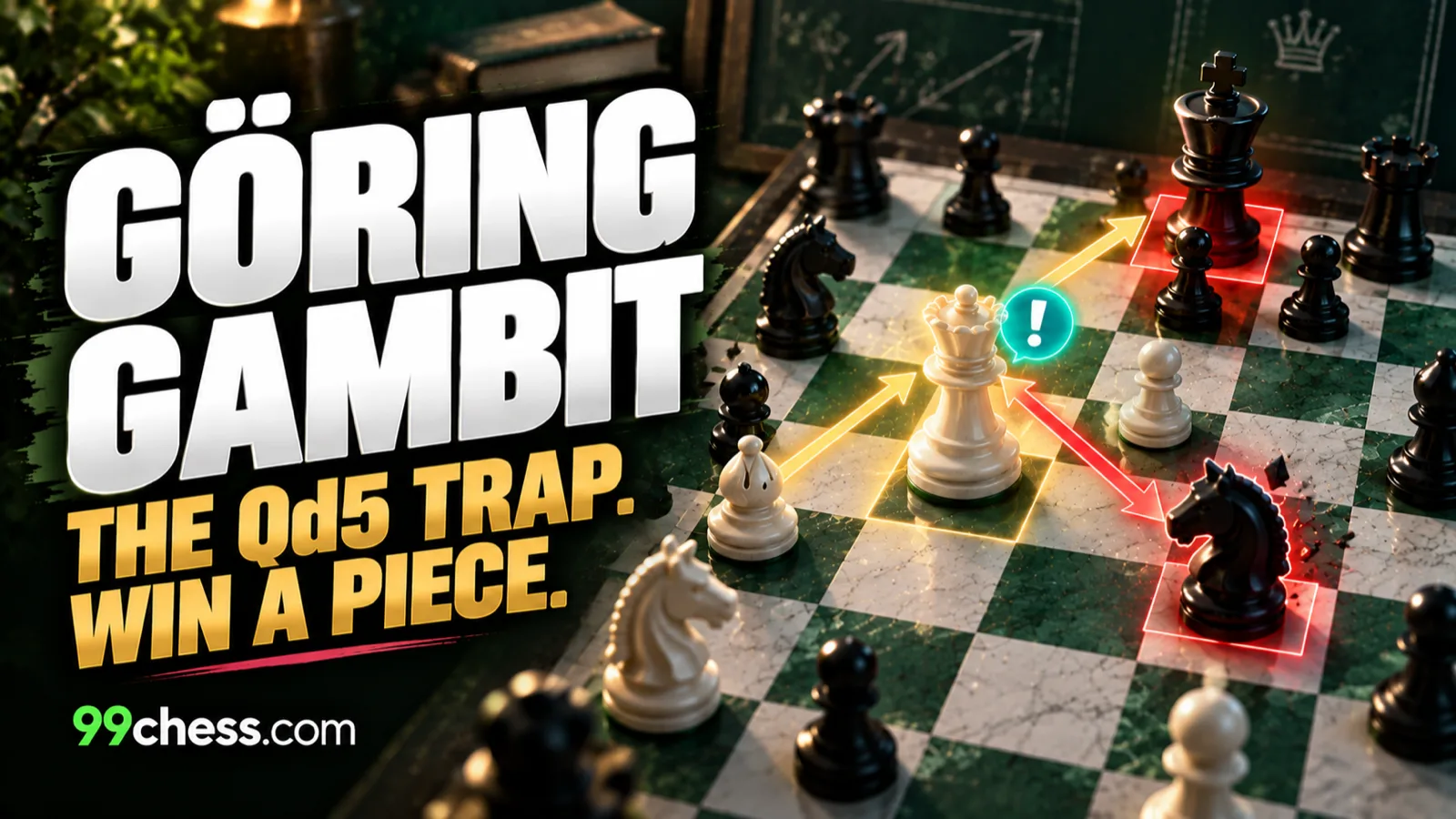
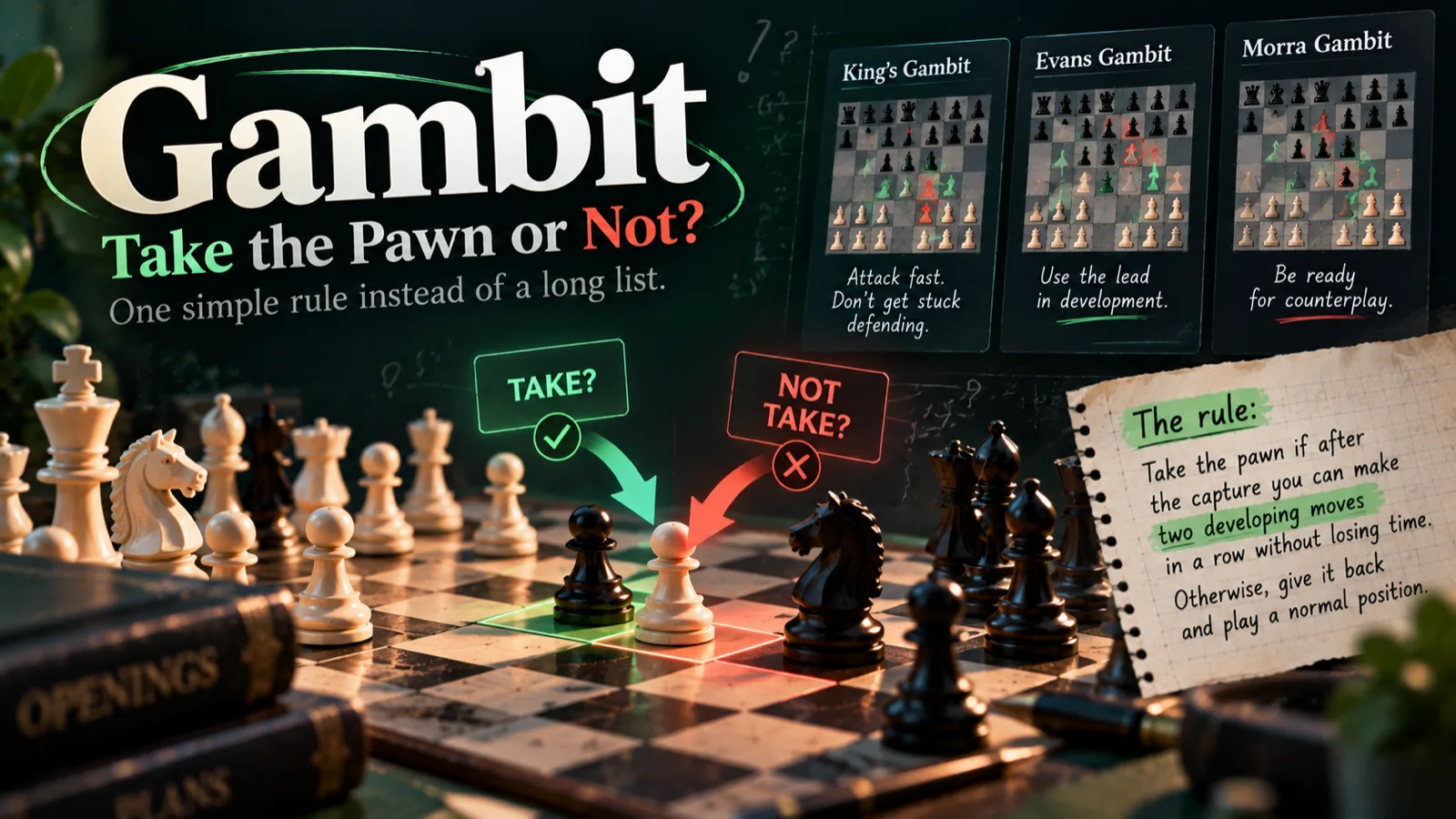 Gambits: Accept or Decline? One Rule Instead of a ChecklistShould you accept a gambit or decline it? Below 1600, gambits don’t win on the position, they win on panic. One rule — can I make two developing moves in a row? — and what to do against the King’s Gambit, the Evans and the Morra, with numbers from millions of lichess games.Русский · Bahasa Indonesia · Português
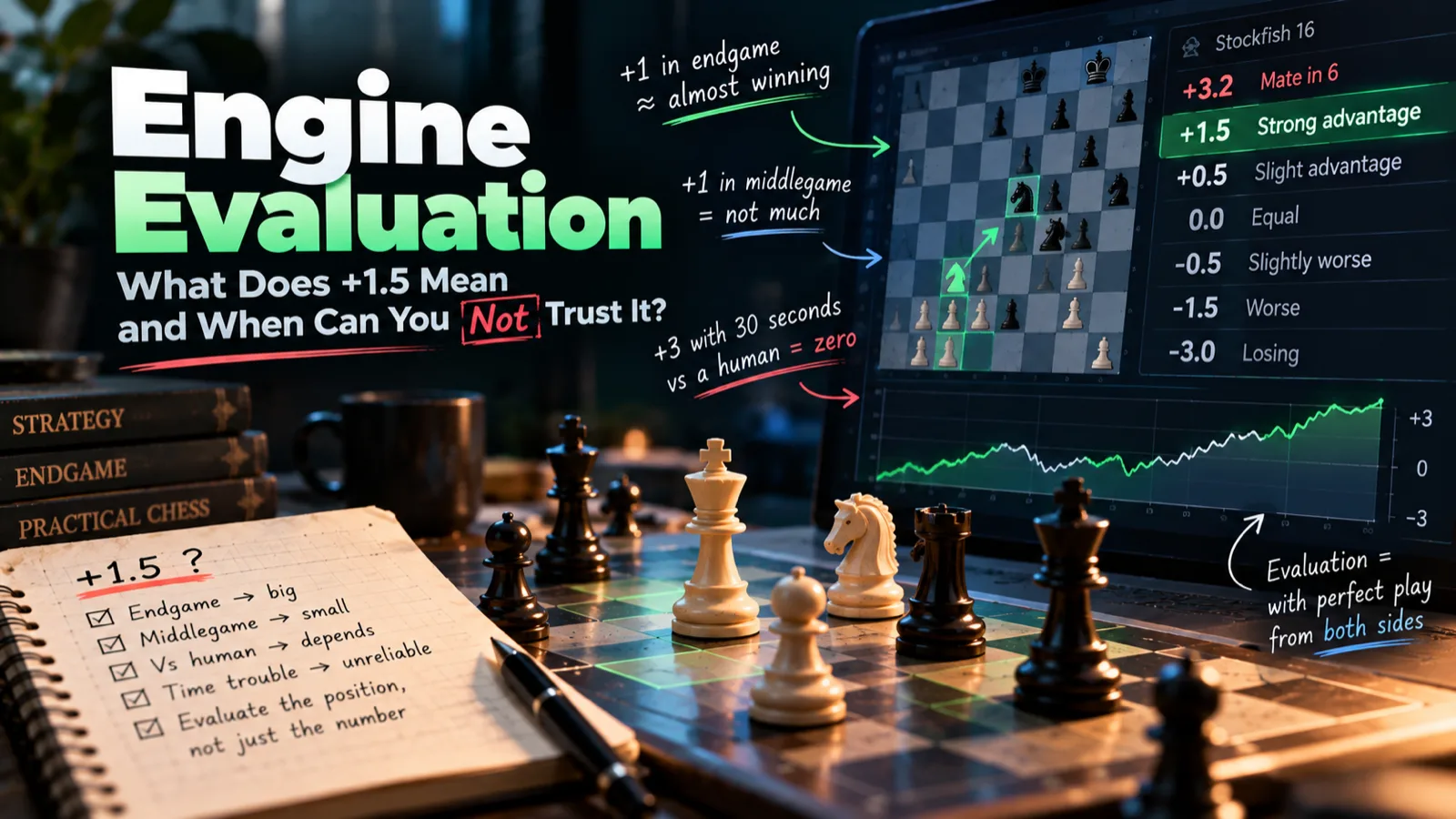 What a +1.5 Engine Evaluation Really Means (and When to Ignore It)An engine evaluation is not “up a pawn and a half”: it is the likely result if both sides play perfectly from here. What +1 means in Stockfish, why the scale is non-linear, how to translate the numbers into human decisions, and where the eval bar actively misleads you.Русский · Bahasa Indonesia · Português
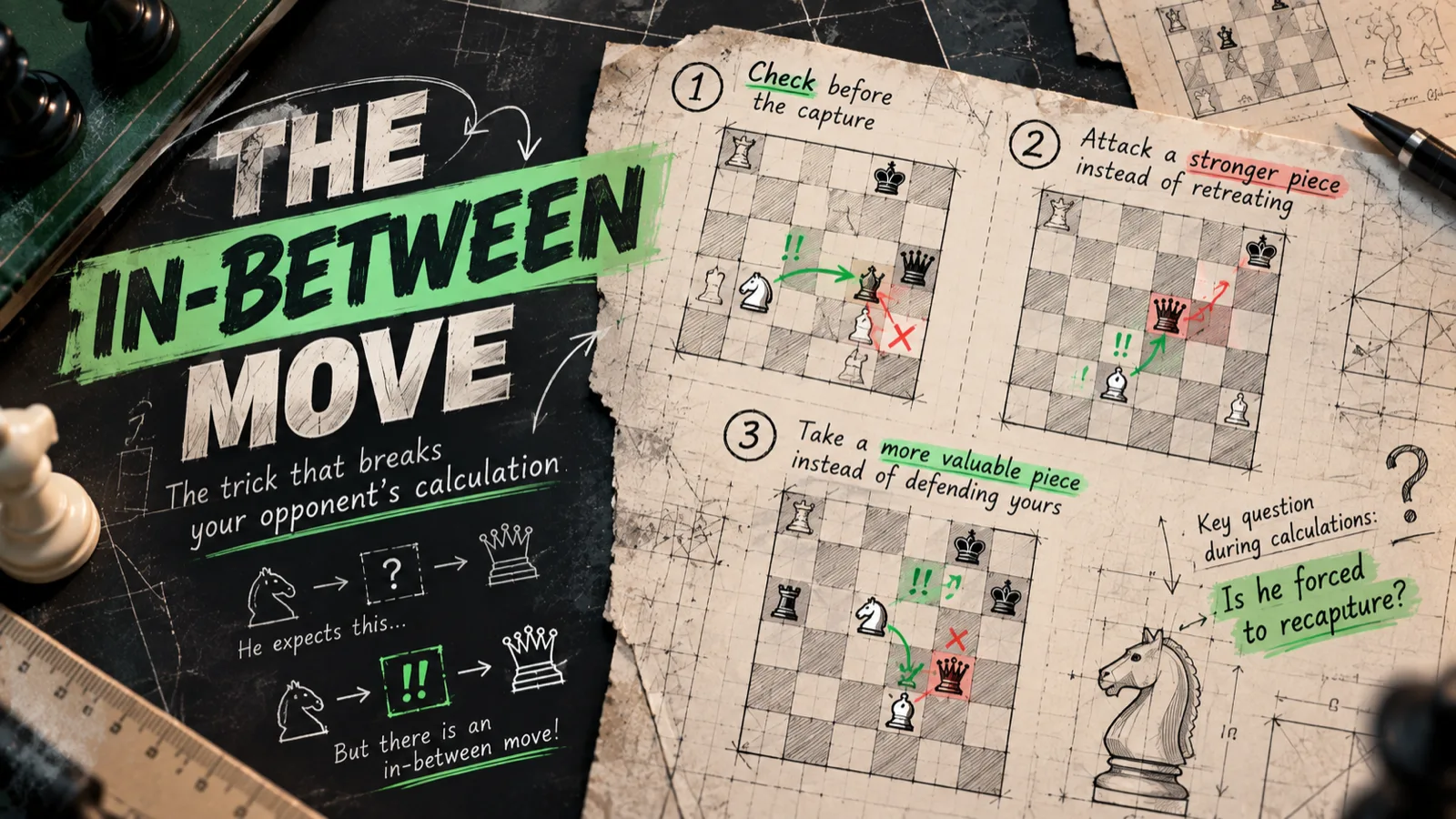 Zwischenzug: the in-between move that breaks your opponent’s calculation — and yours“He takes, I take back” falls apart the moment one move is slipped in between: a check or a counter-hit. What a zwischenzug (intermediate move) is, the one question to ask before any exchange, and the three situations where it decides games under 1600.Русский · Bahasa Indonesia · Português
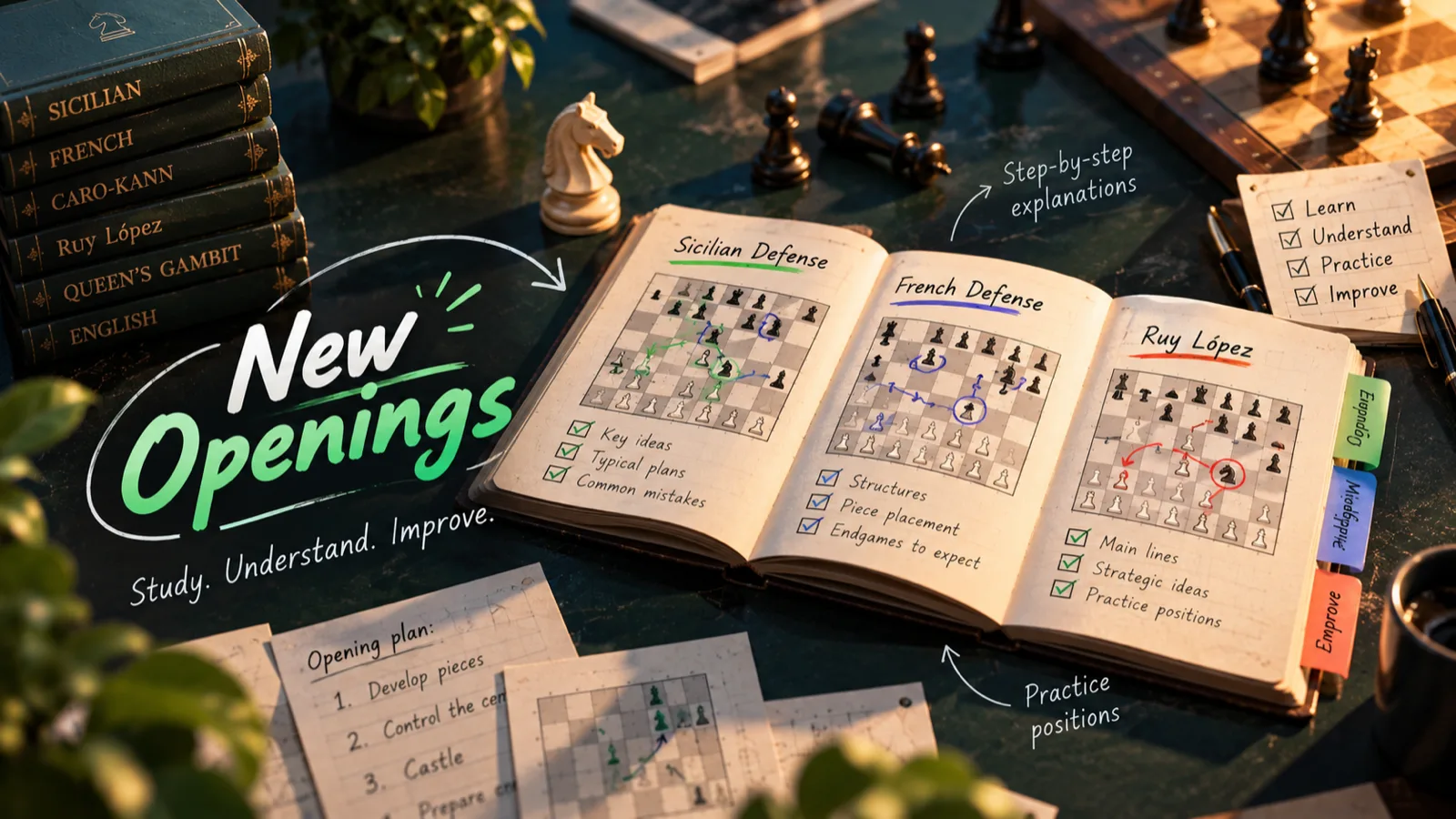 Openings in the trainer: ten schemes that teach the setup, not the linesThe dashboard has a new Openings section: ten schemes for White and Black, from the London to the Dragon. Every move comes with a "why", a bot that replies differently each time drills the setup, and the numbers come from billions of lichess games: how the opening is played at your rating and by masters.Русский · Bahasa Indonesia · Português
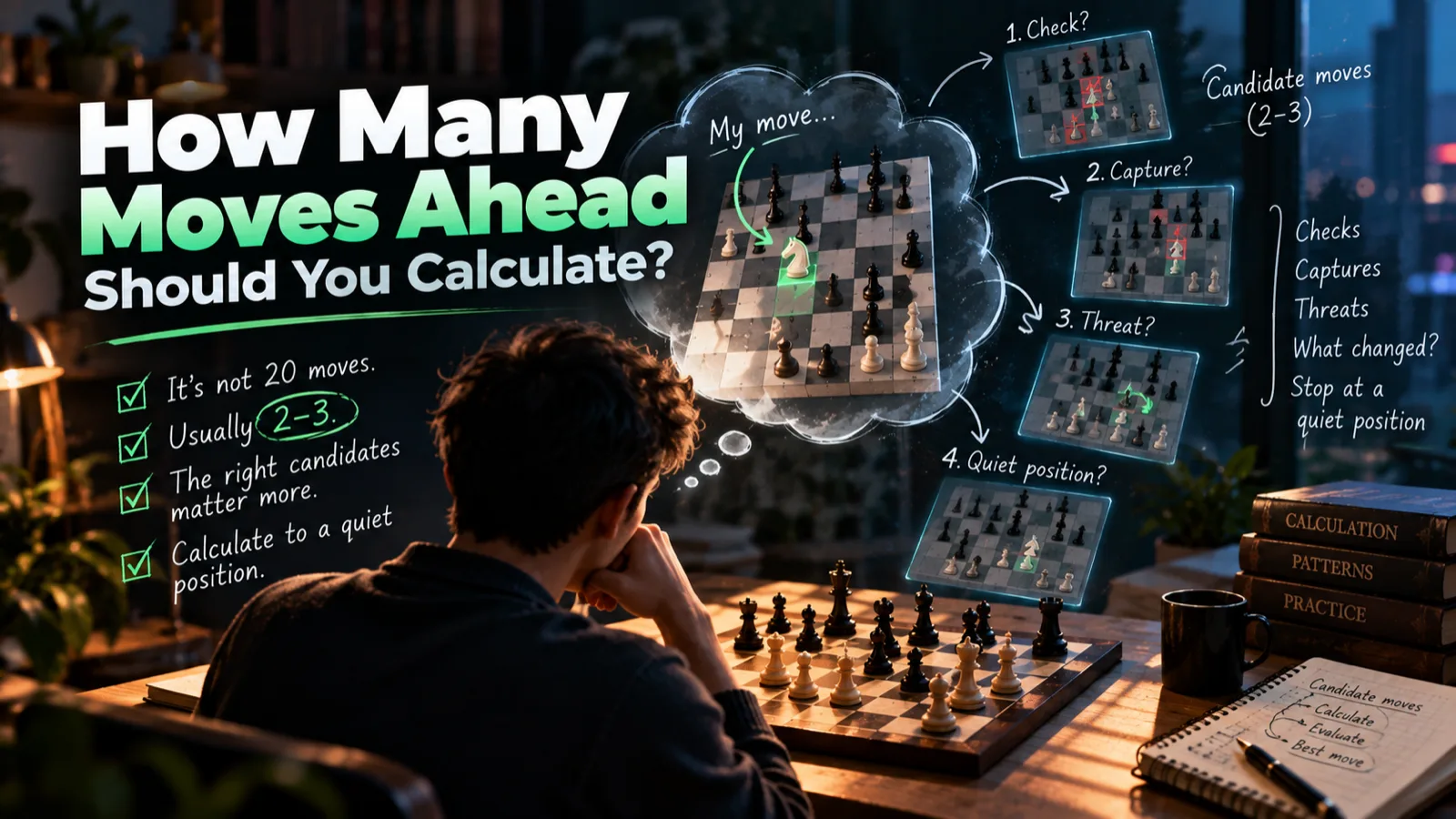 How many moves ahead should you calculate? The truth about chess calculation"Grandmasters see twenty moves ahead" is a lovely legend. In most positions they calculate two or three moves, but the right ones. How to calculate variations in chess: candidate moves, the checks-captures-threats scan, the question "what did the opponent's last move change", and the rule of calculating not deep but until the position goes quiet.Русский · Bahasa Indonesia · Português
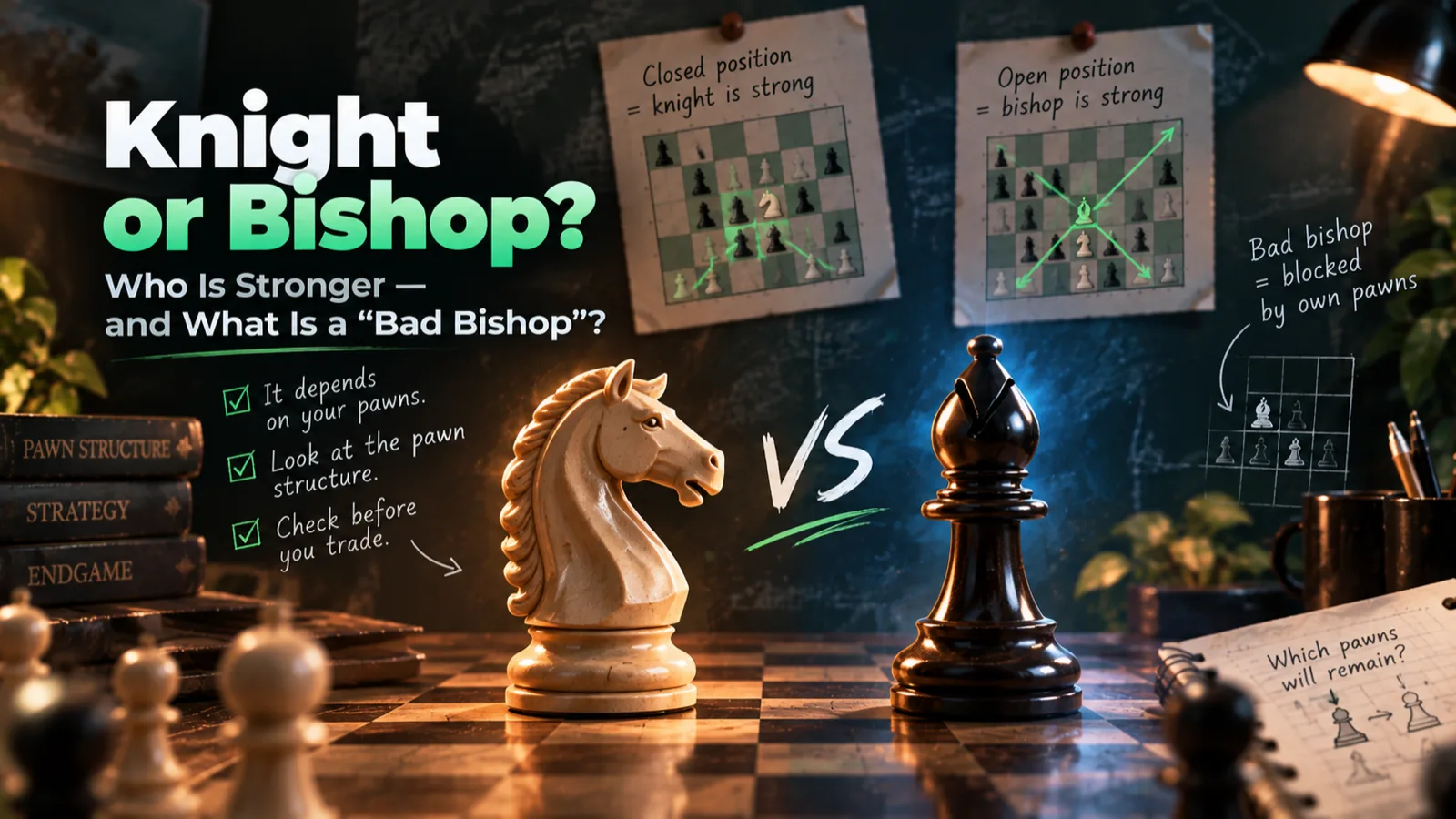 Knight vs Bishop: Which Is Better, and What a "Bad Bishop" Really MeansKnight vs bishop — which is stronger? The question is wrong. A piece's strength is decided by the pawns that will still be on the board. What a bad bishop is, when the two-bishop advantage is real, and a one-second rule to use before any trade.Русский · Bahasa Indonesia · Português
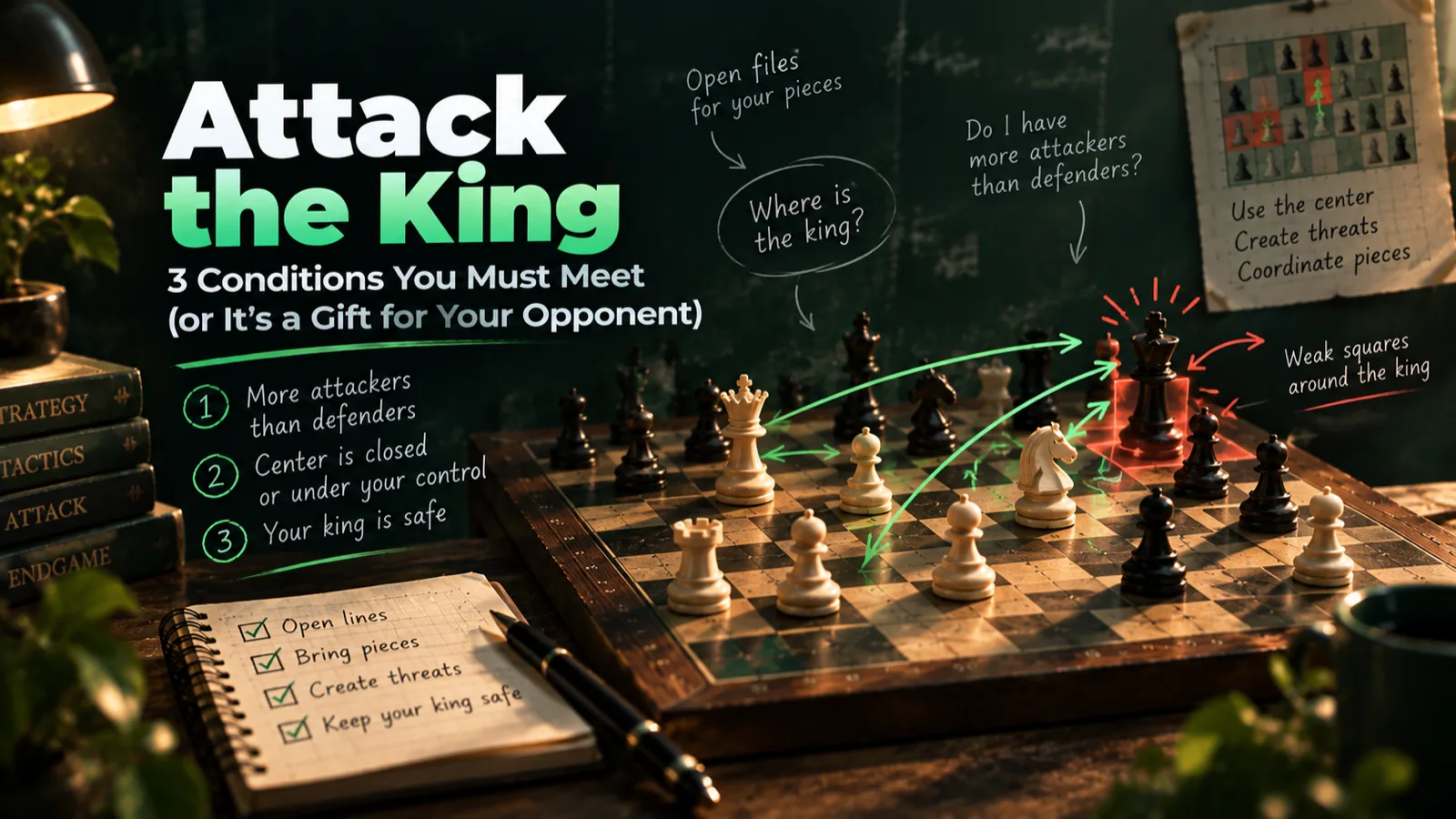 How to Attack the King: Three Conditions, or You're Just DonatingAttacking the king in chess isn't courage or mood — it's arithmetic: more attackers than defenders, a closed or favourable centre, and your own king already tucked away. Three conditions on diagrams, Steinitz's rule in plain words, and what to do when one answer is no.Русский · Bahasa Indonesia · Português
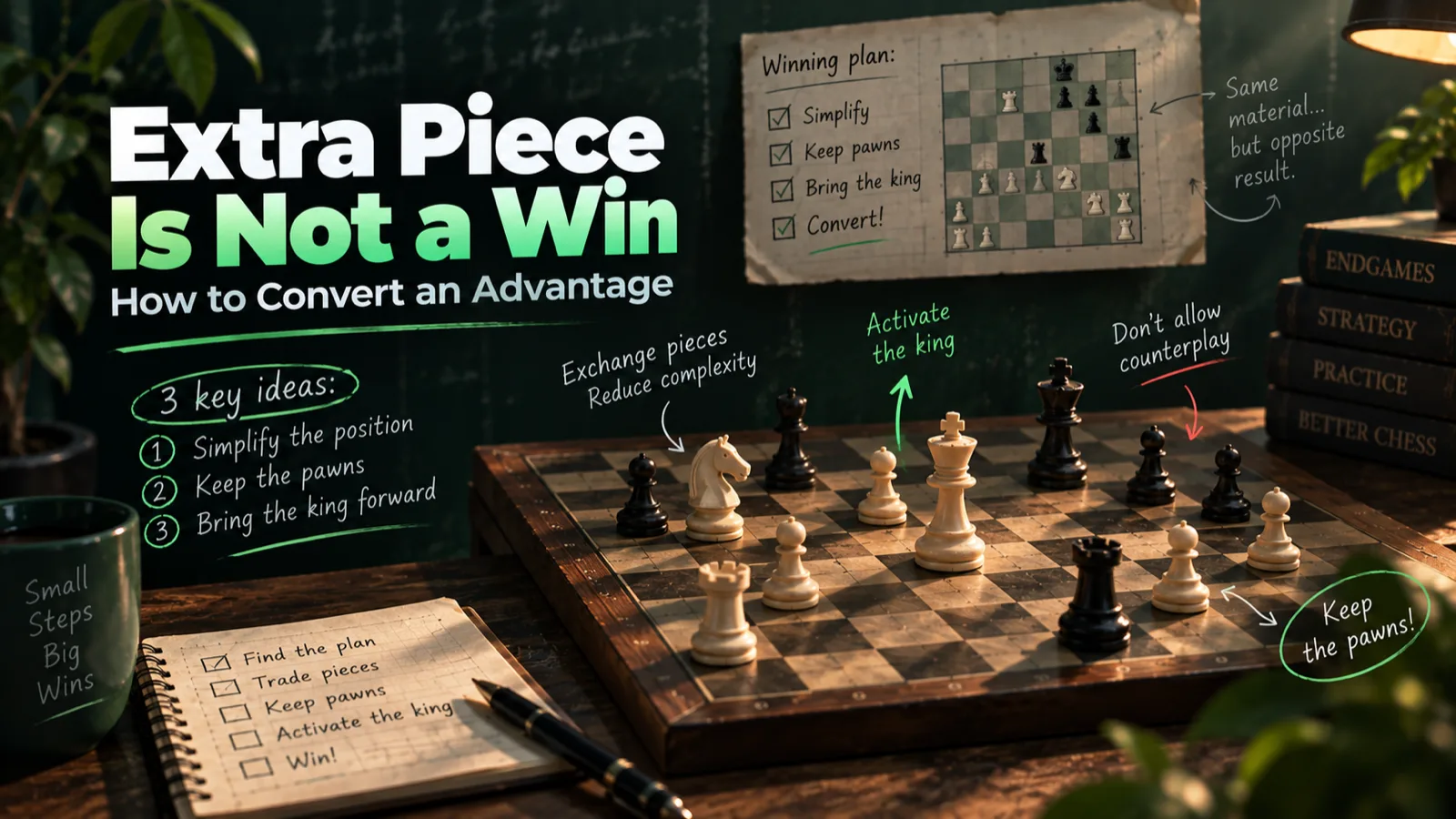 A piece up and still no win: how to convert a winning positionHow to convert a winning position when you are a piece up and the win keeps slipping away. Three concrete actions instead of «play carefully»: trade pieces but keep pawns, kill counterplay before collecting more material, and walk the king in. With diagrams and engine evaluations.Русский · Bahasa Indonesia · Português
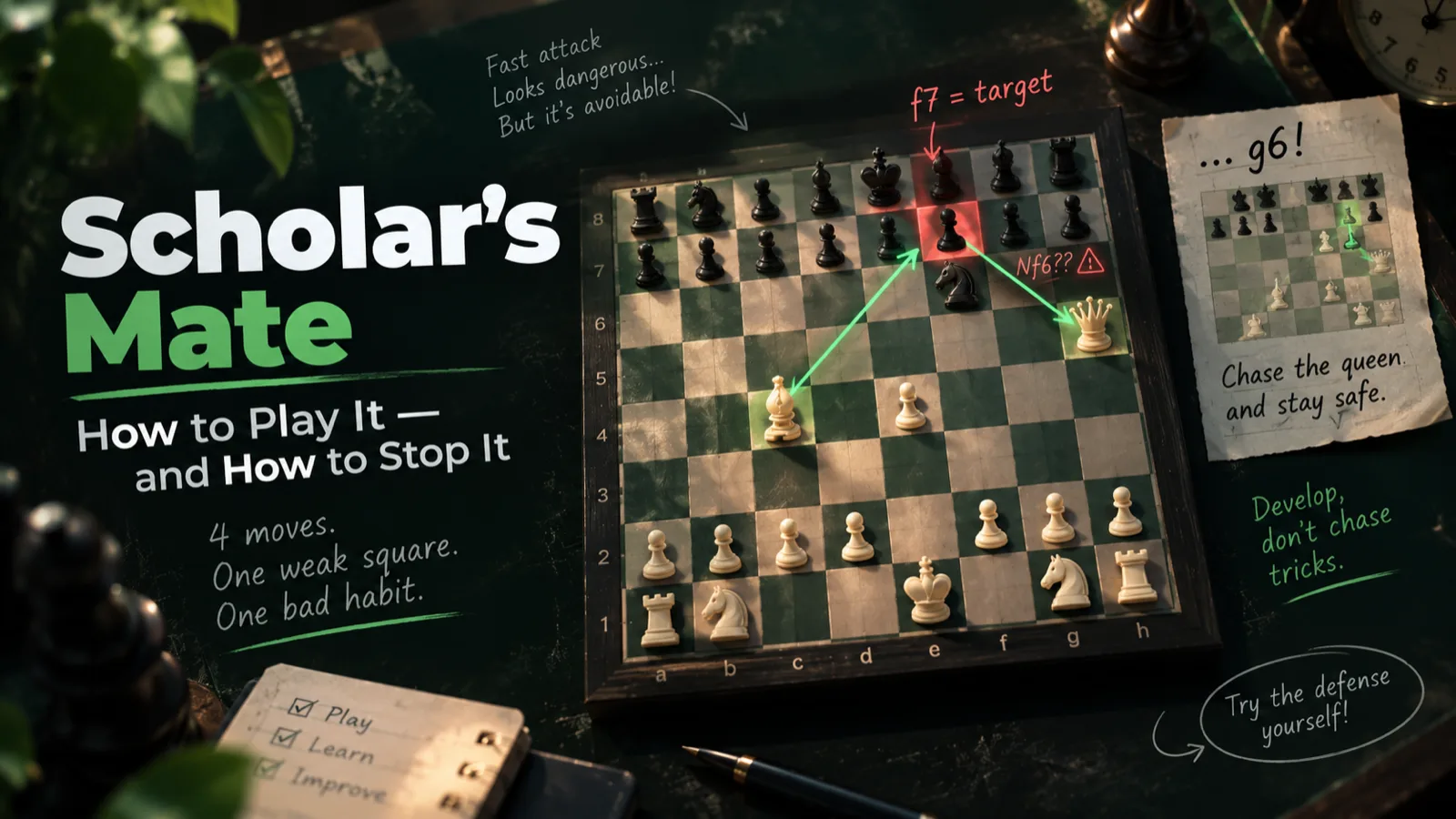 Scholar's Mate: how the 4-move checkmate works — and how to stop itScholar's Mate takes four moves and rests on a single pawn: f7. Here is the line on diagrams, the natural developing move that loses on the spot, and the two-move defence — including why the very same knight move is a blunder early and the refutation one move later.Русский · Bahasa Indonesia · Português
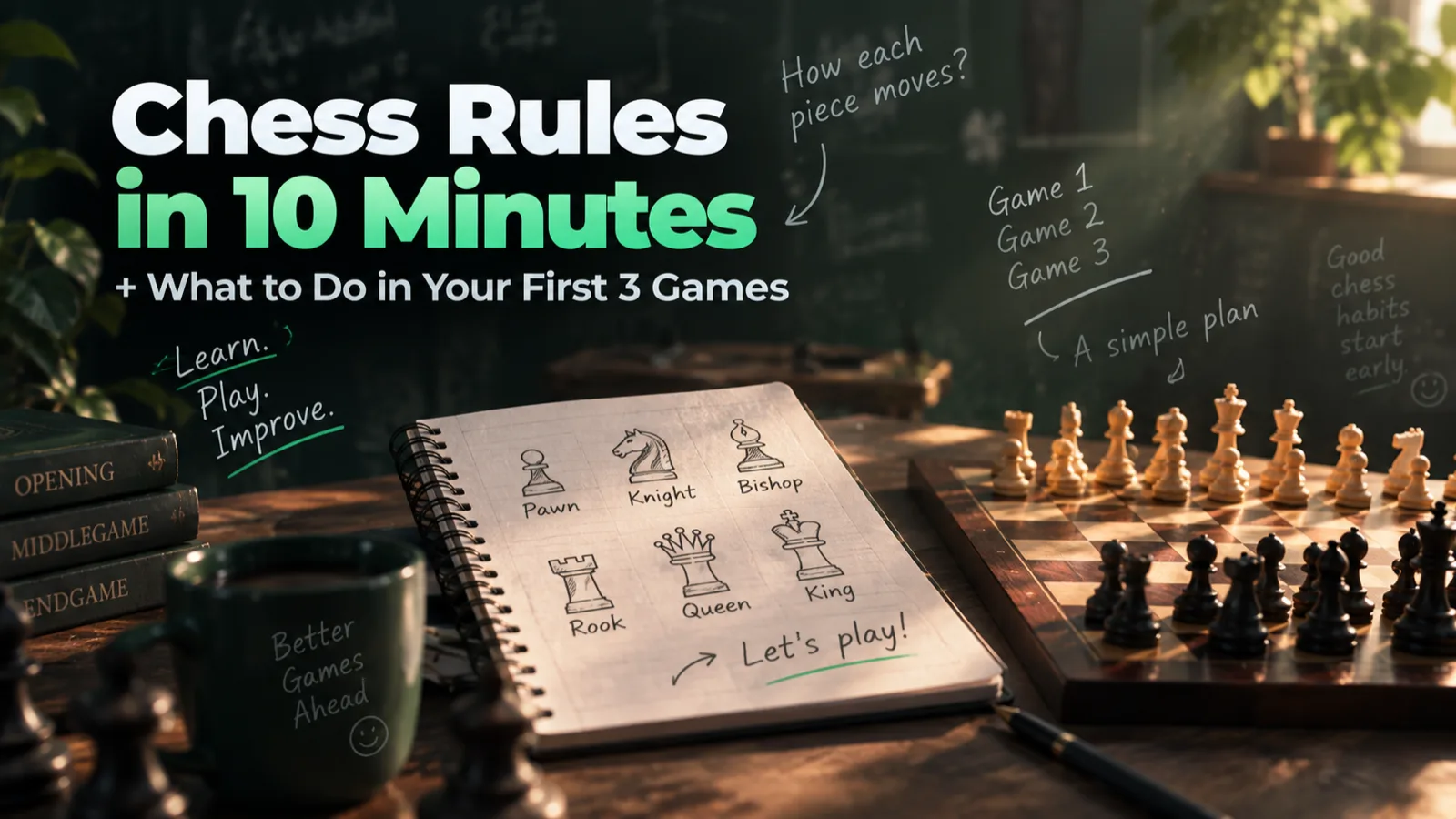 Chess Rules in 10 Minutes — and What to Do in Your First Three GamesThe rules of chess take ten minutes: how each piece moves, castling, en passant, checkmate and stalemate. Nobody quits over the rules — they quit in minute eleven, when nothing tells them what to do next. Here's a plan for your first three games, one job each.Русский · Bahasa Indonesia · Português
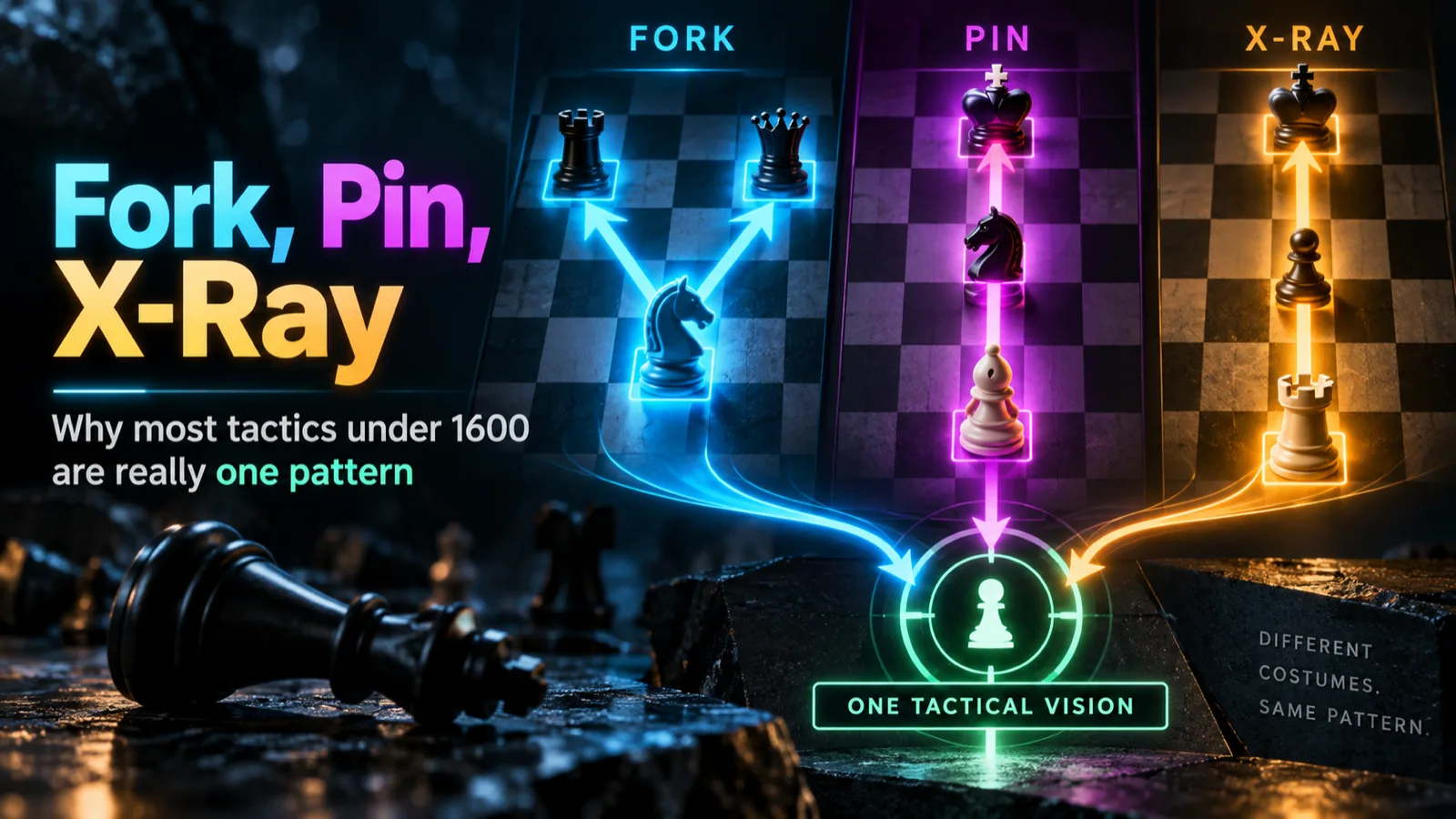 Fork, Pin and Skewer: Why 80% of Tactics Below 1600 Is One Single TrickTextbooks list twenty-five tactical motifs. Your own games contain one. The chess fork, the pin, the skewer and the discovered attack are costumes worn by a single idea — the double attack. Here is how to stop memorising a list and start seeing the trick itself.Русский · Bahasa Indonesia · Português
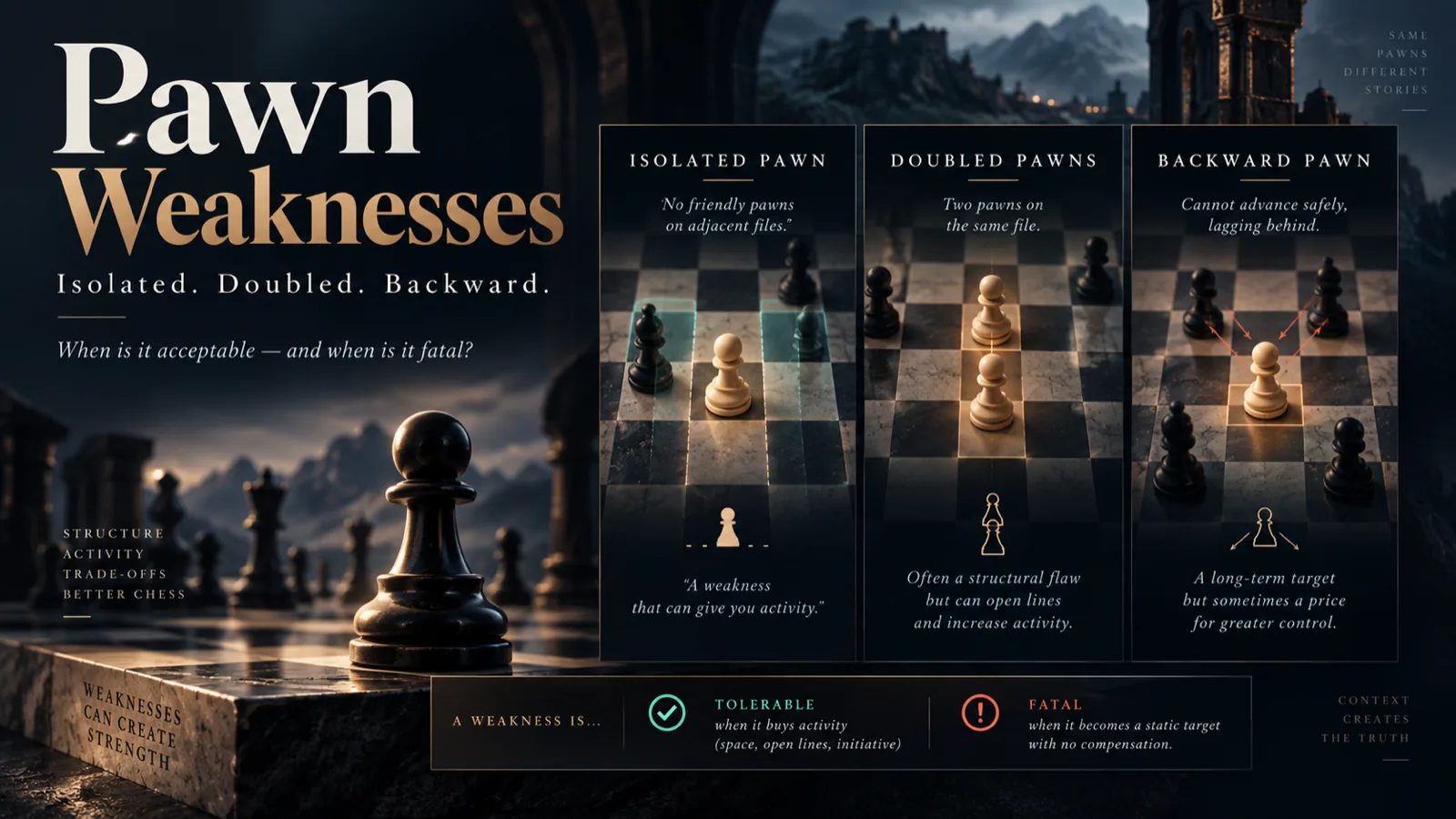 Isolated, Doubled, Backward: Which Pawn Weaknesses Actually Lose GamesIsolated pawn, doubled pawns, backward pawn — three diagnoses people fear for the wrong reasons. Below 1600 it is not the structural defect that loses games, but not knowing when a weakness is a fair price for piece activity and when it is a death sentence. Plus a table: tolerable vs fatal.Русский · Bahasa Indonesia · Português
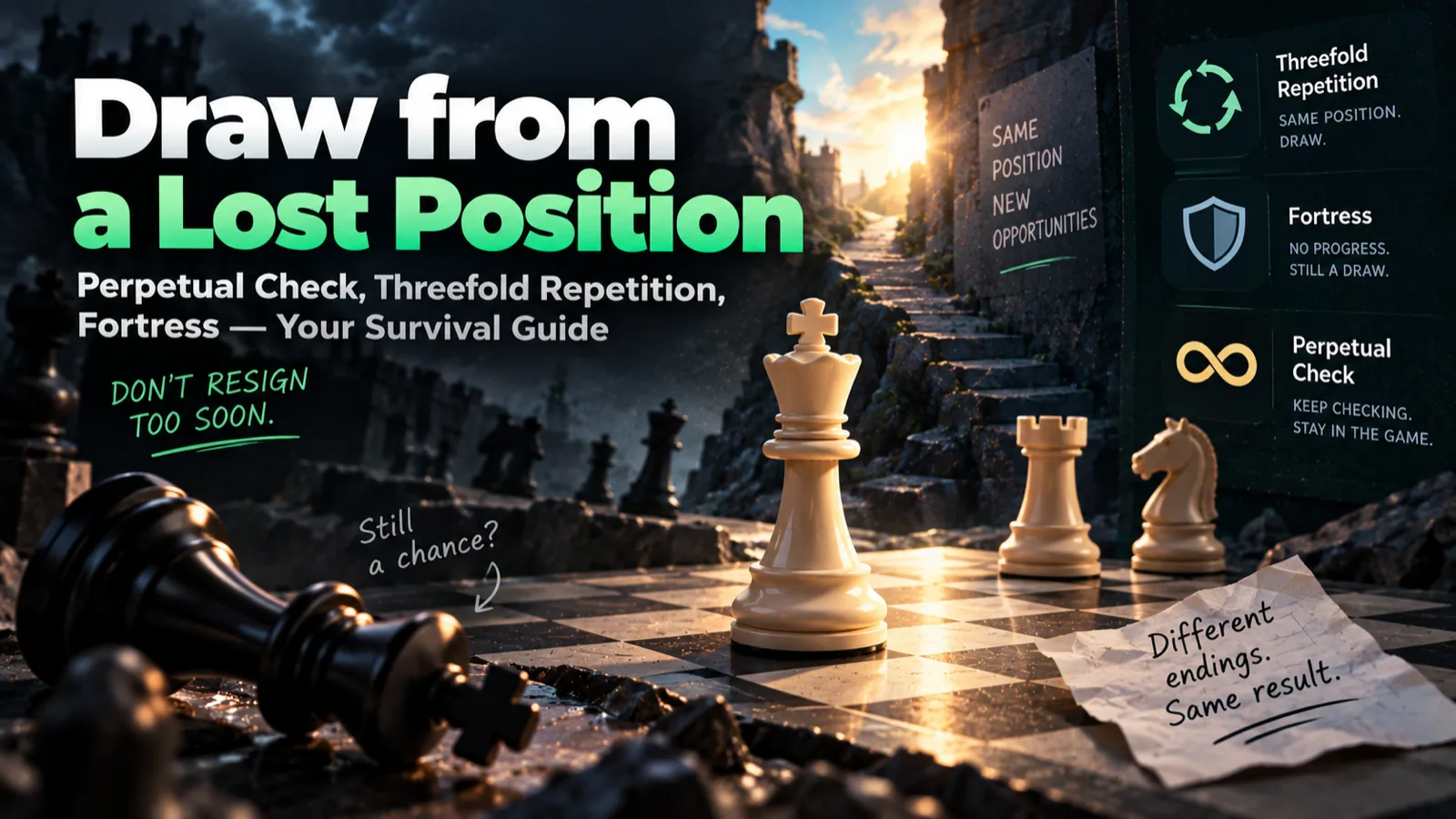 Perpetual Check, Threefold Repetition, Fortress: How to Save a Draw From a Lost PositionPerpetual check, threefold repetition, the 50-move rule and the fortress — the complete rescue kit for positions that look lost. Saving draws is the most underrated source of rating: half a point rescued equals half a win.Русский · Bahasa Indonesia · Português
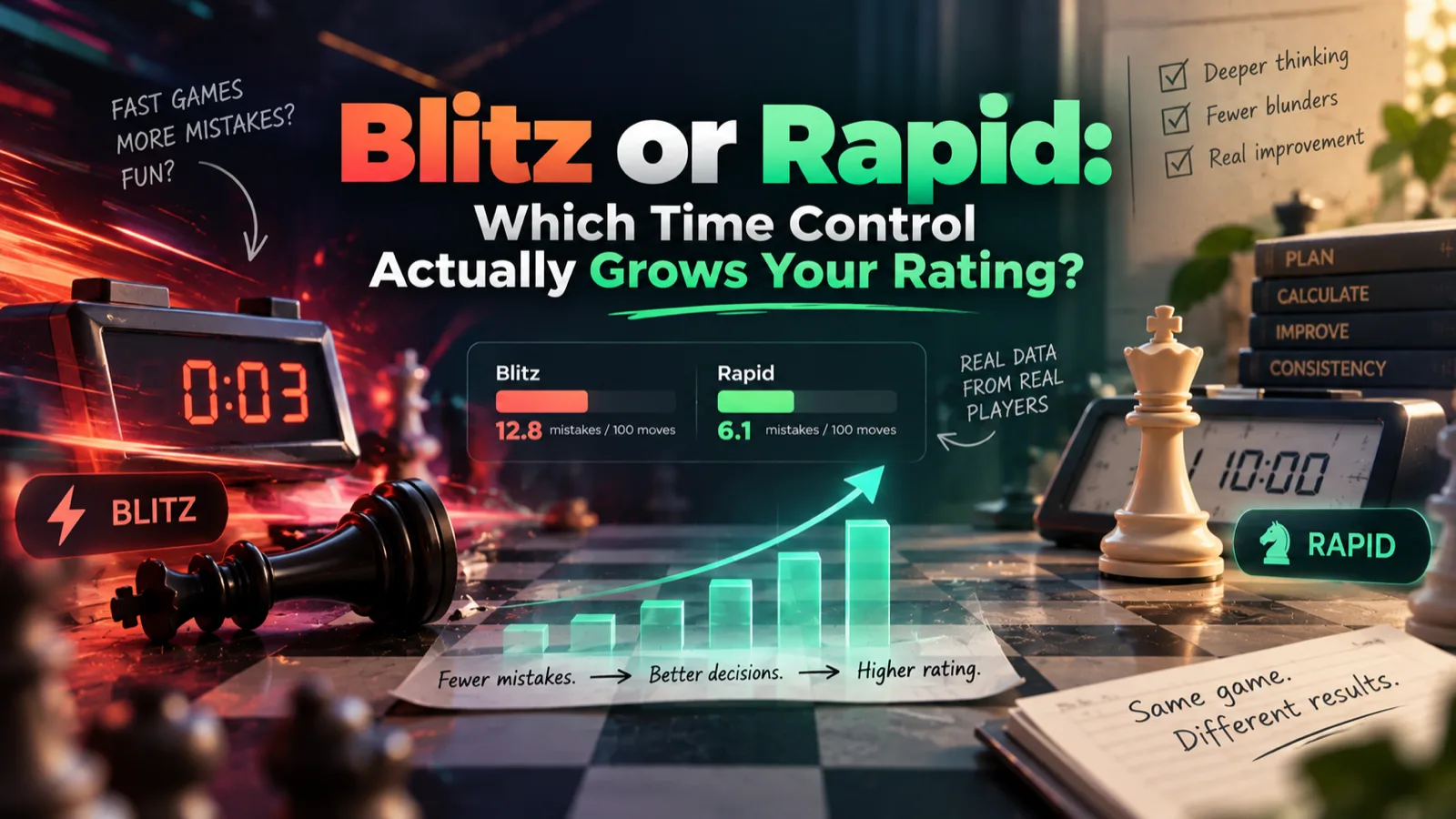 Blitz vs rapid: which time control actually makes you betterWe counted mistakes per 100 moves across our students' analysed games — and the blitz vs rapid debate fell apart: the error rates are nearly identical, and rapid actually has more blunders. What grows your rating isn't the time control, it's what happens after the game.Русский · Bahasa Indonesia · Português
 Learning Chess as an Adult: What Grown-Up Students' Games Actually ShowIt's not your brain — it's your training routine: binge blitz with zero reviews. Why learning chess as an adult is entirely realistic, the advantages only adult learners have, and a 30-minute daily routine that actually works.Русский · Bahasa Indonesia · Português