
Play. Learn.
Get stronger.
Analyze your games, get personalized feedback, solve puzzles — and build a training plan with AI.
 Play games
 Solve puzzles
 Track progress
 Get AI feedback
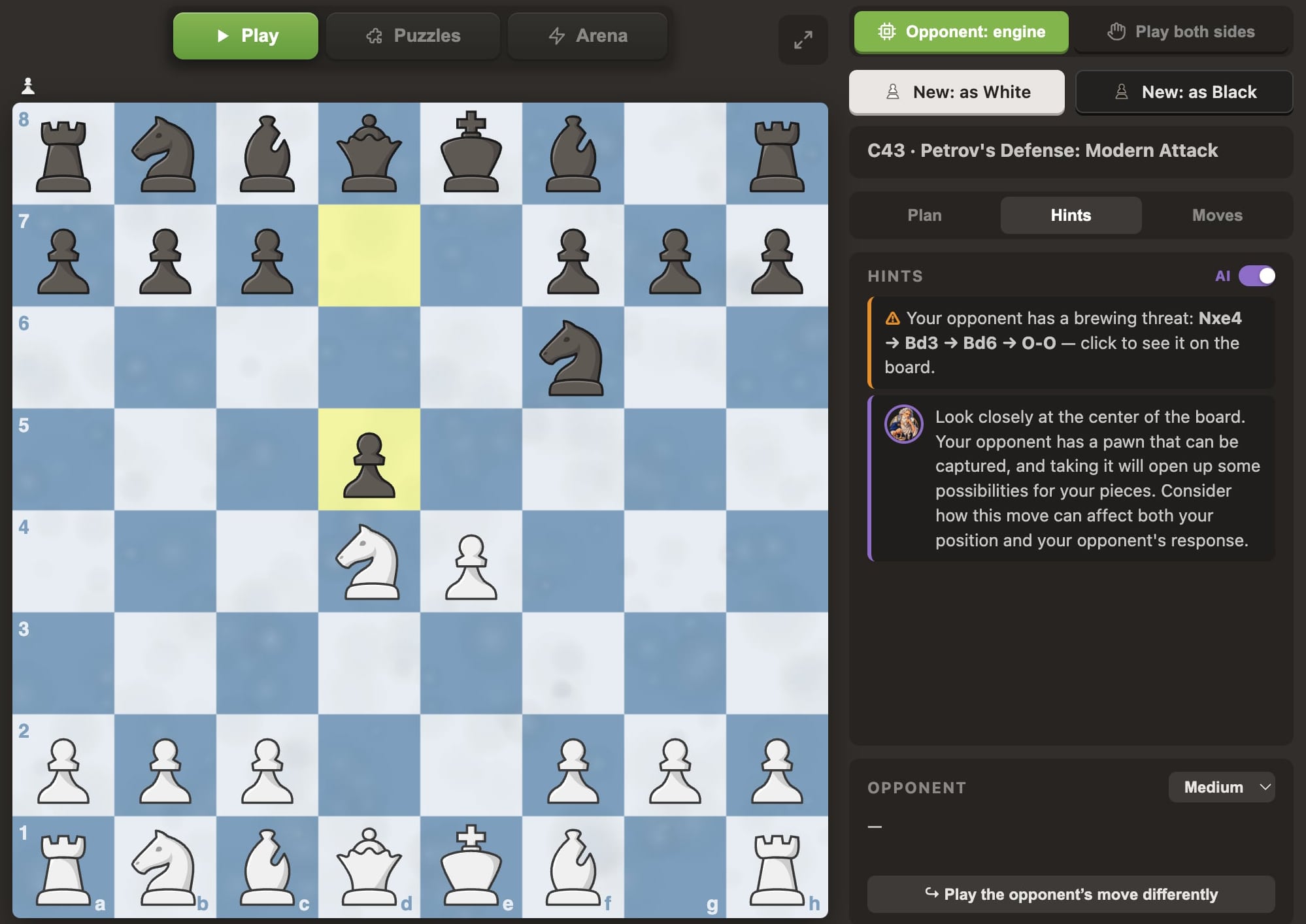
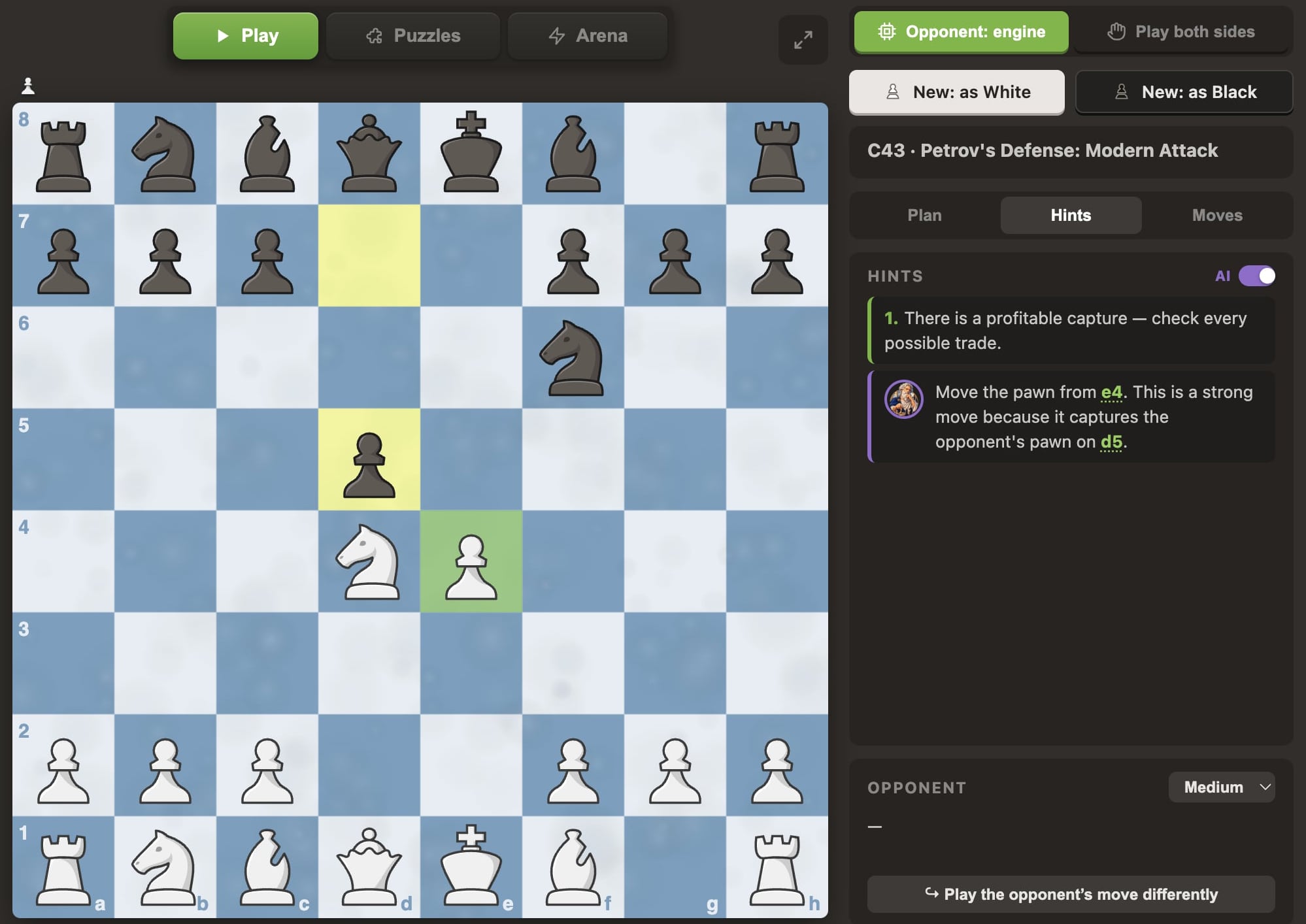
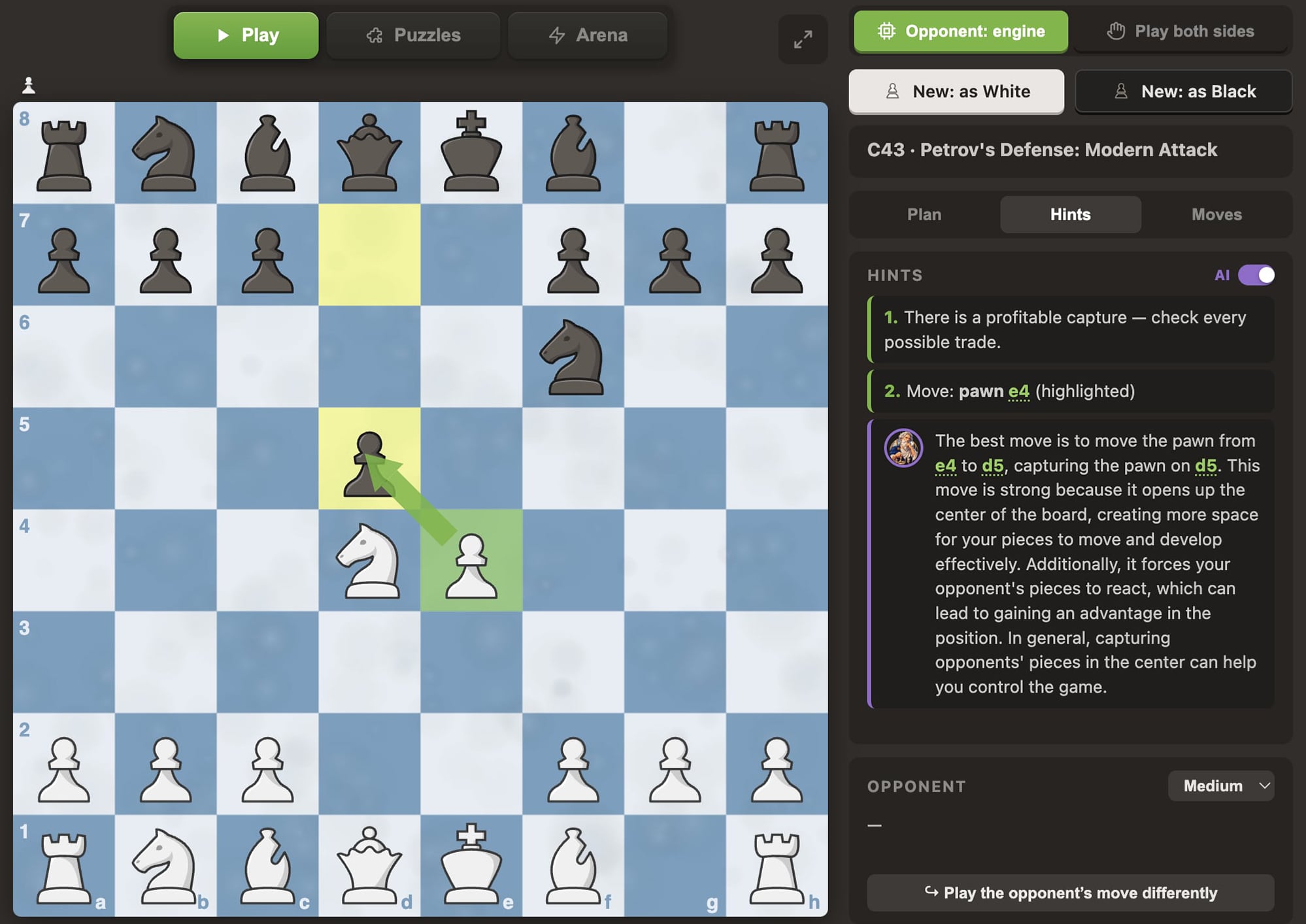
Hints without spoilers
The plan in plain words
Threat detection
Move preview
AI coach
What is inside
A personal training program
Built from your own games: a weekly theme (say, hanging pieces), a daily portion of reviews and new puzzles, and a checkpoint game that closes the theme. Not a feed of exercises — a program with a goal.
Puzzles made from YOUR mistakes
Positions where you actually went wrong become your puzzles — with an explanation of why. Spaced repetition brings each one back right before you would forget it.
An AI coach explains in words
Not just "the best move" — real strategy in plain words: what your move did, what the reply changed and what the plan is now. Like a coach at the board: threats first, development second.
Every game reviewed
Move accuracy, blunders and missed tactics — with an explanation of why the move failed and what was better. Eval graph, mistake navigation and a "play from here" sandbox.
An engine that learns you
A personal sparring partner: it studies your games, plays at your strength and grows with you. It will not crush a beginner nor roll over for a strong player.
Arena and live games
Coming soonPlay rated blitz against real people, invite friends with a link, watch live games and cheer for players with coins.
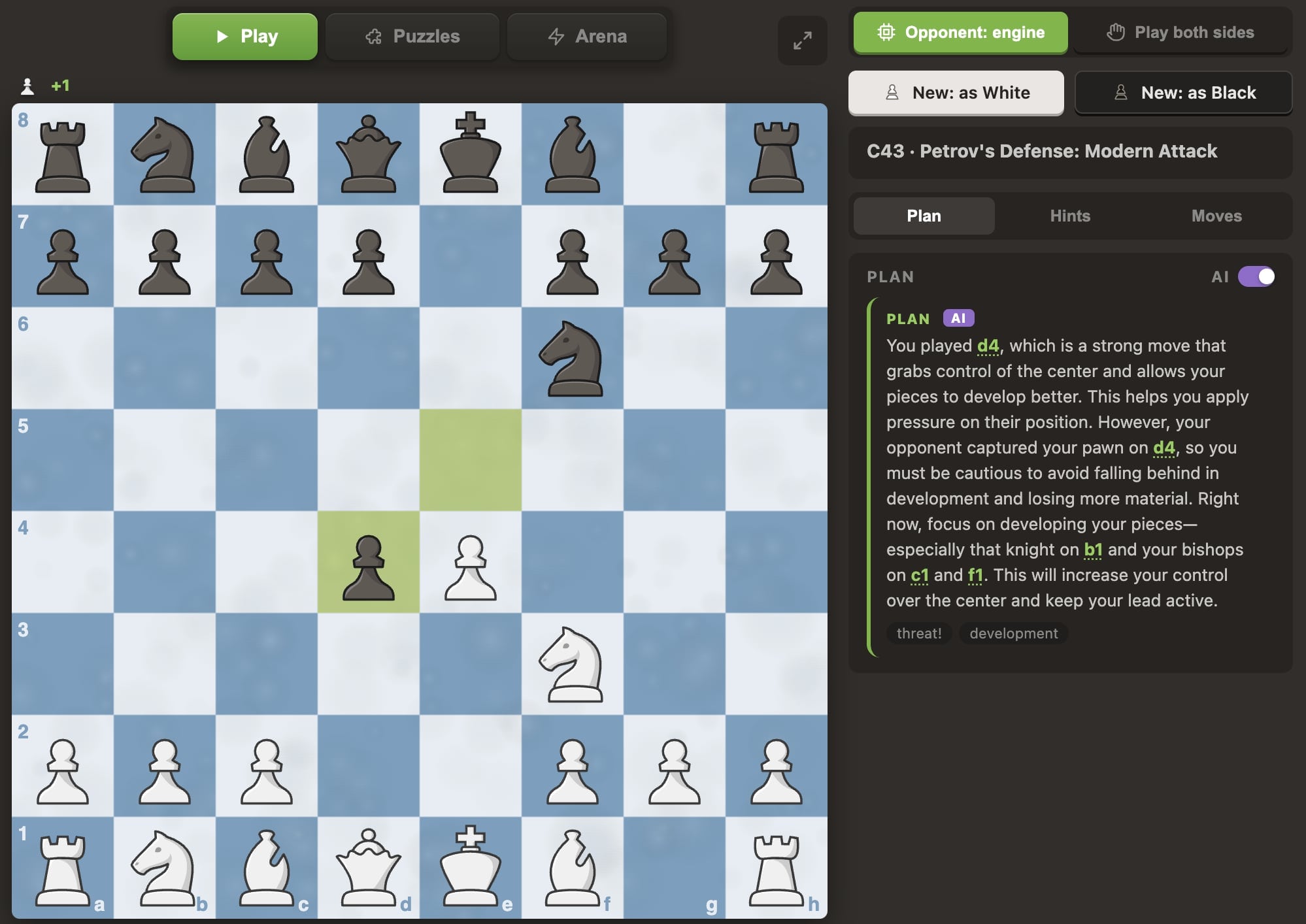
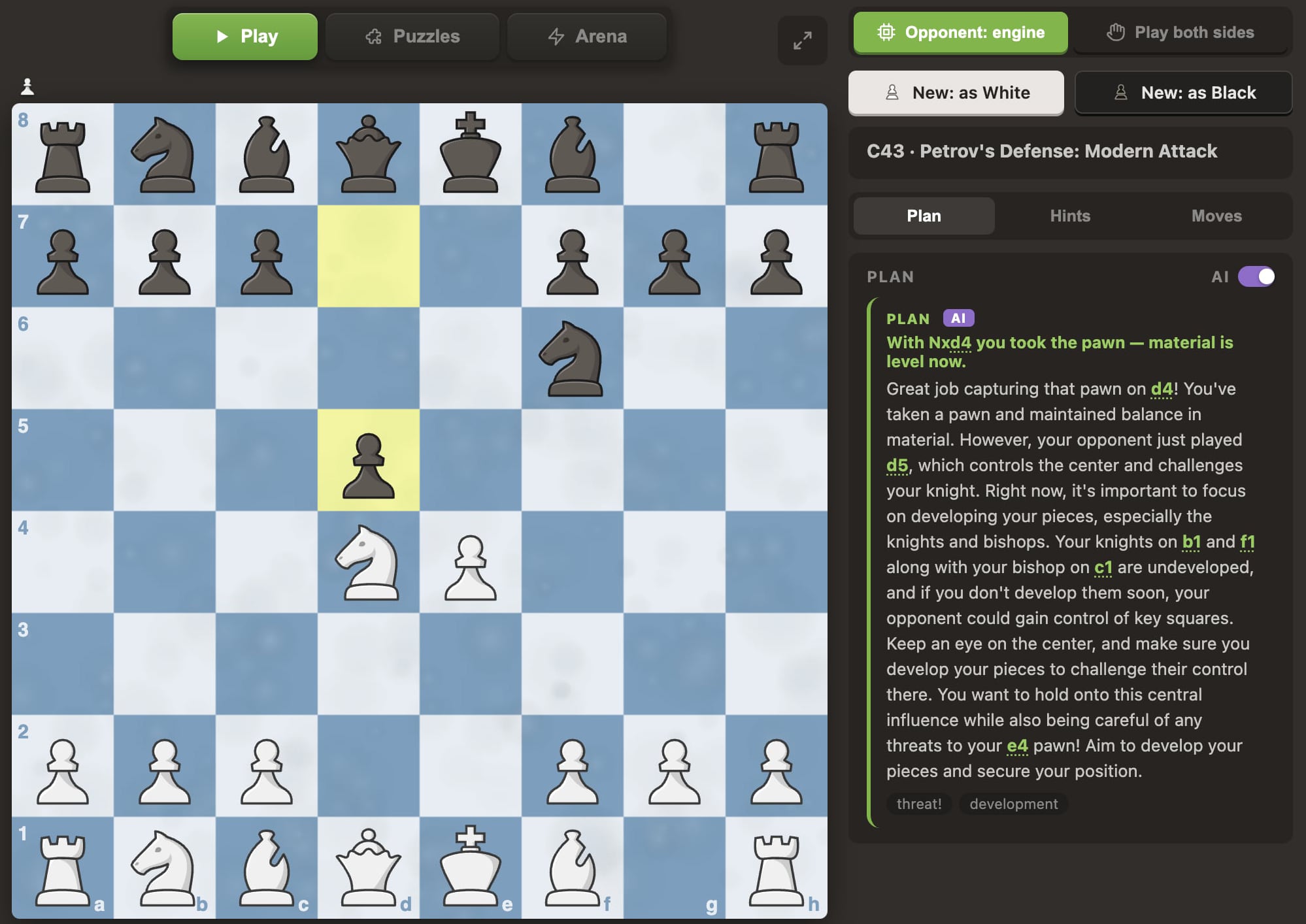
This is how your coach talks
Your personal coach: not engine lines, but living explanations — straight from a real game.
How it works
Diagnose. Train. Grow.
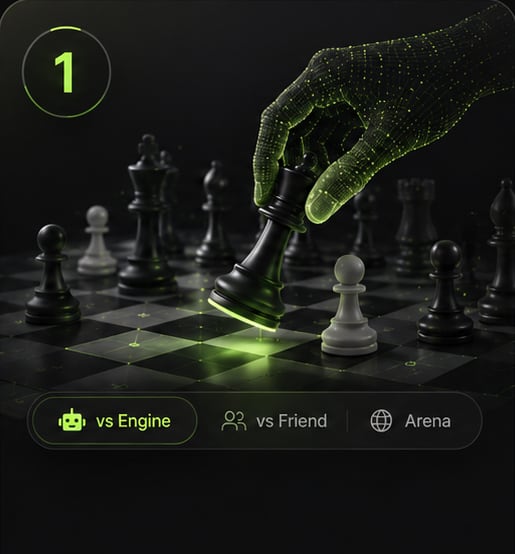
Bring your games
Import from chess.com or lichess by username — or just play here: the coach learns from every game either way.
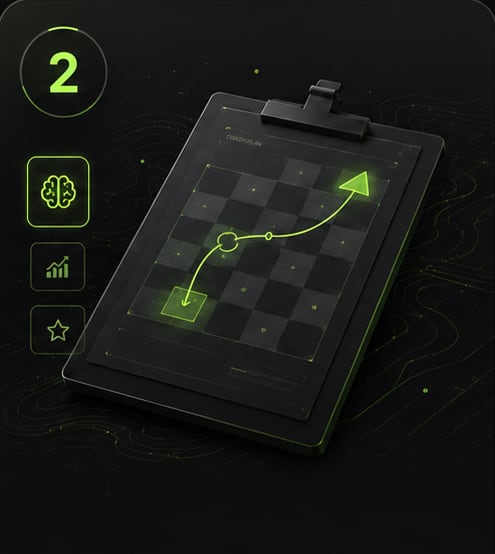
Get your program
The coach finds the mistake that costs you the most points and makes it the theme of the week: daily reviews, fresh puzzles, one guided game.
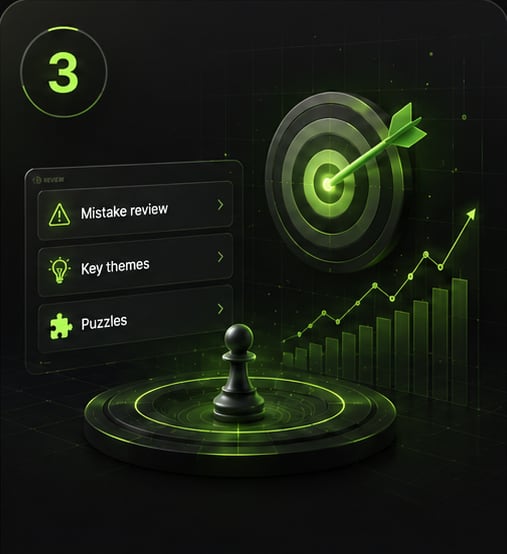
Close the theme
Reach the volume, pass the checkpoint game — the theme is closed and the next weakness takes its place. That is how the rating climbs.
Questions, answered
Is it really free?
Yes. Playing, hints, game review and puzzles are free. No card, no trial timers.
Do I need an account?
To just play — no: click and you are at the board. The training program, game import and the AI coach need a free account, so your progress has somewhere to live.
What level is the engine?
Adjustable. It plays at your strength — from beginner-friendly to club level — and picks varied openings like a human sparring partner.
Does it work on my phone?
Yes, right in the browser. Nothing to install.
How is this different from big chess sites?
There you play — here you grow. Every game comes with a plan in words, hints teach you to think for yourself, and puzzles are built from your own mistakes and come back on a spaced-repetition schedule.
From the blog
What we ship and what we learn about chess improvement
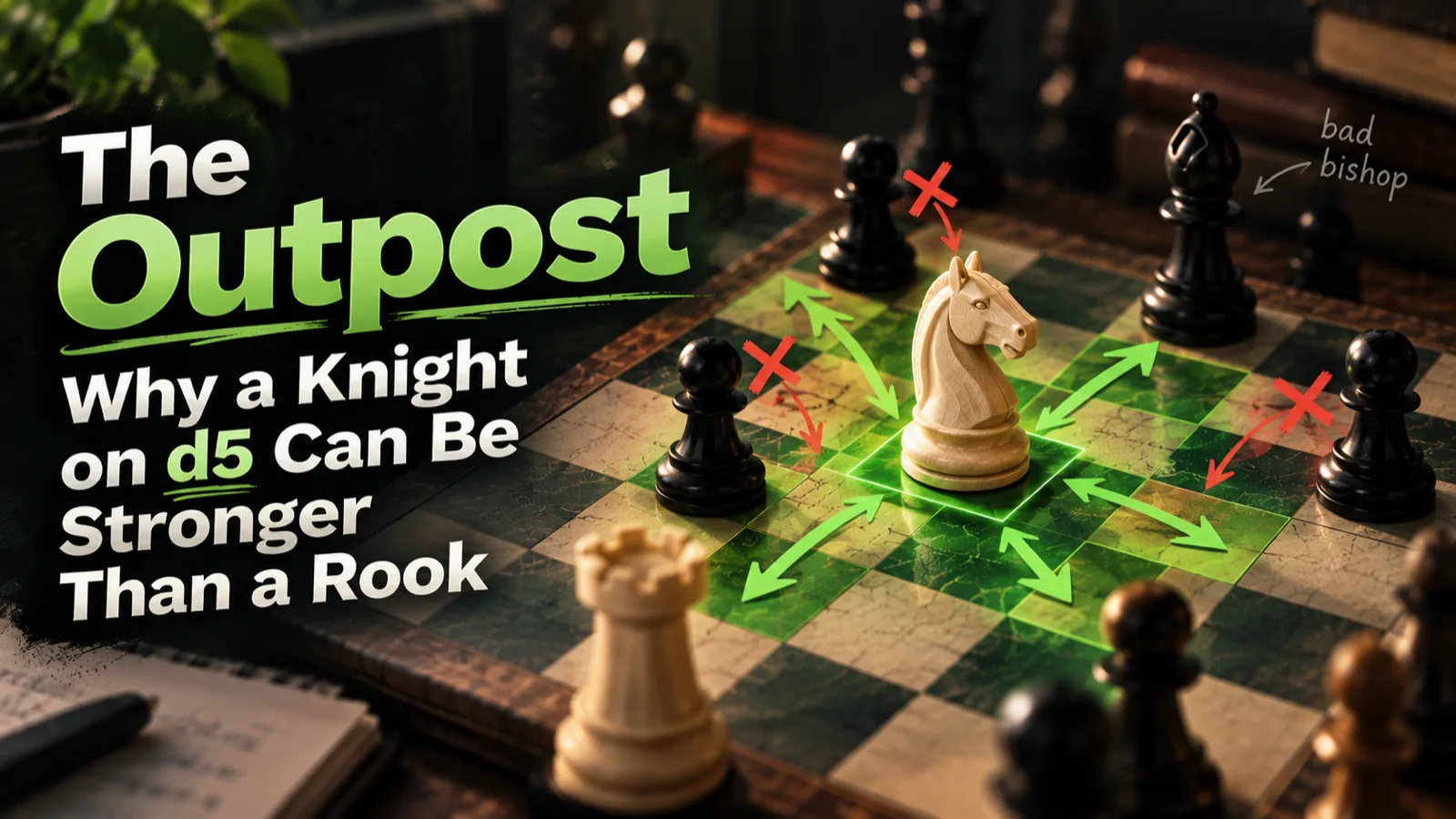 October 13, 2026Knight Outpost in Chess: Why a Knight on d5 Can Beat a RookAn outpost in chess is a square no enemy pawn can ever attack. How to spot one three moves before your knight gets there, why a knight belongs on it rather than any piece, and what you pay for the pawn move that creates the hole.Read →
 October 7, 2026Nine Rivals Instead of Three: Meet the 99chess Bot LadderInstead of easy, medium and hard: nine chess bots from 400 to 2000+, each with a name and a personality. Why our old medium bot scared beginners away, how the new bots make human mistakes, and who to play first.Read →
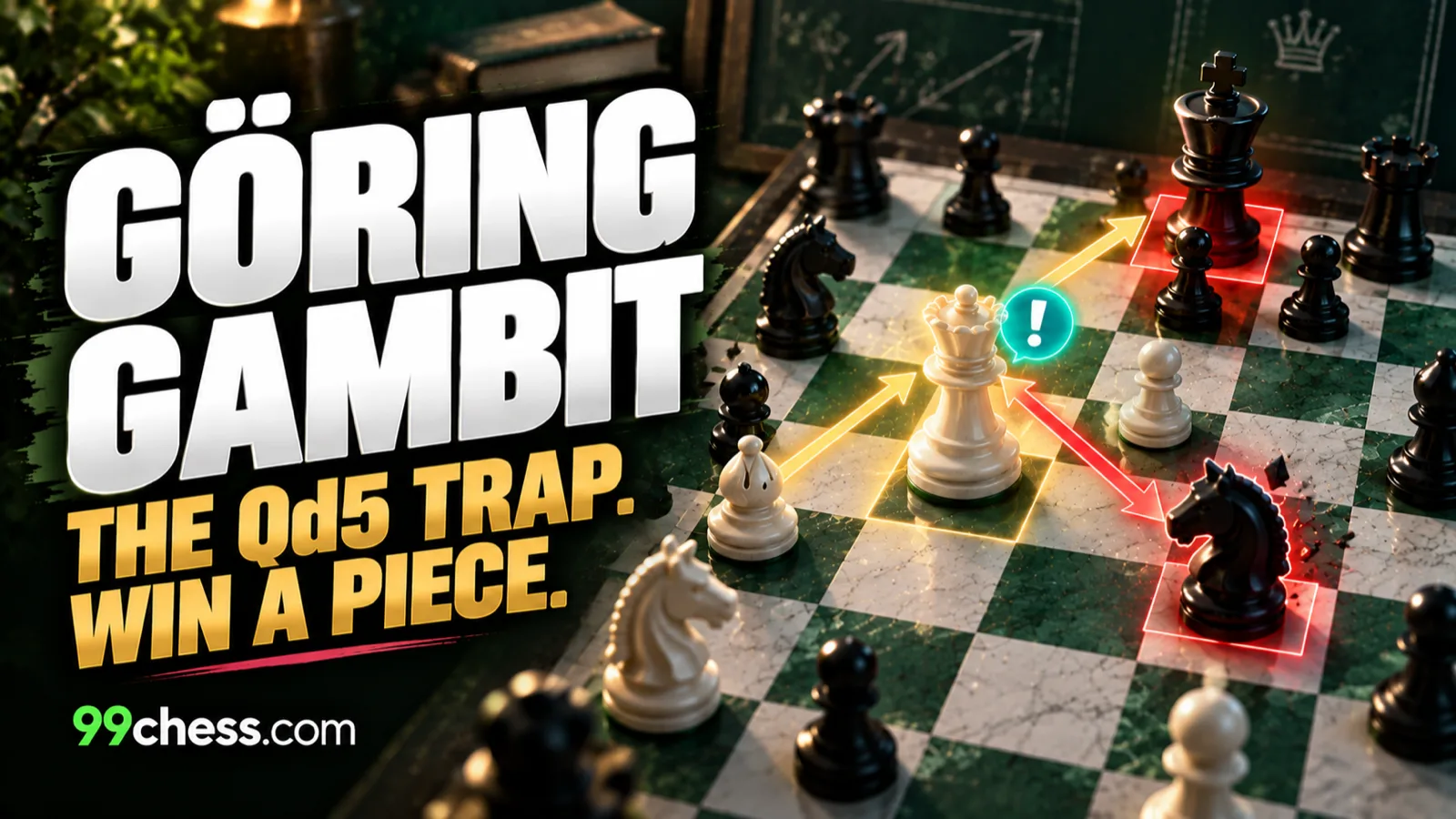 October 6, 2026Göring Gambit Video Lesson: The Qd5 Trap That Wins a PieceThe Göring Gambit gives a pawn with 4.c3, and a third of opponents walk into 7…Ne4? 8.Qd5!, after which White wins eight games out of ten. A short video lesson built on 2.2 million Lichess games: three lines and one trick that works twice.Read →
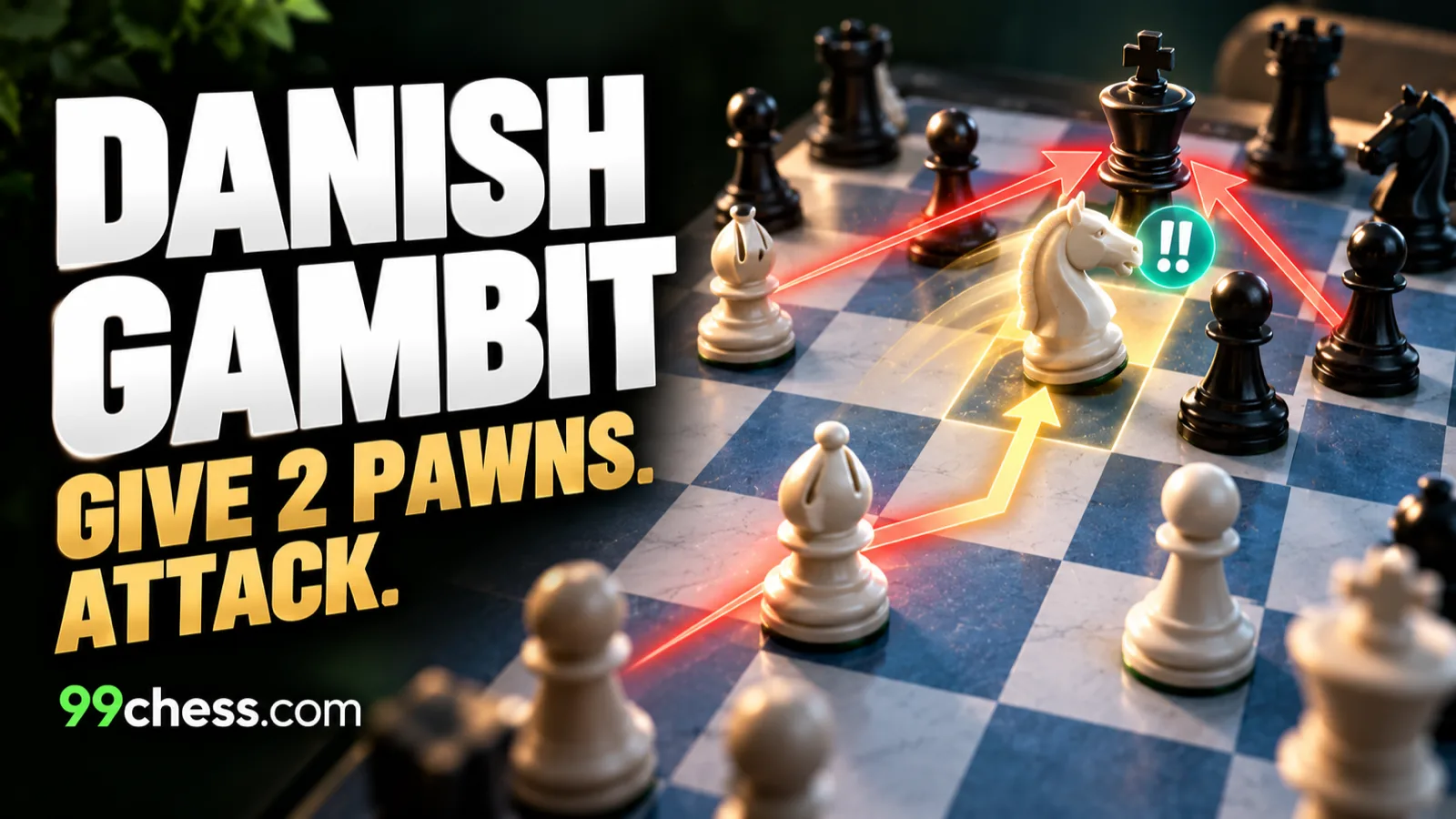 October 6, 2026The Danish Gambit in 4 Minutes: Video LessonThe Danish Gambit gives away two pawns by move three, and White still wins 55% of Lichess games between 1200 and 1800. A short video lesson: the idea, the two main lines, and the knight sacrifice that punishes greed.Read →
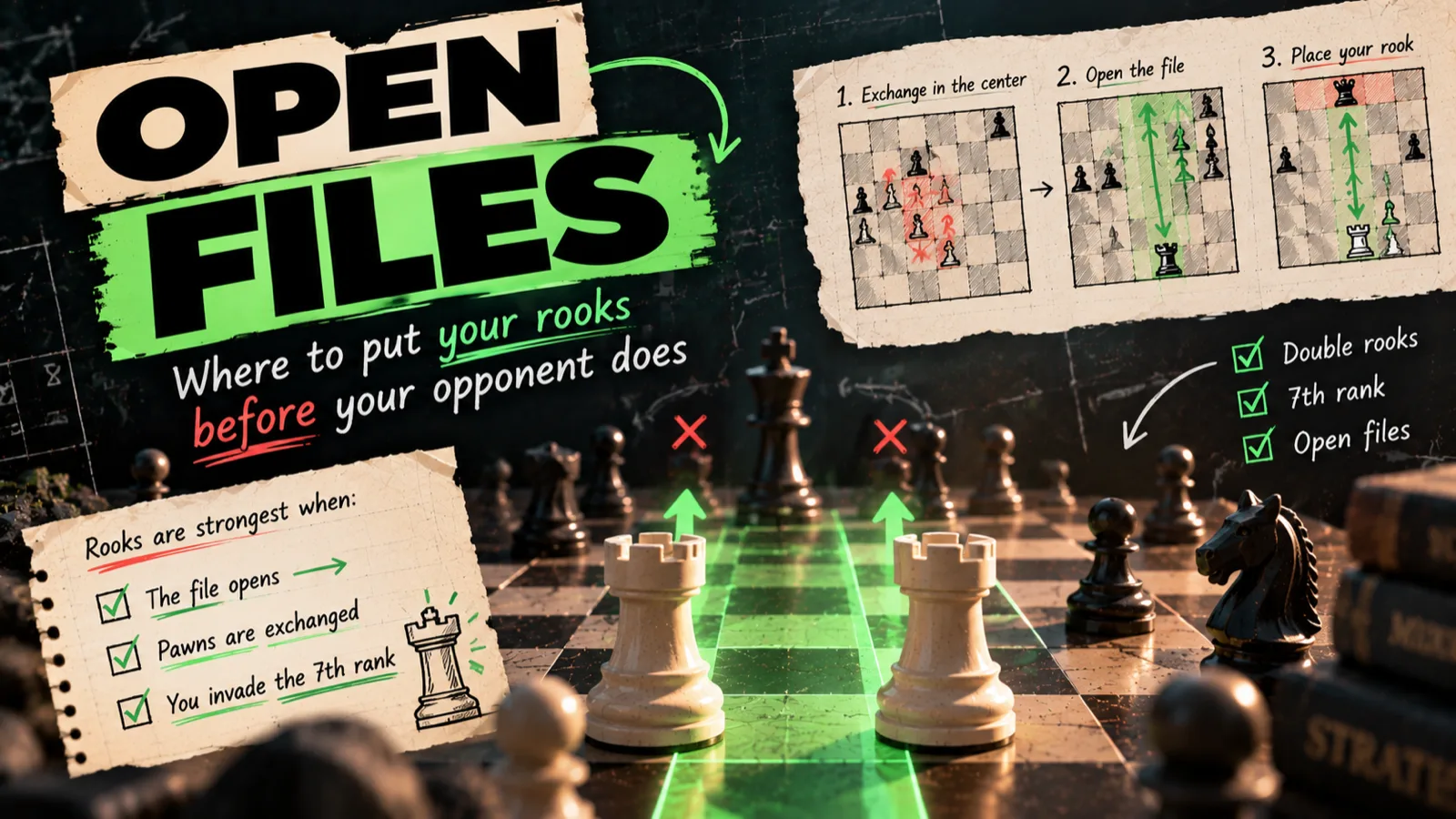 October 5, 2026Open files in chess: where to put your rooks before your opponent doesOpen files in chess aren't where pawns are missing now, but where they're about to be traded. Where to put your rooks before a file opens, the one sign it's time, and how to double up and reach the seventh — with examples from master games.Read →+4343 more postsOpen the blog →

Start training
No install, no card. Bring your games — the first theme of your program is minutes away.
Play with the coach