

A bishop is worth three points. A knight is worth three points. The argument over which is better has run for two centuries, and both camps can show you a game where their piece tore the other one apart. That is the tell: the question is wrong.
The right one is duller and always works: whose pawns will still be on the board? A piece isn't strong or weak by itself. Pawns make it one or the other — yours and your opponent's.
A bad bishop isn't a bad bishop. It's your pawns
The term misleads. A "bad bishop" isn't a defective piece — it's a bishop staring into its own pawns, which happen to sit on squares of its colour. It sees nothing, hits nothing, and still has to stay home and babysit.
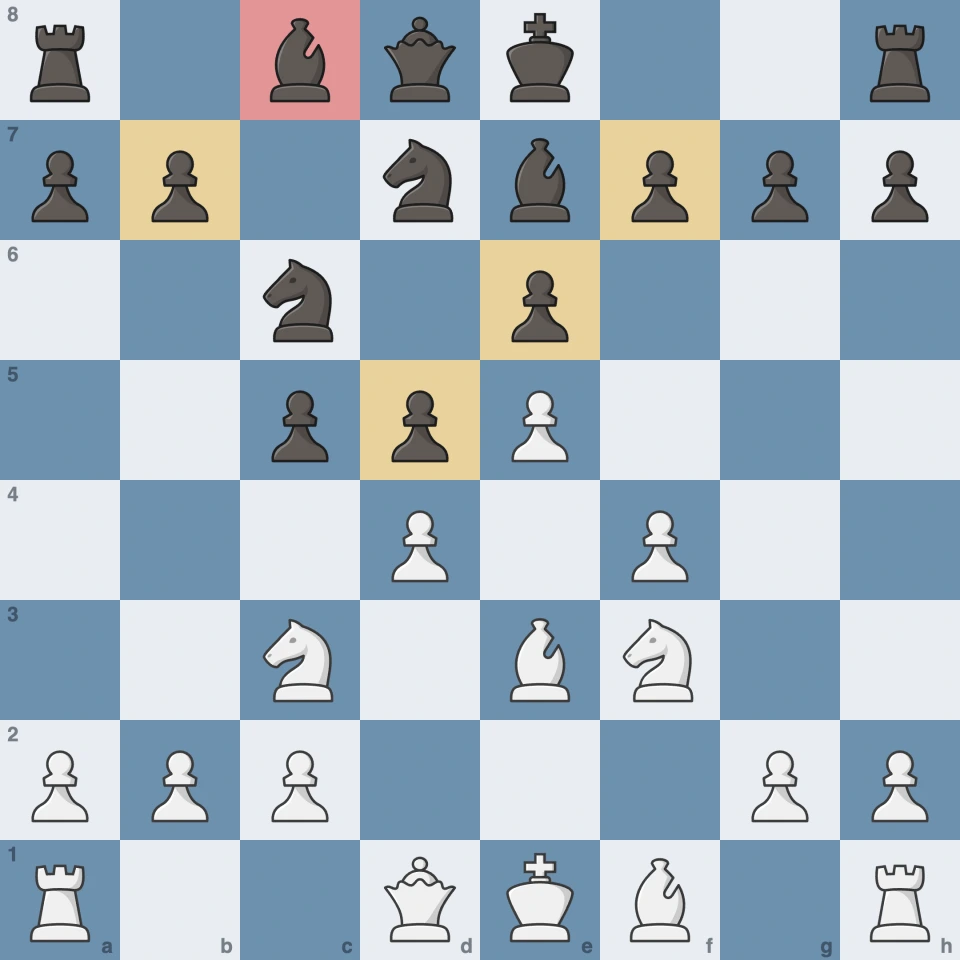
Hence the first practical consequence. With a bad bishop you have two options: trade it, or move the pawns off its colour. The second takes forever and usually isn't available, so strong players swap that bishop at the first chance — happily giving it up for a knight while somebody tells them a bishop is worth more.
A knight is strong exactly where a bishop has no work
The knight is the one piece that doesn't care whether the position is closed: it jumps. In a locked structure, that settles it.
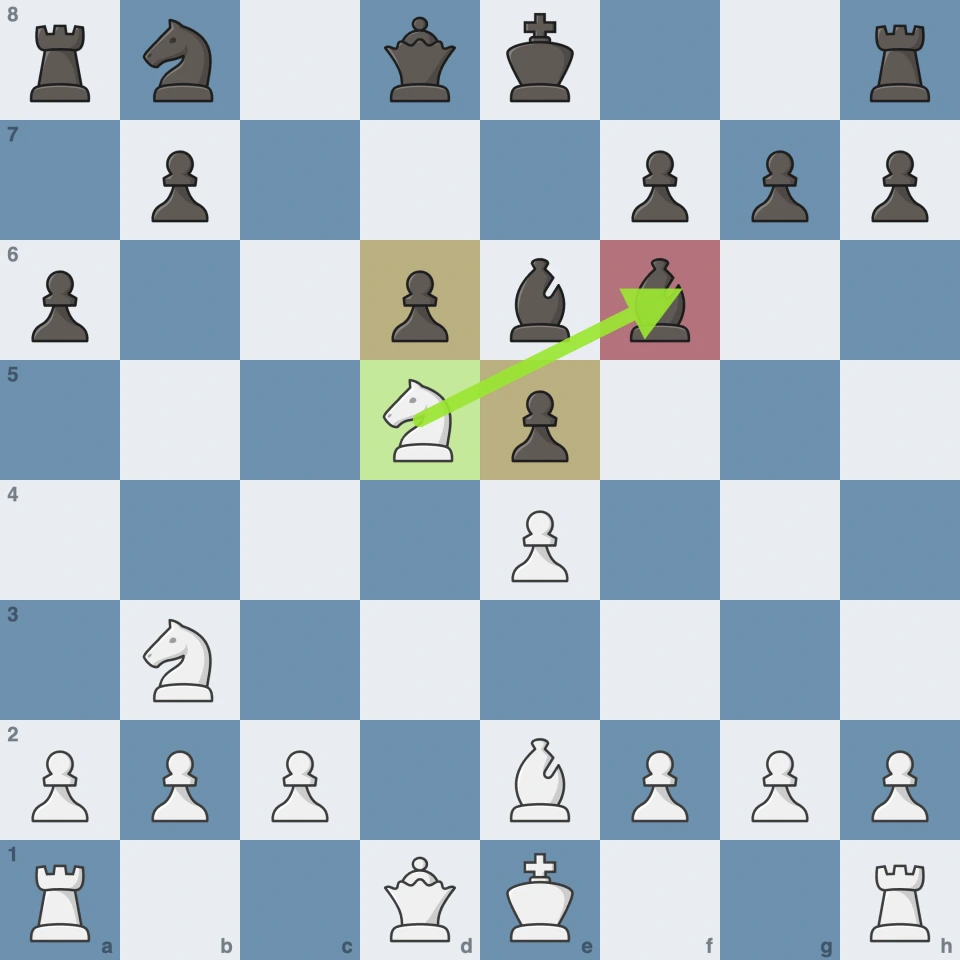
That square is an outpost: a square your opponent can no longer attack with a pawn. A knight on a central outpost beats a bishop almost every time — not because knights are better, but because it has a home and the bishop has no job.
The reverse holds too. Open the position, clear the centre, spread the play to both wings — and the bishop that crosses the board in one move starts beating the knight that needs four hops to get there.
The two-bishop advantage isn't about bishops
"The bishop pair" sounds like a trophy. In truth the pair just patches the weakness each bishop has alone: one covers the light squares, the other the dark ones, and together they rake the whole board. Only if the board is open, though.
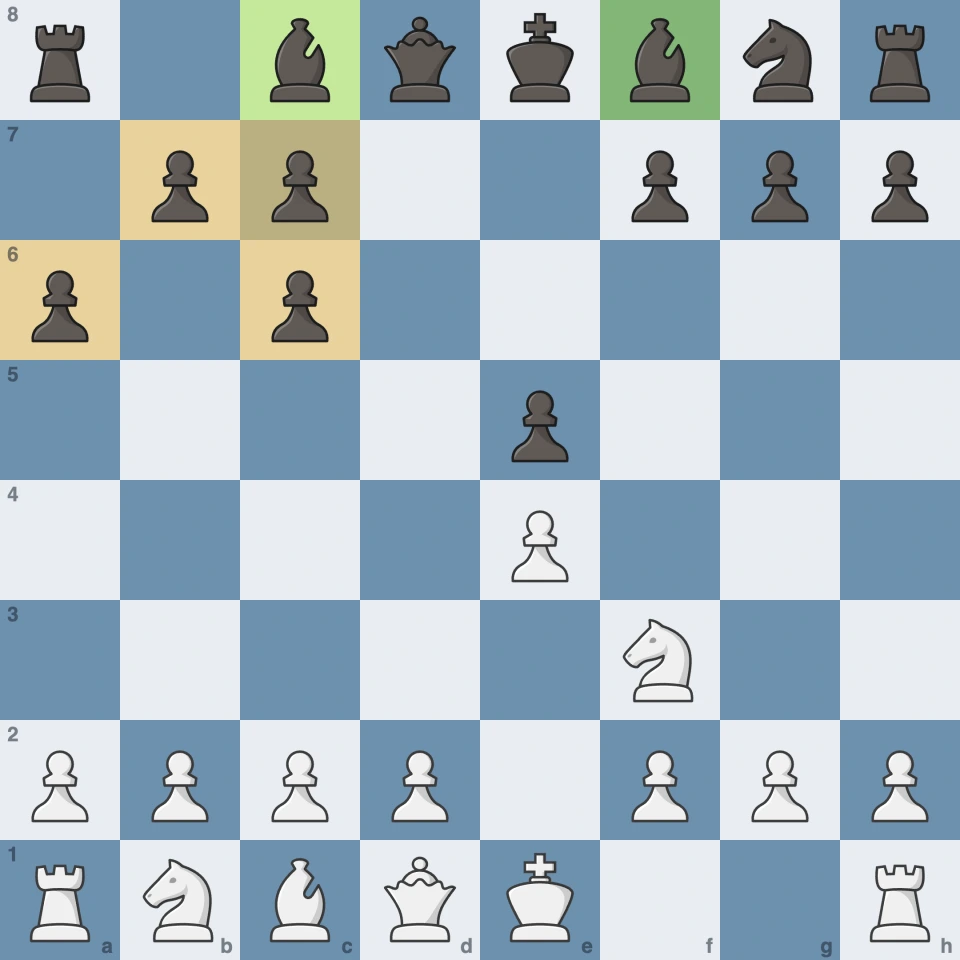
That is the whole argument in one position. Black bought the bishop pair, White bought the better pawn structure. Who is right depends on where the game goes: if the centre opens, Black; if it reaches a pawn endgame, White.
The one-second rule before any trade
When you're deciding whether to trade a knight for a bishop or a bishop for a knight, don't count points. Look at the pawns that will remain after the trade and answer one question: are they on the colour of my bishop's squares, or not?
If your pawns sit on your bishop's colour and can't be moved, the bishop is bad — trade it. If your opponent's pawns sit on his bishop's colour, don't trade: leave him the liability and find your knight an outpost in its shadow.
It takes a second, and it catches the mistake that makes the endgame two points worse an hour later. Pawn weaknesses and piece strength are the same subject viewed from two sides.
What not to do
Don't trade a bishop for a knight "because that's the rule", and don't hoard a bishop "because bishops are better". Both rules are equally blind, and both cost games.
The other classic: don't trade pieces just to "simplify" when you stand worse. Simplifying helps when you're up material; when your structure is bad, every trade walks you towards the endgame where that structure gets punished. The same question — whose pawns are left — decides the queen trade too.
In a 99chess review the coach points at exactly this: not "inaccuracy", but what stayed on the board after the trade and why ten moves later your bishop was chewing on its own pawns.
A knight is not better than a bishop, and a bishop is not better than a knight. The better piece is the one the pawns are built for.