
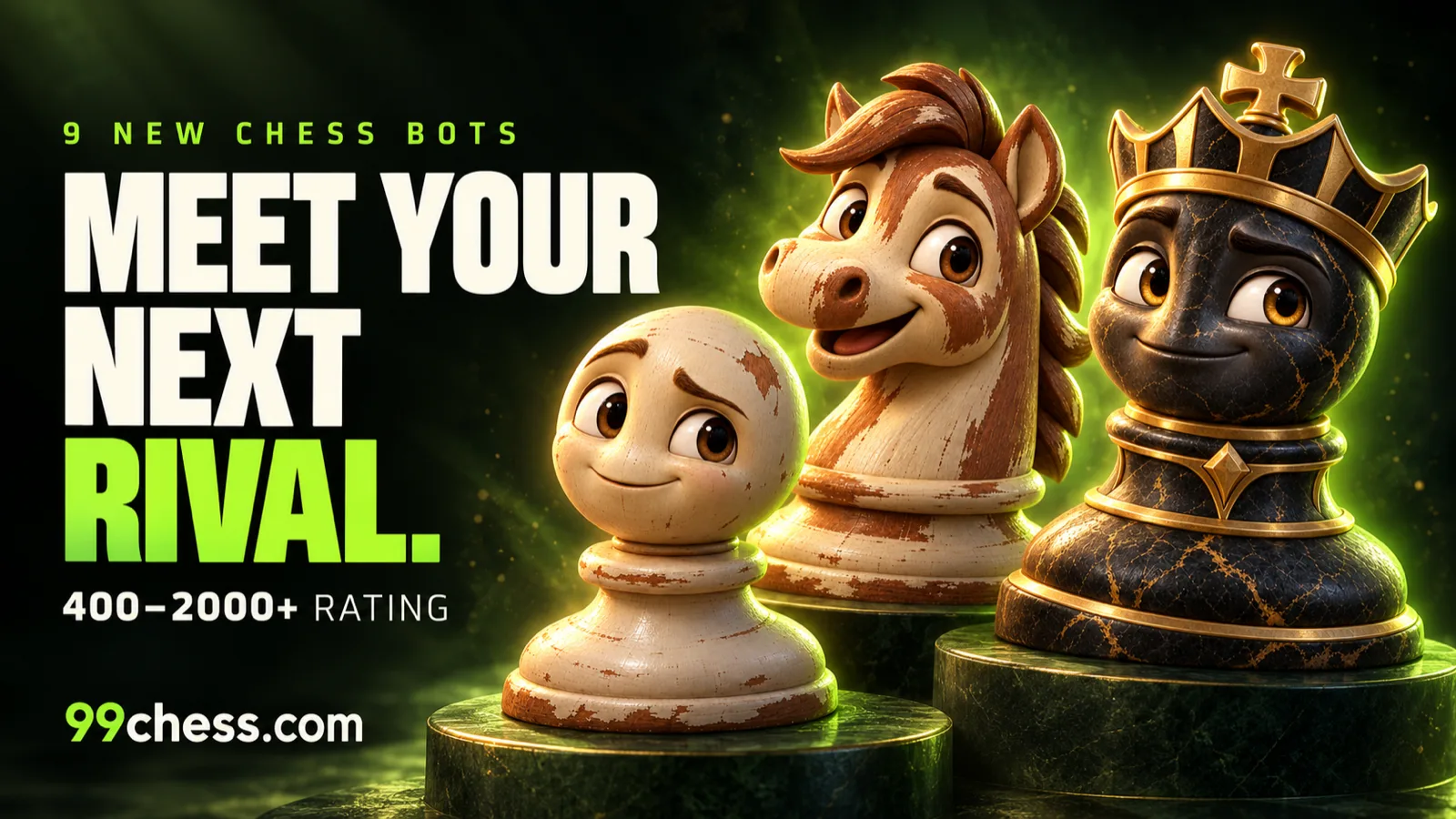
Until yesterday, our default opponent was the “medium” bot. It played at around 1300, and a beginner who had just learned the rules lost the very first game to it, with no chance and no idea why. A lost first game rarely makes anyone want a second one.
So we replaced the three levels, easy, medium and hard, with a ladder of nine chess bots from 400 to 2000+. Each one has a name, a personality and its own way of making mistakes.
Three levels means three cliffs
Easy and medium were almost 500 rating points apart. For a 700 player that’s the gap between “I win easily” and “I have no idea what’s happening.” Real improvement looks different: an opponent slightly stronger than you, you win about half your games, and you move up a step.
The nine bots are spaced roughly 200 points apart, so every step has someone to play on equal terms. We wrote about what actually changes at each step on the way from 800 to 1600 in this article.
Meet the nine rivals

Pip · 400Just learned how the pieces move. Drops a piece about once every ten moves: the perfect first opponent if you learned the rules yesterday.

Hop · 600The default opponent. Quick and cheerful: develops pieces but keeps walking into forks and pins.
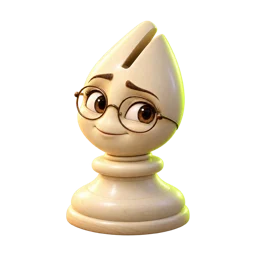
Bea · 800Careful, with round glasses. Won’t give pieces away for free, but rarely sees tactics beyond one move.

Rocky · 1000A wall: solid position, rare blunders. One trap won’t do it, you need a plan.
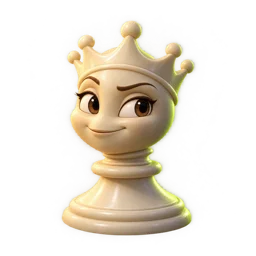
Vera · 1200Confident and sharp: hunts for tactics herself and punishes loose pieces.
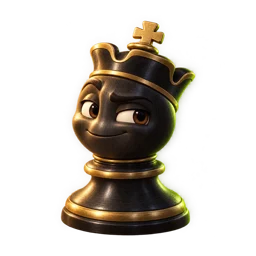
Max · 1400A sly club player. Knows his openings and rarely errs, so you have to earn his mistakes.

Iron · 1600A scarred veteran. Calculates deeper, squeezes positionally, blunders maybe once every few games.

The Professor · 1800A wise old bishop. Plays like a strong club player: he does miscalculate, but you have to pull it out of him.

Zug · 2000+The legend. Almost never errs, and beating him is worth a screenshot.
The bots make human mistakes
Making a weak bot is easy: let it play a random move now and then. But no human plays like that. A beginner doesn’t give the queen away for nothing, and doesn’t walk past a piece hanging right in front of them.
Our bots go wrong differently: they fall for tactics. They miss forks, pins, discovered attacks and in-between moves, exactly what costs real players under 1600 their games. Less often, they don’t notice their own piece is attacked. What they almost never do is hang a piece outright or drop the queen. We ran the bots through dozens of engine games against each other to check the rates: Pip makes a serious mistake roughly once every ten moves, Bea once every thirty-odd, and Zug almost never.
One more detail you’ll notice by the third game: the openings vary more. The bot remembers how it answered you before and doesn’t repeat the same line every time.
If tactics are your weak spot, start with Fork, pin and skewer: these are exactly the tricks our bots fall for, and so do you.
Who to play first
Hop (600) is waiting for you by default. Beat him a couple of times in a row, then move on to Bea. Lost three in a row? Step down; there’s no shame in it, because you learn faster against an equal opponent than against an unbeatable one.
You pick your opponent in the right column, right above the New game buttons; a click opens a grid of nine portraits. On a phone it’s in the settings under the gear icon. If you switch bots mid-game, the new one takes over from the next game.
Nine steps means nine small wins. Start with Hop and see where you stop.