
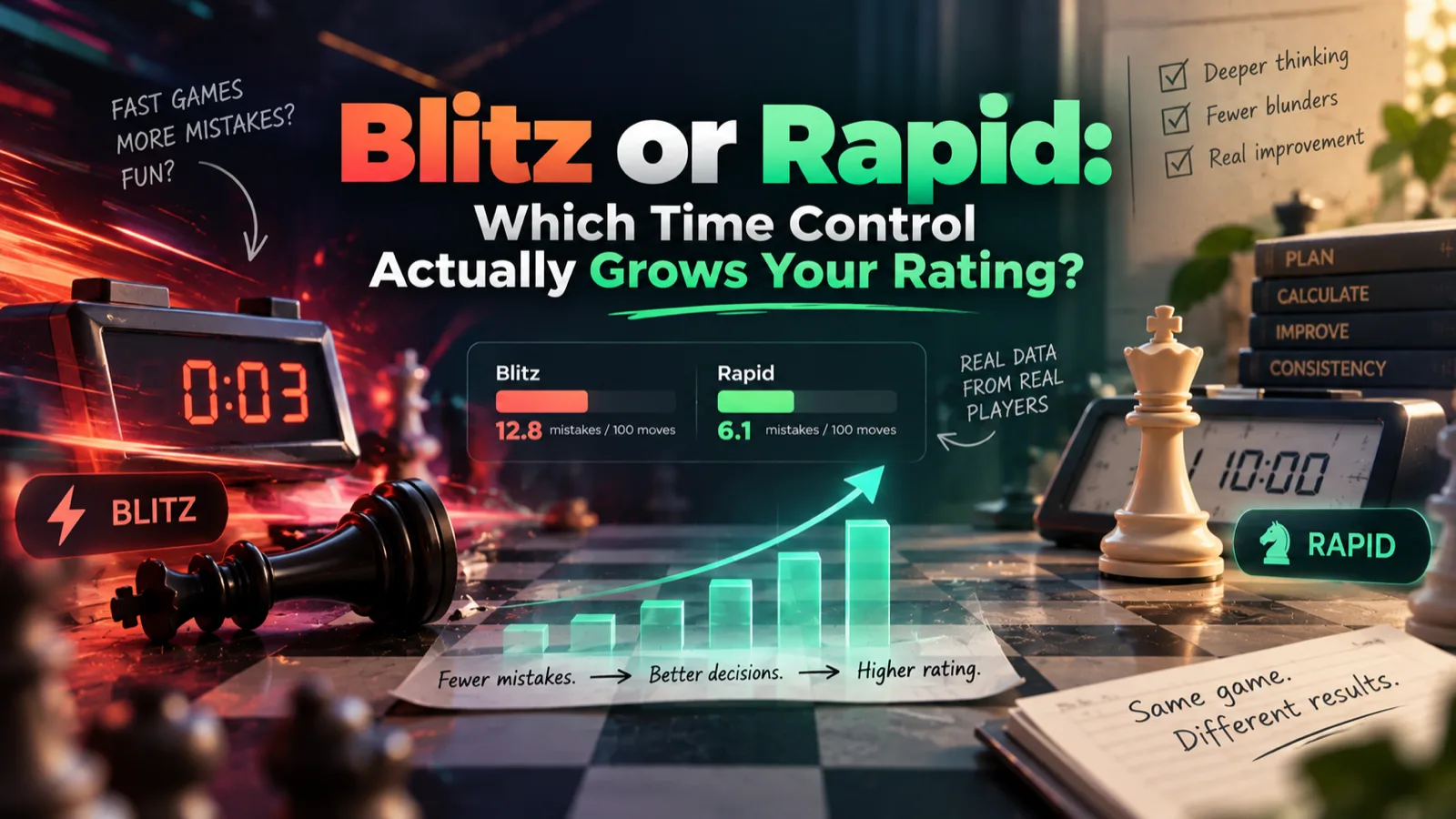
This argument is older than the internet: “play rapid — in blitz you don't think, you just hang pieces.” We decided not to argue but to count: our trainer engine-checks every analysed game, so we know the mistake rate per 100 moves in each time control. We expected to confirm the old wisdom about harmful blitz. We couldn't.
Numbers we didn't expect to see
A fresh slice of the 99chess pool — 98 analysed games, about two thousand engine-checked moves in fast time controls. In blitz our students make 7.8 mistakes per 100 moves; in rapid — 8.0. That's within noise. Now the uncomfortable part: outright blunders were more frequent in rapid — 3.2 per 100 moves against 2.7 in blitz.
The sample is honestly small: 19 blitz games against 40 rapid, and we'll keep updating as the base grows. But note what the myth predicted: blitz losing by miles. It isn't even close.
Why rapid players blunder just as much
We have three explanations, and none of them flatters quick conclusions. First: in rapid, hard positions actually get played out — there's enough time to reach a heavy middlegame and get tired inside it. Blitz often ends earlier, on the flag or a quick crush, before the genuinely difficult decisions arrive.
Second: selection. Blitz attracts players with more games under their belt — their hand doesn't hang the queen on its own. Third: a fifteen-minute game gives you time to think — and time to talk yourself out of a good move. Half the rapid blunders in our reviews come after a long think, when the player convinced themselves.
The debate is asking the wrong question
The takeaway isn't “blitz is fine after all.” It's harsher: the time control by itself doesn't improve anything. In any game you err at roughly the same rate. Your rating moves not where the mistake happens, but where it stops repeating — in the review after the game.
So why does every coach recommend rapid? Because people have a relationship with a fifteen-minute game. They remember it. They regret it. They review it. Nobody reviews twenty blitz games from one evening — they blur into one long click, and by morning nothing is left except minus thirty points. We wrote about that pattern in our piece on learning chess as an adult: binge blitz with zero reviews is the number one eater of adult progress.
The rule: play the control you'll actually review
If you're willing to spend five minutes on a review after the game, that control works for improvement. If not, it's entertainment — which is fine, just don't expect rating from it. In practice: blitz in sets of three with a review of the worst one; rapid one or two games a day, each reviewed; bullet goes honestly into the “rest” column. And take breaks between games, or the only thing left to review will be tilt.
Pool averages are hospital averages. For some players blitz really is a blunder factory; others overthink themselves into mistakes precisely in rapid. The “What to improve” page on 99chess splits your mistakes per 100 moves by time control — bullet, blitz, rapid, classical — from your own games: link your chess.com or lichess account and replace the forum debate with your personal answer.
Your rating doesn't grow in the control where you think longer. It grows in the one you come back to after the game.