
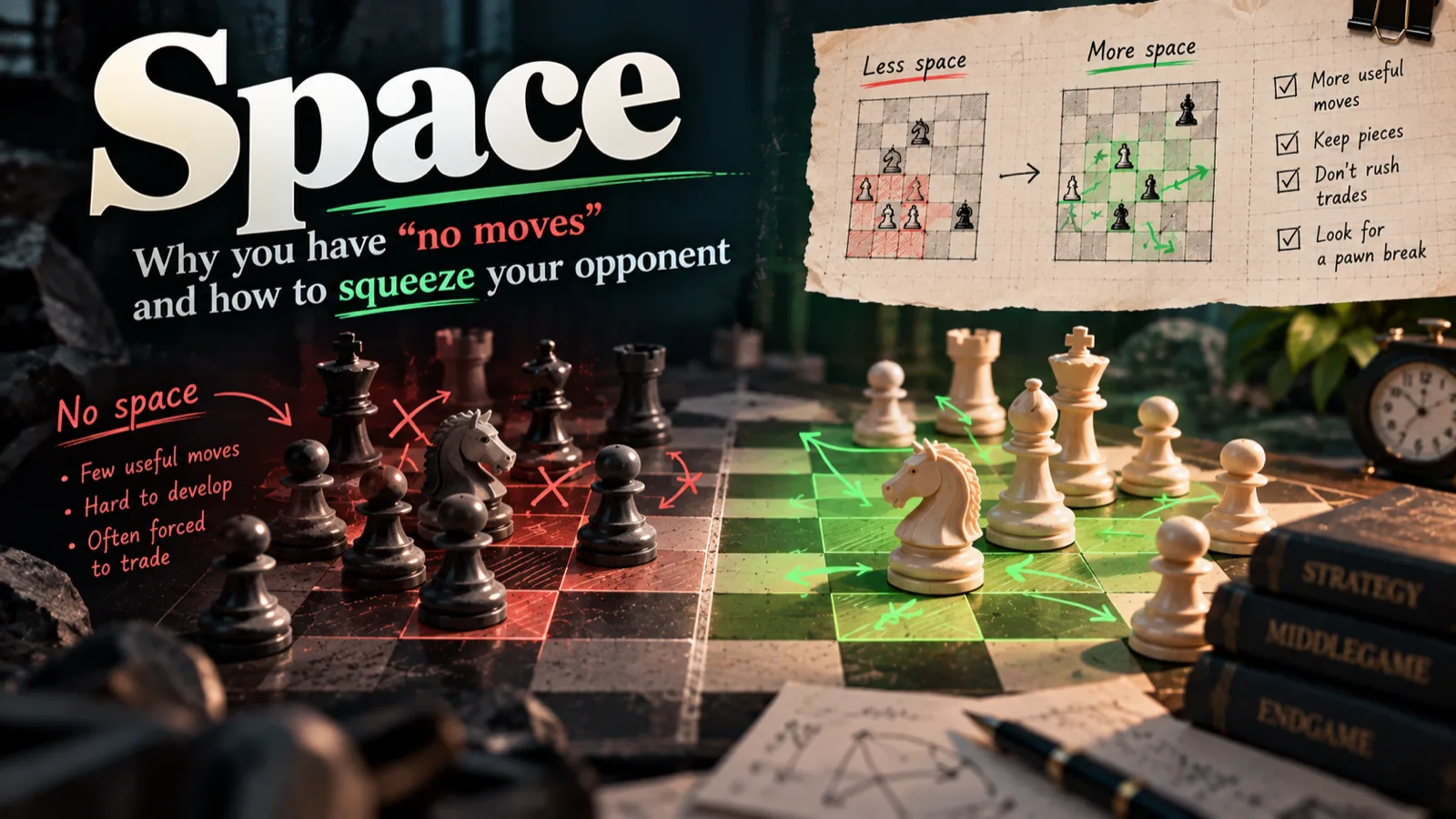
Move seven. Material is level, nothing is hanging — and yet you have no moves. Your knight shuffles between d7 and b8, your c8 bishop stares at its own pawn on e6, and every "normal" move somehow makes things worse. That isn't fatigue or a bad day. It's space in chess, and it comes with an exact number.
Space isn't pawns, it's moves
Books measure space with pawns: whoever has pushed them further owns more of the board. Neat, but useless over the board. Count something else instead — how many useful moves your pieces have. A useful move is a piece move to a square no enemy pawn attacks: you can put a piece there and it won't get kicked away next turn.
Take an ordinary French Defense: 1.e4 e6 2.d4 d5 3.e5 Nd7 4.f4 Be7 5.Nf3 Nh6 6.Bd3 O-O 7.O-O. Black hasn't blundered anything; every move "developed" something. Now count: White's pieces have 17 useful moves, Black's have 9. The c8 bishop has zero. The engine gives White +0.93 with equal material — almost a pawn for space alone.
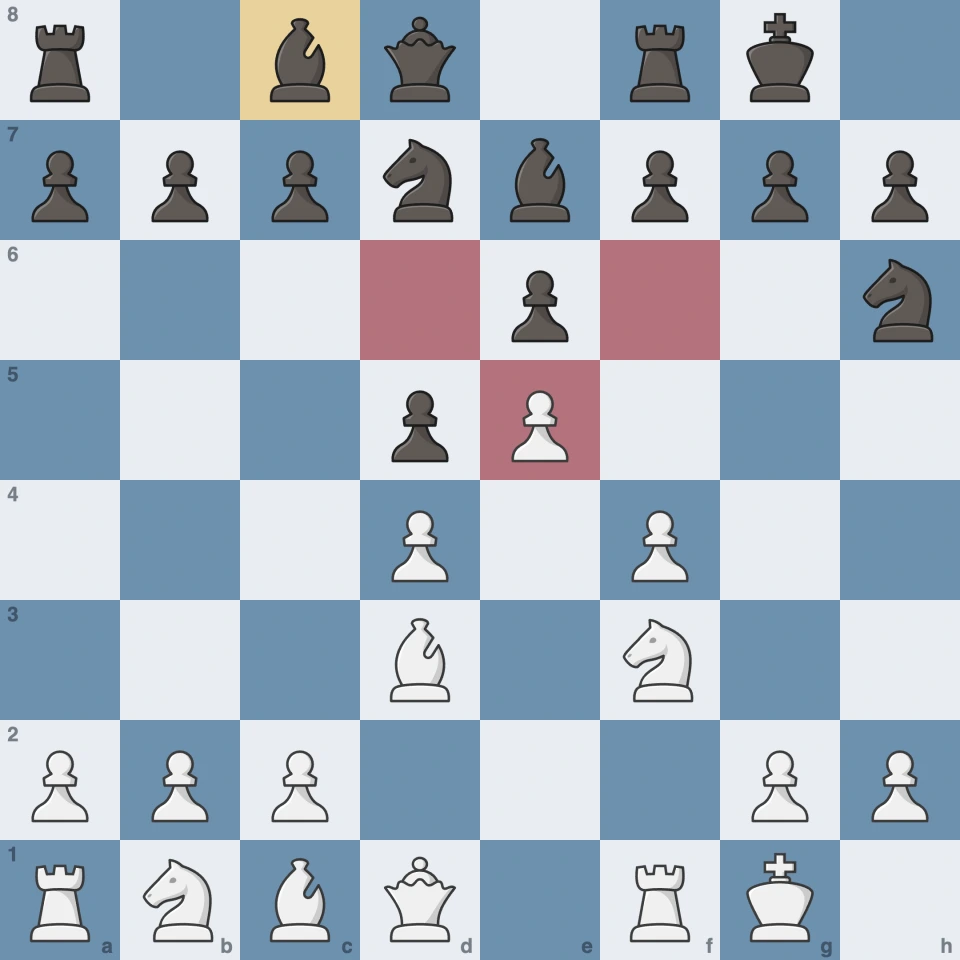
That's where "I have no moves" comes from: plenty of legal moves, hardly any useful ones. The pieces stand two deep and trip over each other like people in a packed elevator.
You can see the squeeze three moves early
This position didn't appear out of nowhere. The alarm went off on move three, when the e5 pawn crossed into Black's half of the board and grabbed two squares. At that moment Black had 12 useful moves. Four quiet moves later there were 9. Each move developed a piece, and each one gave away a little more room.
The rule is short. An enemy pawn in your half plus one of your pieces with zero moves means the squeeze has already started. White needs roughly three moves to reinforce the chain: f4, Nf3, c3. That's your window. If you haven't hit the chain with a pawn by then, you'll spend the rest of the game defending with no room and no plan.
What to do in a cramped position: one pawn break and trades
The cure is a pawn break — a pawn move that strikes at the base of the enemy chain. In the French it's c7–c5, hitting d4. In the diagram position the engine rates it as Black's best move, with f7–f6 next. After c5 the knight gets c6, the queen gets b6, and the pressure on d4 ties White's pieces to defense.
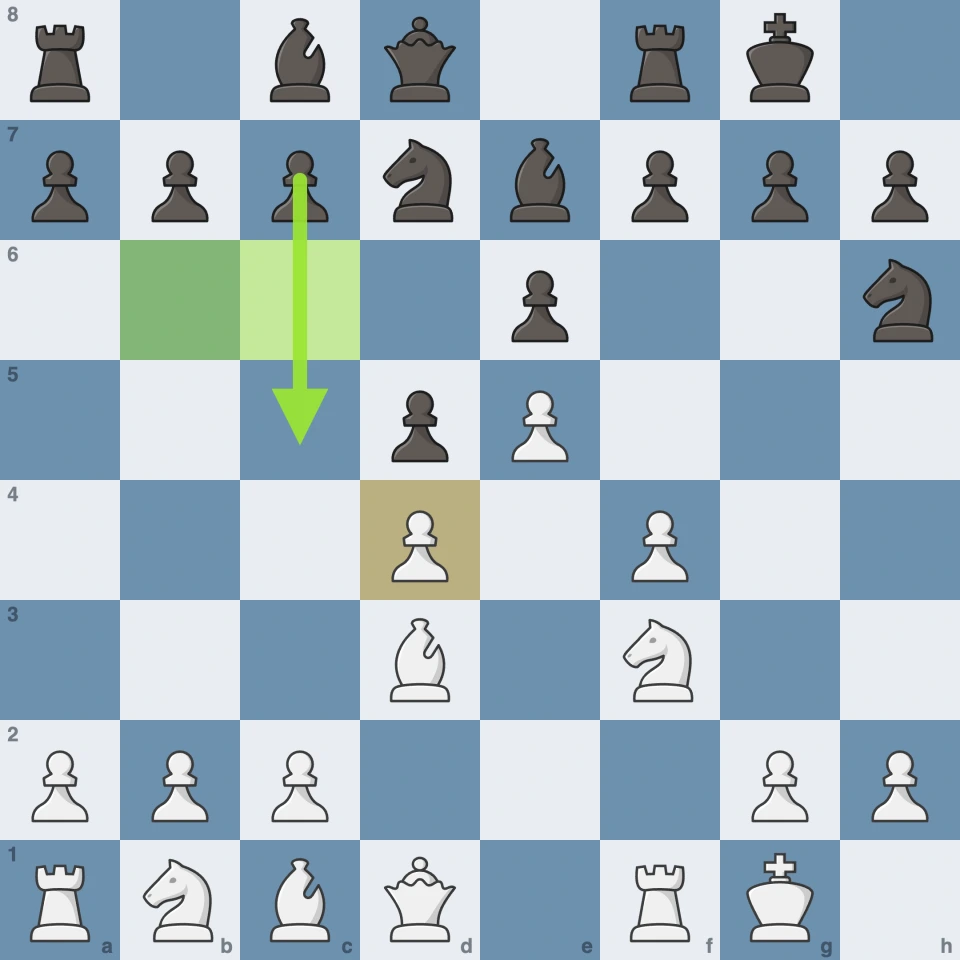
The numbers show how much it matters. If Black plays c5 right away — 3...c5 4.c3 Nc6 5.Nf3 Qb6 6.Bd3 cxd4 7.cxd4 Bd7 — the two sides have 23 and 22 useful moves and the evaluation is a flat 0.00. Same pawn center, same pieces, no squeeze.
The cramped side's second tool is trading. Fewer pieces means more squares each. But trade with purpose: first the enemy piece that holds the clamp, and your worst piece, not your best. The c8 bishop is a textbook bad bishop, walled in by its own pawns; swapping it for White's active bishop is half the liberation already. And a break always aims at the base of the chain — which weaknesses it creates for your opponent and which for you is covered in our piece on pawn weaknesses.
How to squeeze: don't trade, don't hurry
Now flip the board. You're White, you have the space, and Black has finally played 7...c5. The temptation is obvious: I have room, so I should attack. The engine disagrees.
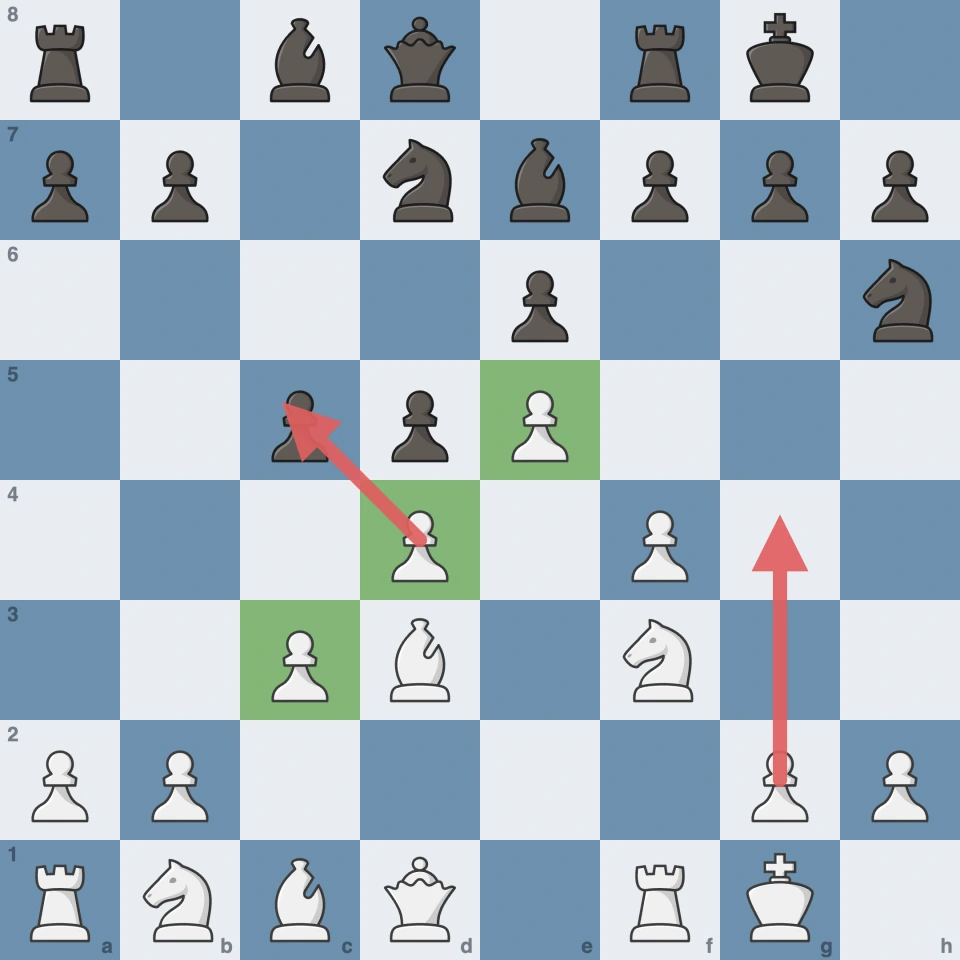
The best move is the modest 8.c3: prop up the chain and trade nothing. The edge stays at +0.98. The attack 8.g4 looks scary, but it's an attack that isn't there: the evaluation drops to +0.19, your own king is exposed and the center is still under fire. The trade 8.dxc5 is worse still — White hands the knight the c5 square and the evaluation goes negative, −0.23.
So here's the rule for the side with the space advantage. Keep the pieces on, hold the chain, and take away your opponent's pawn breaks. There's no rush: every move they spend without useful moves works for you. The attack will come by itself once they run out of decent moves. Until then the plan isn't "charge the king" but an answer to the question of what the fight is about — how to find it is in How to make a plan in chess.
One number instead of a feeling
Next time you have "no moves", don't hunt for a move — count squares. How many useful moves do your pieces have, and how many do theirs? If you have fewer, look for a break and for trades. If you have more, don't trade and don't hurry.
By the way, in the first diagram position our trainer's hint won't show you c5. Its first step only says: "The key is a pawn move: think about the center and space." Finding the break is your job — and that's exactly the part you remember later.
Space isn't territory, it's choice. Once you've taken your opponent's choices away, there's nothing left to hurry for.