
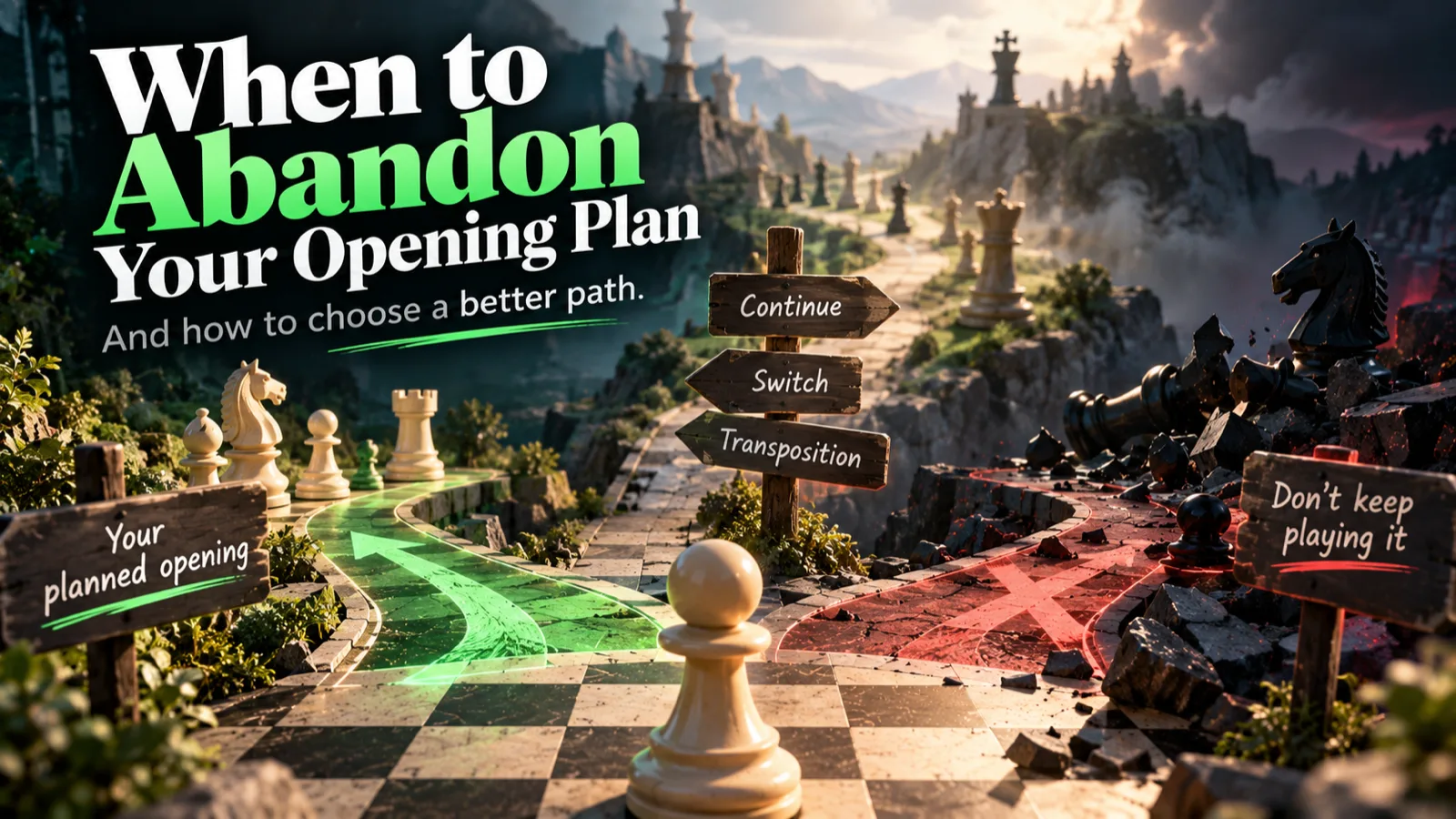
You learned the Italian Game: e4, knight to f3, bishop to c4, then c3 and d4 — the centre is yours. Two moves go exactly to plan. On the third, your opponent plays something that wasn't in the video, you play c3 from memory — and a moment later your e4 pawn is gone. You didn't forget anything. The opening simply ended before you noticed.
Here's the key thing about when the opening ends: it doesn't end on move ten. It ends the moment your opponent takes away whatever your setup was standing on. Sometimes that's move fifteen. Sometimes it's move three.
An opening is a set of jobs, not a list of moves
Every opening has three jobs: get your pieces out, fight for the centre, tuck your king away. The Italian is one way to do those jobs — a way that assumes certain replies. While your opponent plays "by the book", the setup's moves do the jobs. When they play something else, the very same moves can start undoing them.
So the real question isn't "what's the next move in my opening?" but "does my setup still work in this position?" Three warning signs answer it. All three come from the same Italian Game.
Sign one: they attack something your setup took for granted
The Italian quietly assumes the e4 pawn is safe — no need to defend it, so White can spend a move on c3 to prepare d4. But after 1.e4 e5 2.Nf3 Nc6 3.Bc4, Black can play 3...Nf6, and the knight hits e4 straight away.
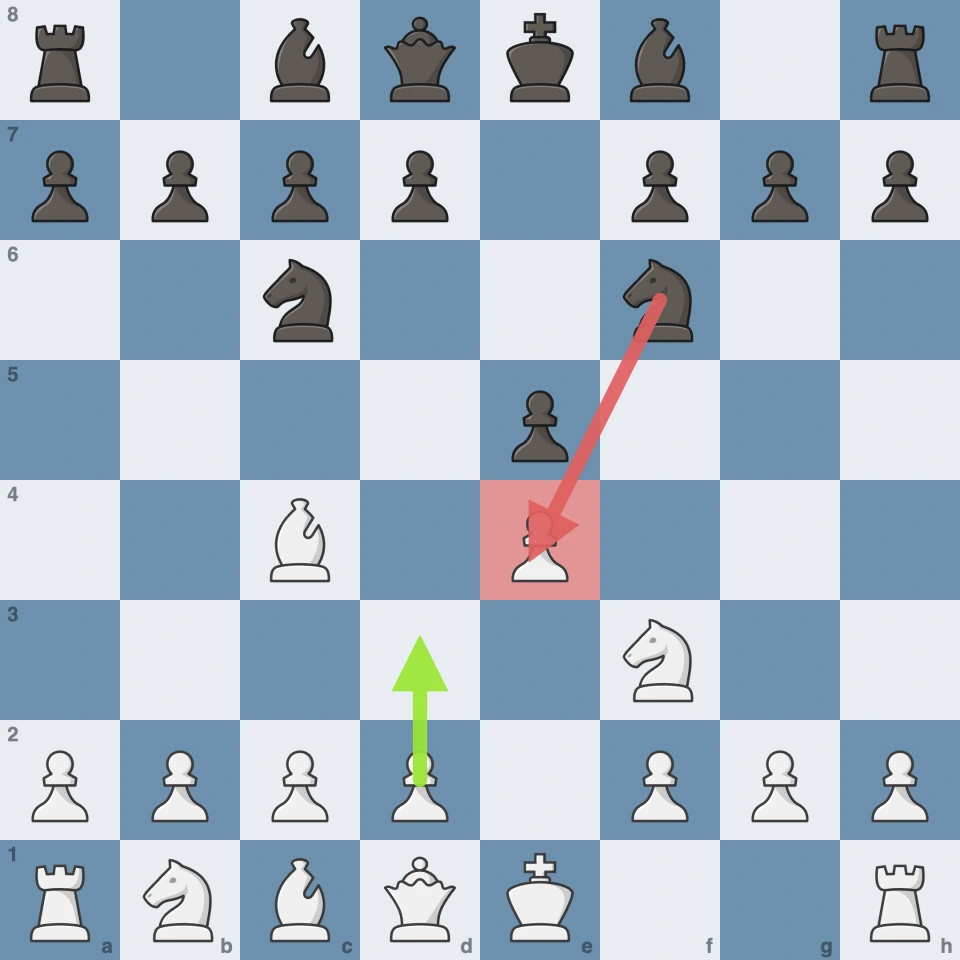
Play 4.c3 "by the setup" and Black just takes: 4...Nxe4. The engine gives Black about eight tenths of a pawn — not a disaster, but you handed over a pawn for a move that does nothing. The right move is 4.d3: protect e4 and push the c3-d4 plan back a couple of moves.
The rule is simple: after every opponent move, ask whether something of mine just came under attack. If it did, the setup goes on pause until that's covered.
Sign two: a strange move that invites you to grab
Sometimes your opponent plays a move that isn't in any of your videos. Say 3...Nd4: the knight jumps to the centre and the e5 pawn is left hanging. Your hand reaches for 4.Nxe5 all by itself — "they just dropped a pawn".
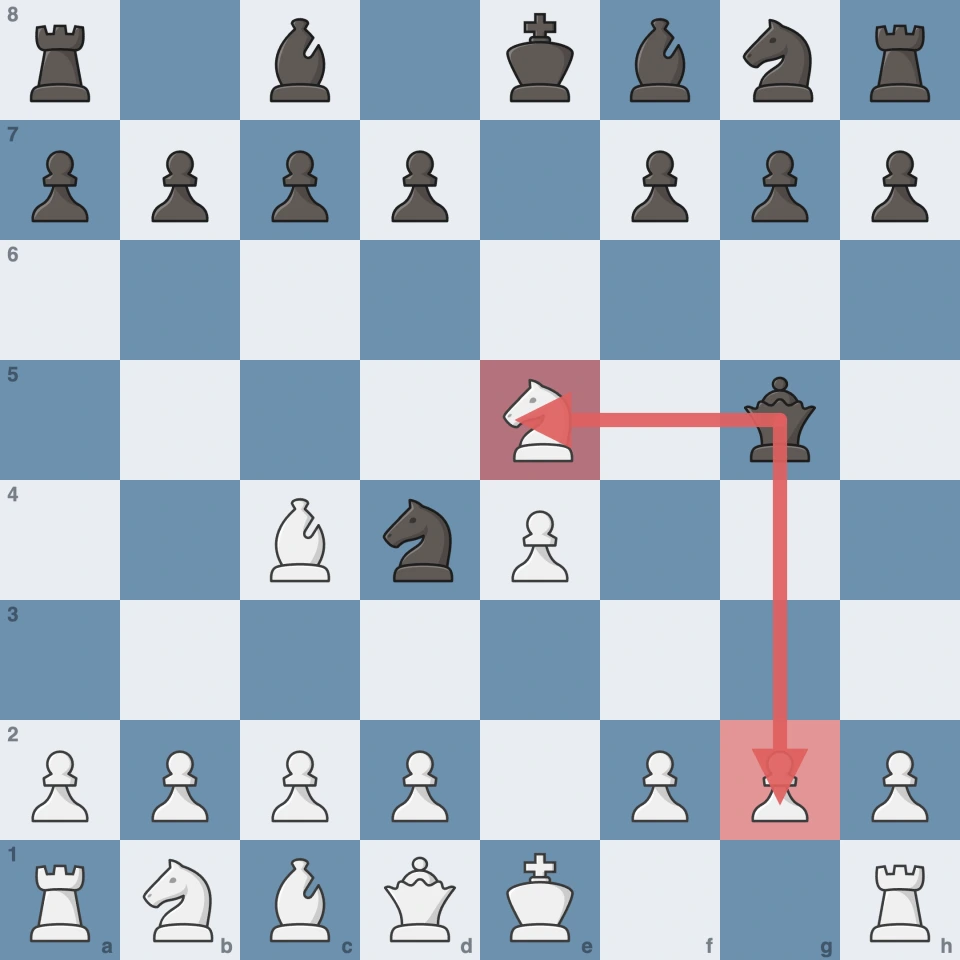
After 4...Qg5 the queen attacks the knight and g2 at once, and White has to give something back. Skip the greed — play 4.Nxd4 or simply castle — and White is roughly a full pawn better. More on positions like this in our piece on opening traps.
The lesson here differs from sign one. The setup isn't broken — your composure is. An unfamiliar move isn't a reason to punish it right away. It's a reason to look at what changed.
Sign three: they're playing a different opening altogether
You planned the Italian, and your opponent answers 1.e4 with 1...c5. That's the Sicilian. If you stubbornly stick to the plan — 2.Nf3 Nc6 3.Bc4 — nothing terrible happens, but nothing good does either: Black plays e6 and d5, and your bishop runs into a wall of pawns.
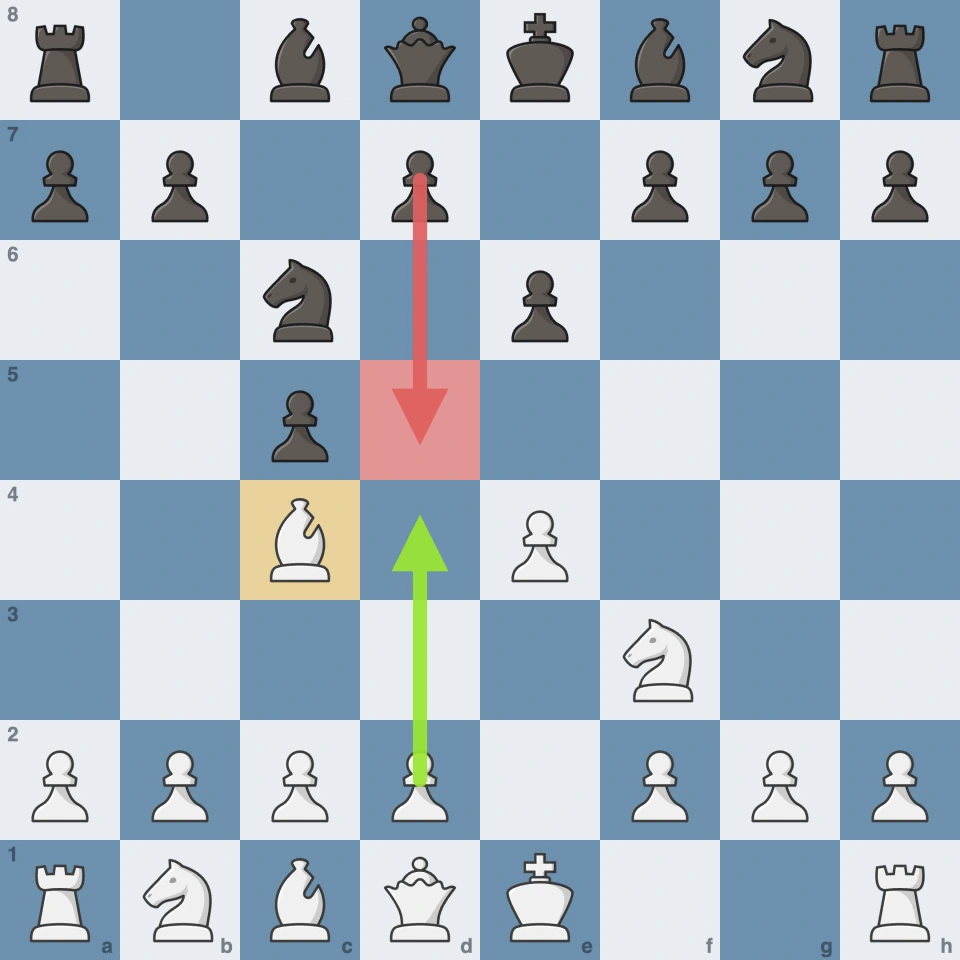
This is the most common case for beginners: the setup is technically playable, but its idea is gone. The Italian lives on pressure against f7 down an open diagonal. Against the Sicilian there's no such diagonal — so there's no point putting the bishop there. The opening ended on move one, and from here on it's the opening's jobs that guide you, not the setup's moves.
What to do once your setup is over
You don't need to know the theory. You need three questions, in this order:
- What did their last move change? What does it attack, which square did it take, what did it open?
- Which opening job haven't I finished? Pieces still at home, king in the centre, an empty centre.
- Which move finishes that job without giving anything away? Usually a developing move, castling, or defending whatever got attacked.
That order is a compact version of what we wrote about in how to make a plan in chess. And if you want an opening that's harder to knock off course, look at the London System: its setup barely depends on what your opponent does.
One habit saves a lot of games: once your opponent is "out of book", don't try to drag the game back into it at any cost. A move from the video played in the wrong position isn't an opening anymore. It's a hope.
The "This is what people play here" panel under the board, in games against the bot, helps you see that your opponent's move isn't exotic. It shows what players at your rating play in this exact position and how those games turn out. Often the "weird" move turns out to be an ordinary side line people at your level play all the time — and you can see straight away which reply has stood the test of practice.
The opening doesn't end when you run out of memorised moves. It ends when your opponent decides they don't like your setup.