
CHESS BLOG
99Chess Blog
Practical ideas. Real improvement.
What is new in the trainer: releases, deep dives and the calls we make
Latest articles · page 2
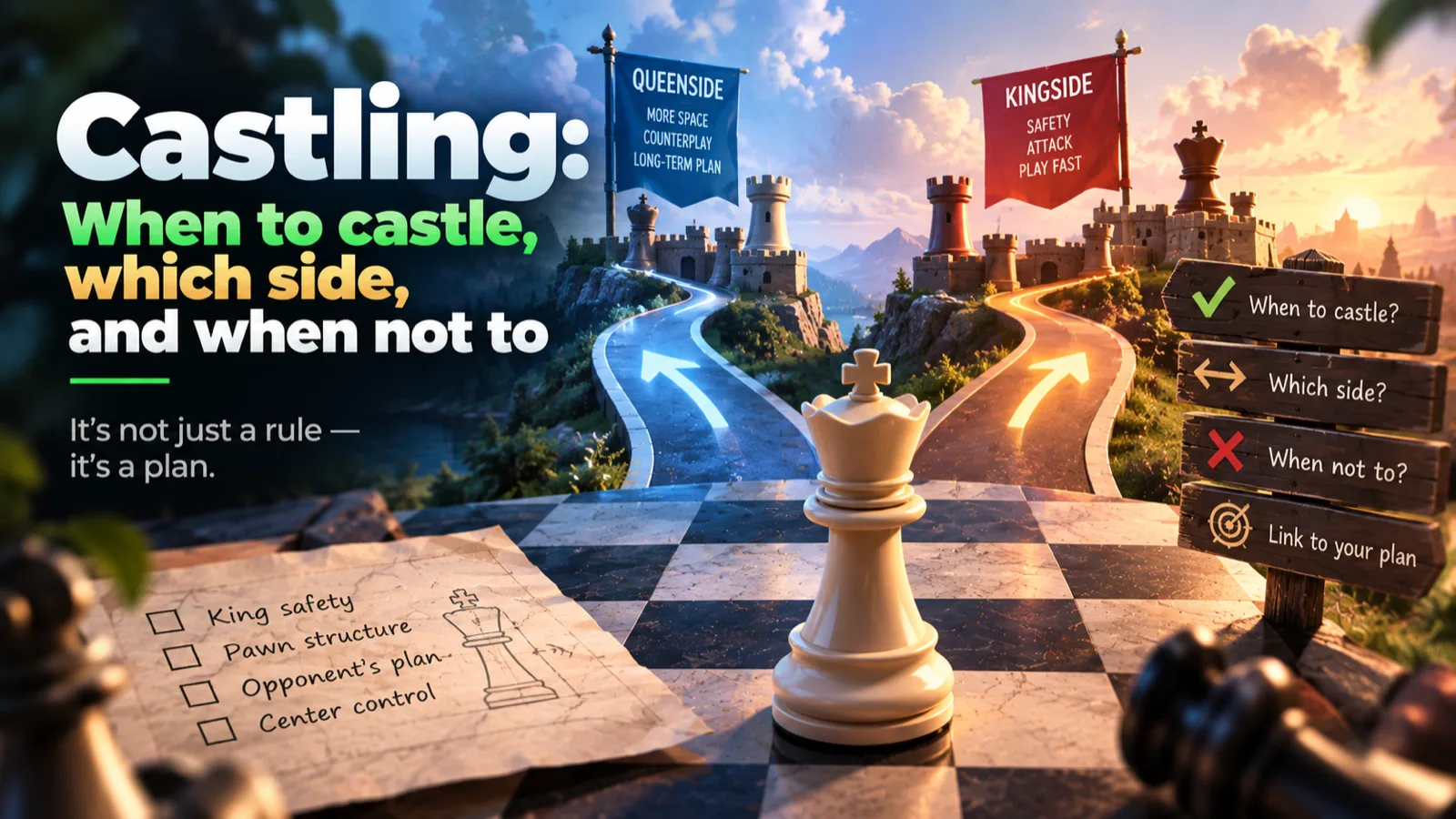 When to Castle in Chess: Kingside or Queenside — and When You Shouldn'tCastling isn't table manners — it decides where your king lives and which pawns get to attack. When to castle, how to pick kingside or queenside, and why the stuck-in-the-centre king is the most expensive pattern between 800 and 1400.Русский · Bahasa Indonesia · Português
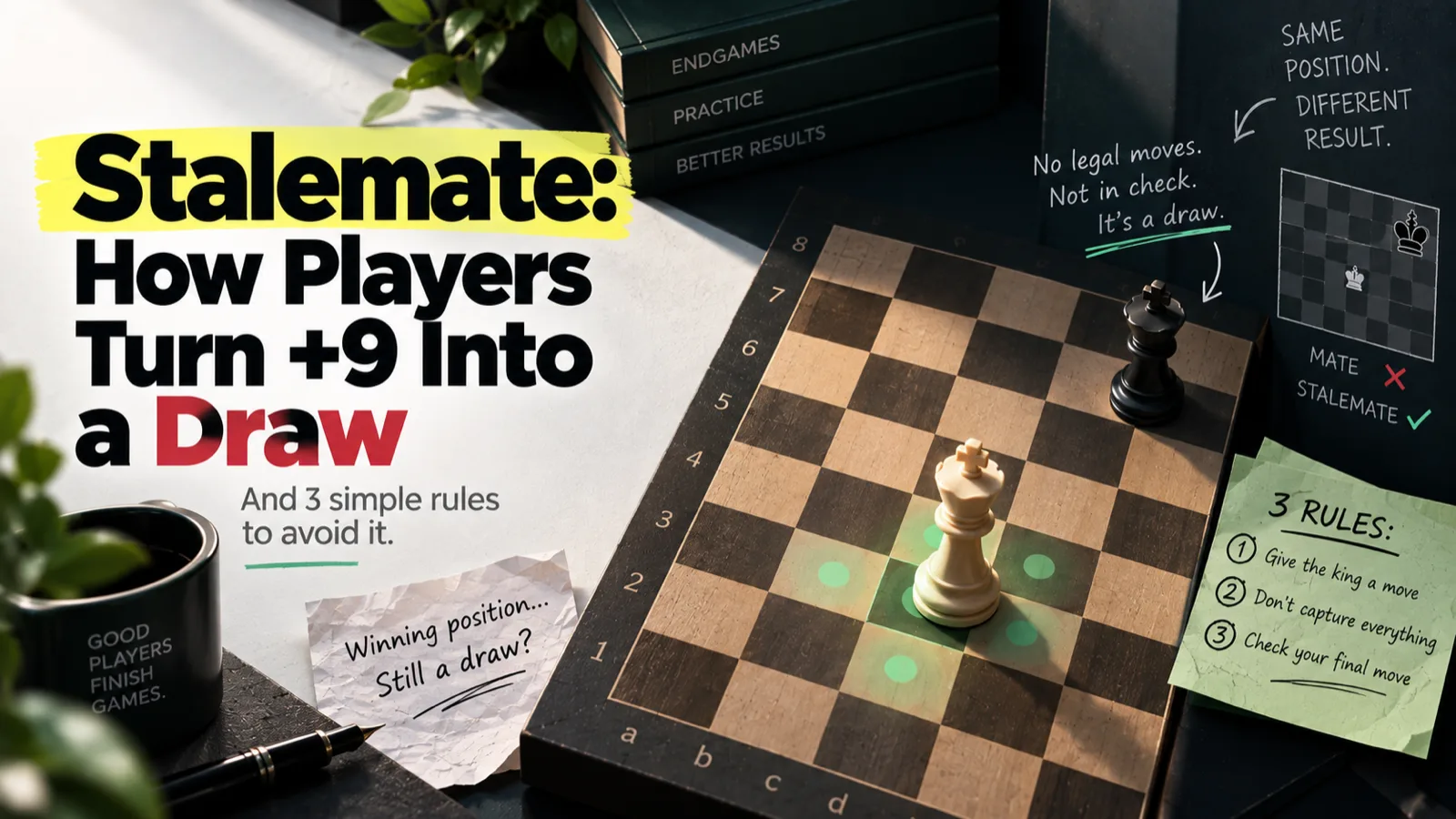 Stalemate in chess: how players turn +9 into a draw — and three rules that stop itStalemate means your opponent has no legal move and no check — a draw, no matter how crushing your advantage. Why stalemate almost always punishes the winning side, the two classic traps, and three rules that close the leak for good.Bahasa Indonesia · Русский · Português
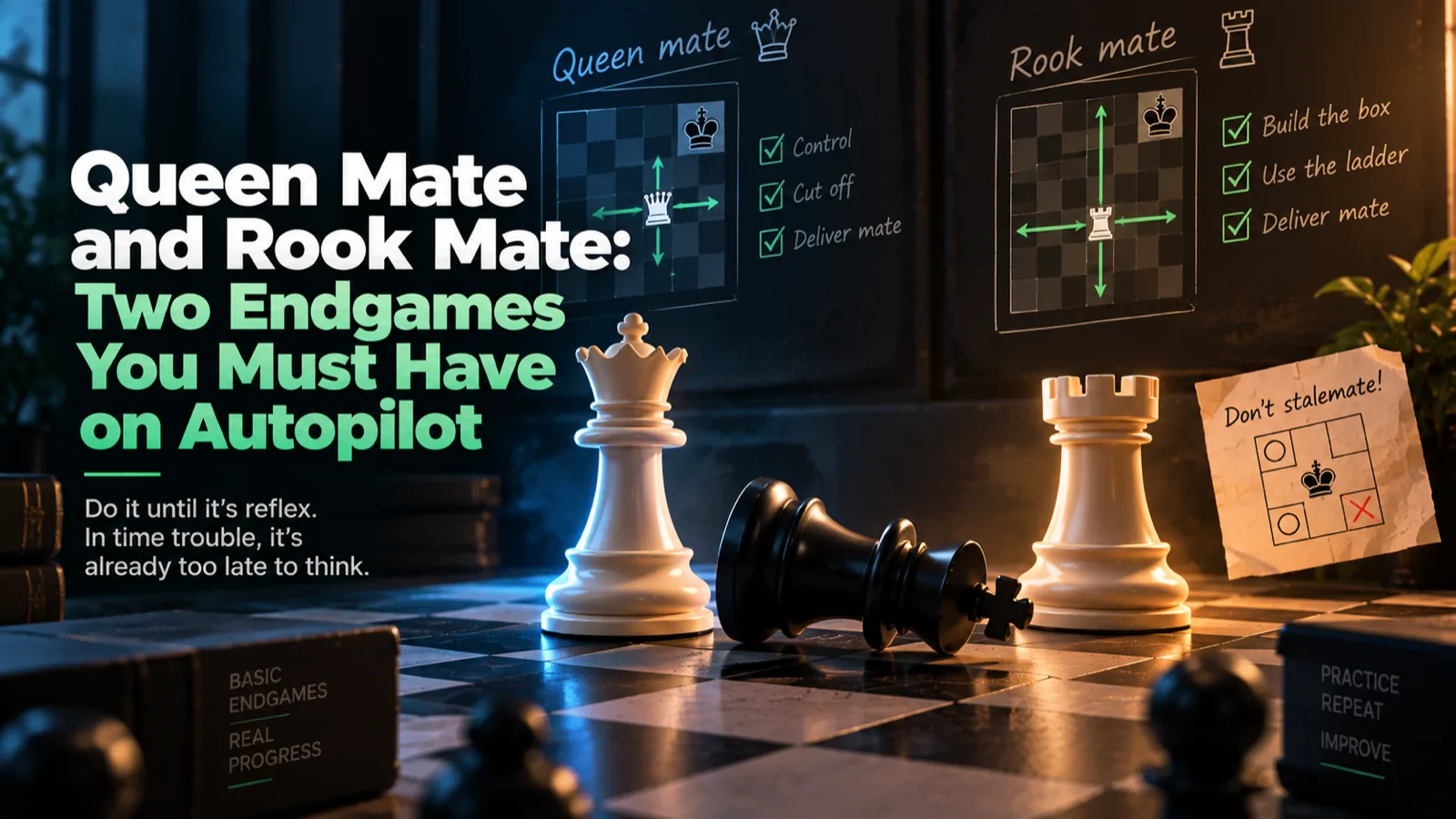 How to checkmate with a queen or a rook — and why it must run on autopilotAn extra queen, thirty seconds on the clock — and instead of a win, stalemate. The knight-distance method for the queen mate, the box method for the rook, the two classic stalemate traps, and a simple drill to make both mates automatic.Bahasa Indonesia · Русский · Português
 Chess Opening Traps Win Games — and Ruin PlayersTrap openings buy rating on credit: quick points off opponents who don't know the line, and a hard ceiling the day they do. How traps quietly rewire your thinking, what separates a cheap trick from a real problem, and how to quit.Русский · Bahasa Indonesia · Português
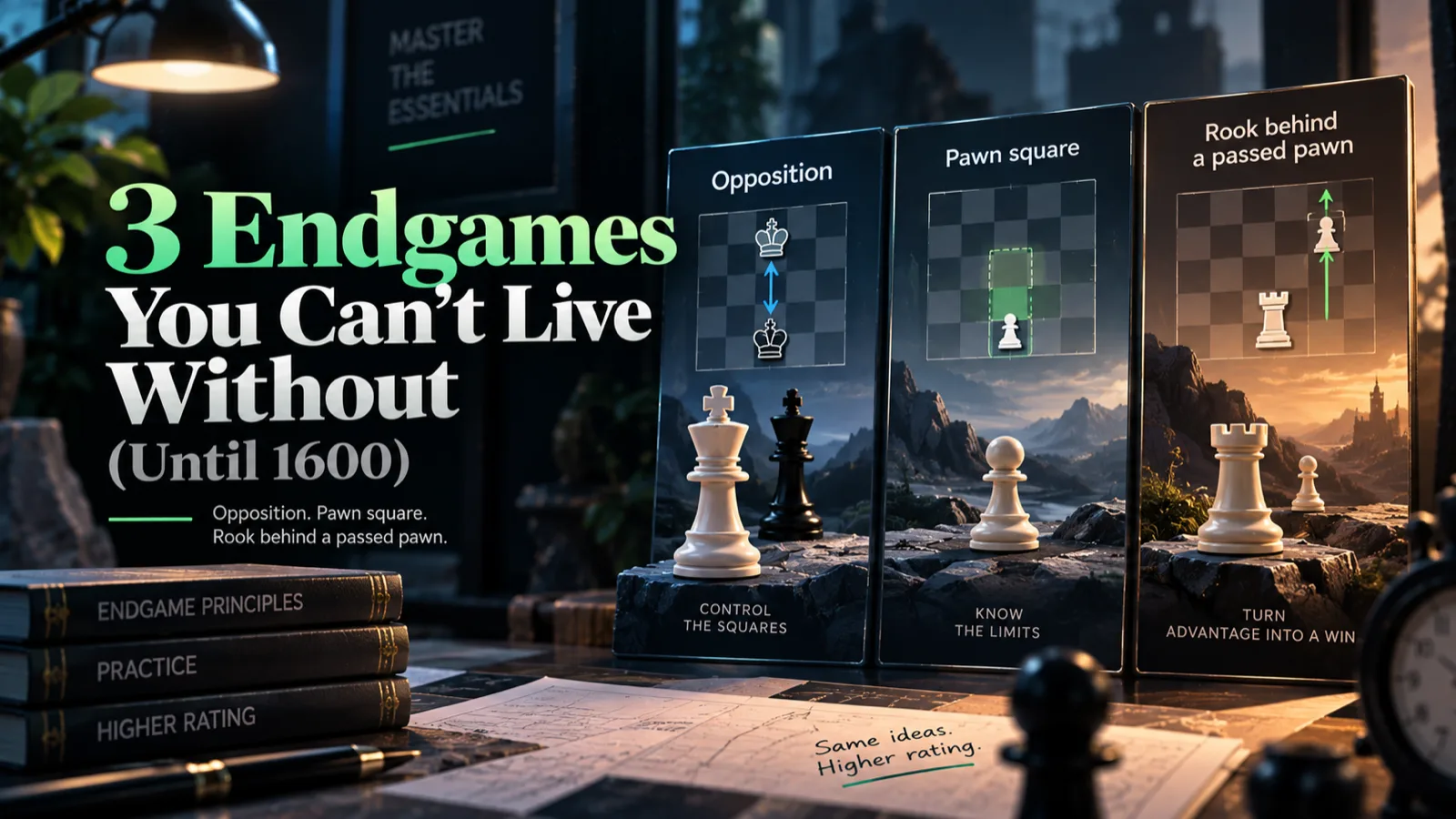 The Three Endgames You Can’t Live Without Below 1600: Opposition, the Square, Rook Behind the PawnWon games below 1600 die in the endgame — and almost always on the same three stones. The opposition, the rule of the square, and “rooks belong behind passed pawns”: one sentence-sized rule each, with the typical mistake and how to apply it at the board.Русский · Bahasa Indonesia · Português
 How Many Chess Puzzles a Day You Actually Need — and Why Our Daily Goal Is 12, Not 50A chess.com user solved 50 puzzles a day for 58 straight days — and gained zero rating. Volume is not the formula: three limiters — concentration, the forgetting curve, and habit survival — and how a real daily number falls out of them.Русский · Bahasa Indonesia · Português
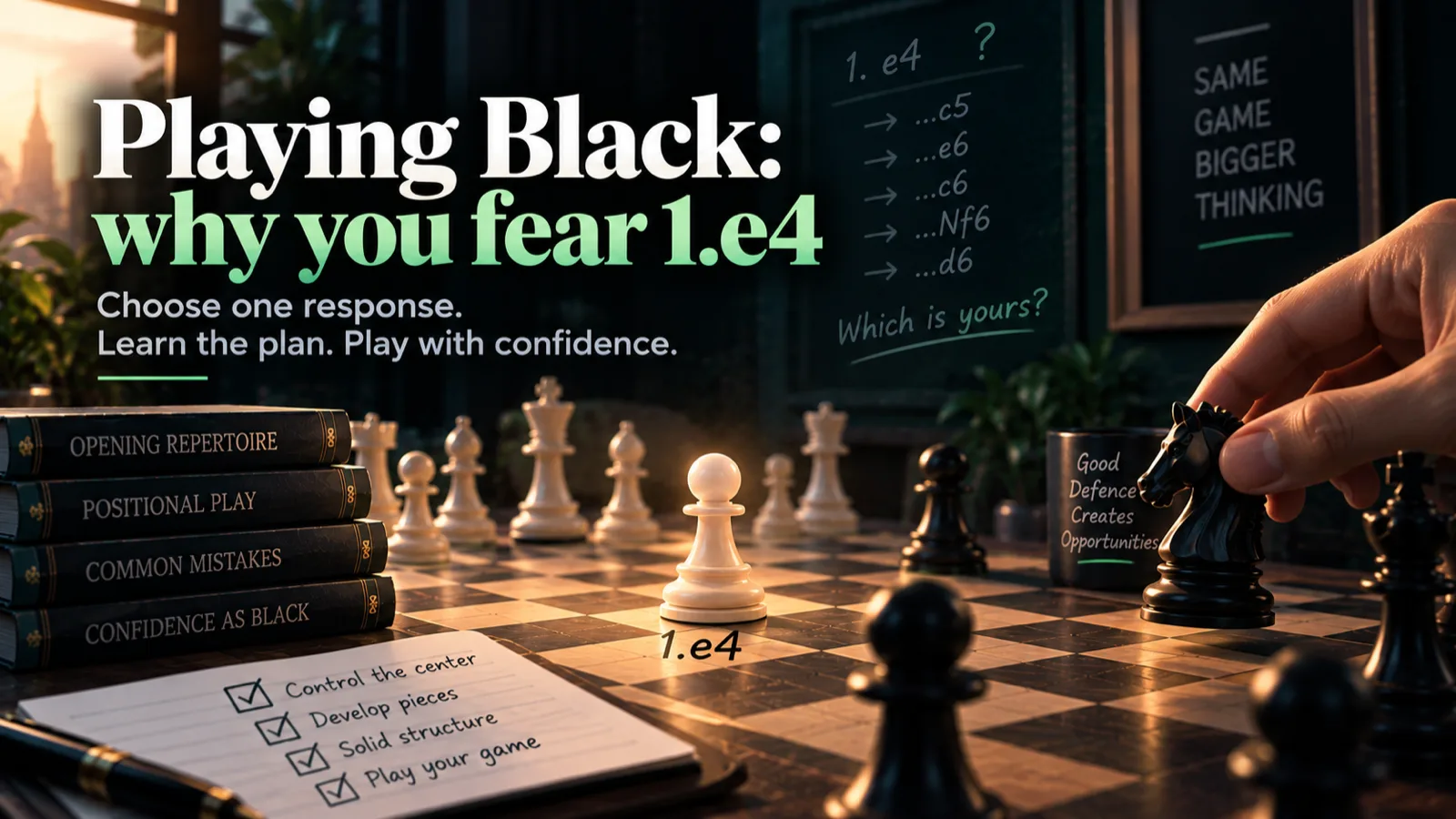 Playing Black: Why 1.e4 Scares You — and the One Answer That Fixes ItHalf of your games are with the black pieces, and most players prepare for them exactly zero minutes. Why the fear of 1.e4 is not cured by “top 5 defenses” lists, how to pick one answer instead of a menu — and the setup that covers 1.e4 and 1.d4 at once.Русский · Bahasa Indonesia · Português
 Loose Pieces Drop Off: the Undefended Piece Is a Time BombThe dangerous piece is not the attacked one — it is the undefended one. Forks and pins do not create your weakness, they find one ready-made. The LPDO rule, a three-second scan before every move, and the four squares where the bomb usually sits.Русский · Bahasa Indonesia · Português
 When to Trade Queens: One Rule Instead of a ChecklistDeciding when to trade queens takes one question, not a four-factor checklist: who is attacking? The rule, what an extra pawn has to do with it, and the three mistakes we see most often in real game reviews.Русский · Bahasa Indonesia · Português
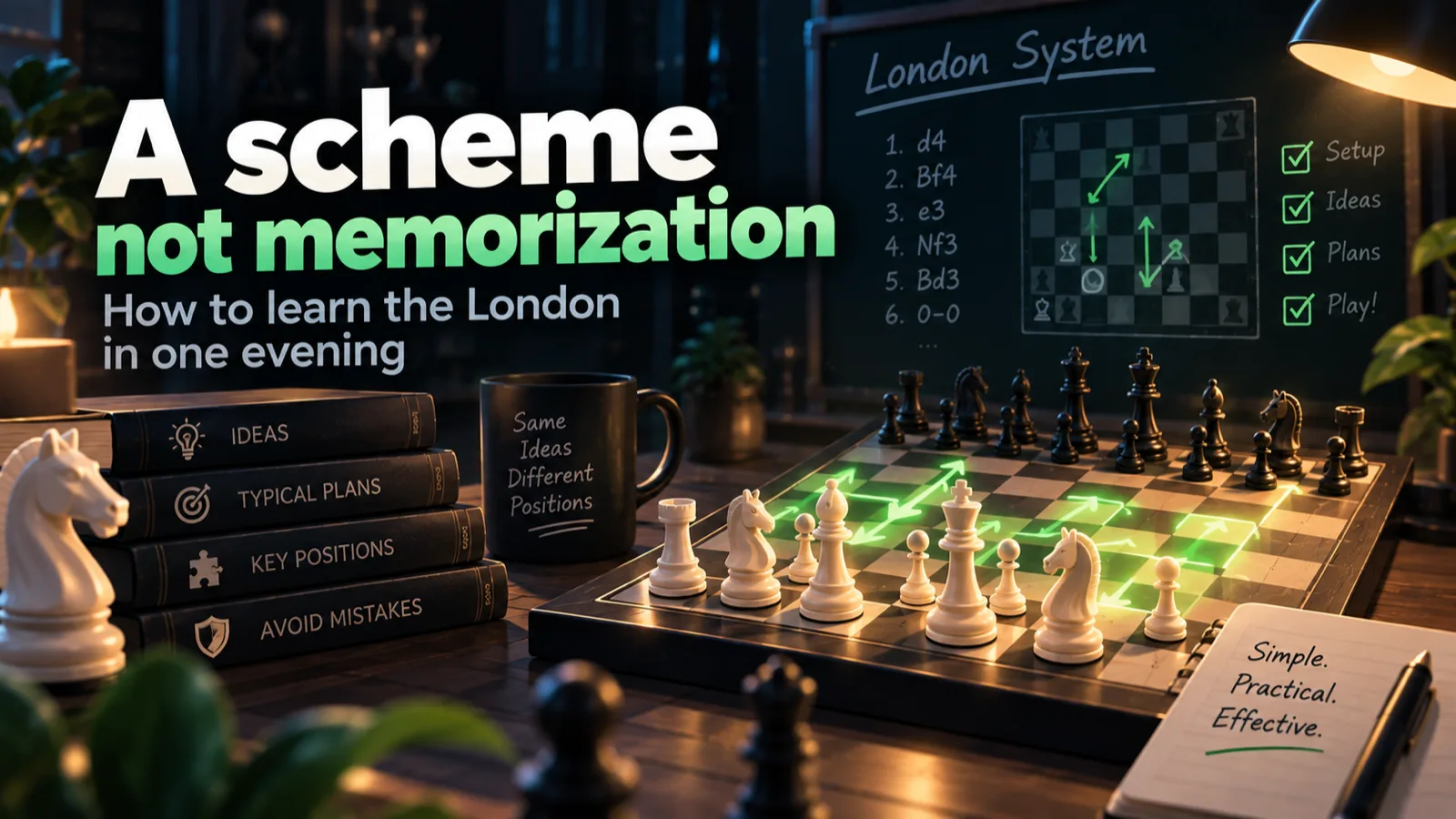 A Scheme, Not Memorization: Learn the London System in One EveningThe London System is the opening you don't have to memorize: one setup of seven squares works against almost anything. What exactly to learn, three plans instead of theory, and how to test yourself against an opponent who never replies the same way twice.Русский · Bahasa Indonesia · Português
 From 800 to 1600: What Actually Changes at Each Chess Rating LevelAsk a 1600 player what changed since they were 800 — they won't say "I got smarter". They'll say "I stopped hanging pieces". A ladder from 800 to 1600 built from the mistake types in our game analysis: each step up is one class of errors going extinct.Русский · Bahasa Indonesia · Português
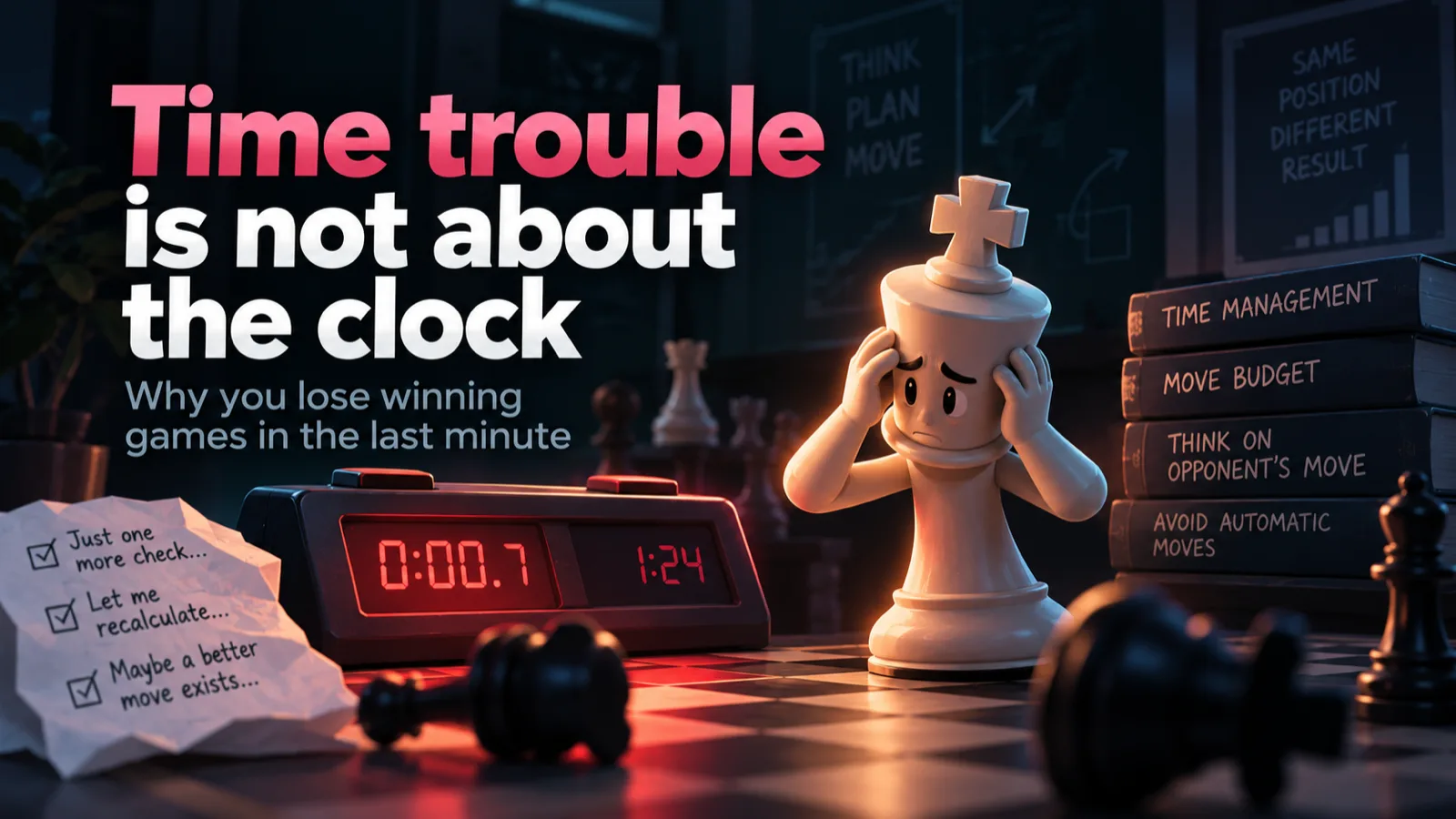 Time Trouble Is Not About the Clock: Why You Lose Winning Games in the Last MinuteThe flag doesn't fall suddenly — it falls twenty moves earlier. Where your time actually leaks (spoiler: not into hard positions), what a move budget is, and why you should think on your opponent's clock.Русский · Bahasa Indonesia · Português
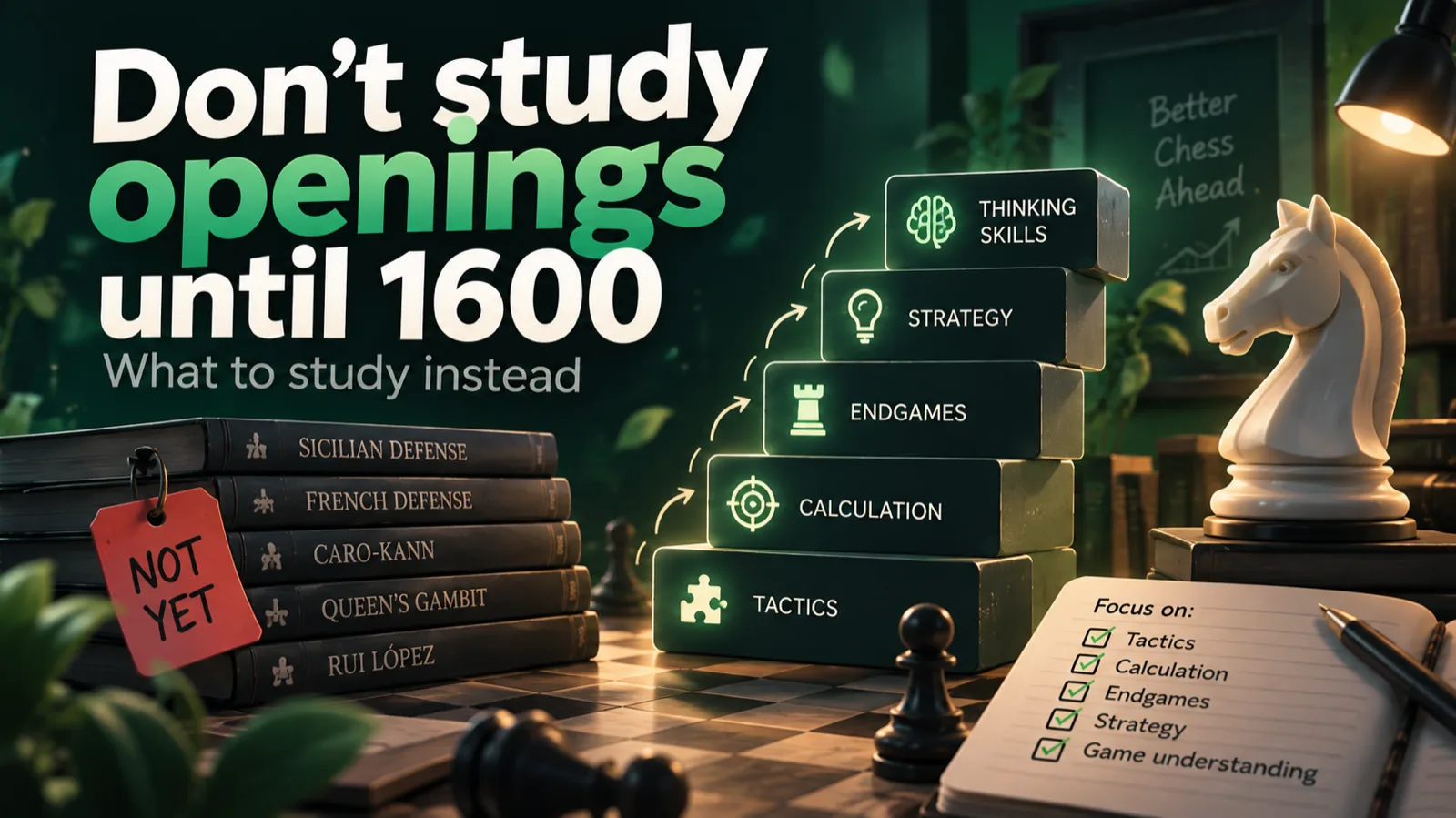 Stop Studying Openings Below 1600 — Do This InsteadThe hours you sink into memorizing the Catalan will not save a game that ends with a hanging bishop on move 19. Why opening lines are the worst time investment below 1600 — and the three things that actually move your rating.Русский · Bahasa Indonesia · Português
 The benchmark game: measuring your real chess strengthYour rating is a queue of results, not a measurement of you: it depends on the player pool, the platform and last night's tilt. A benchmark game measures differently — decision quality against an opponent calibrated to you.Русский · Bahasa Indonesia · Português
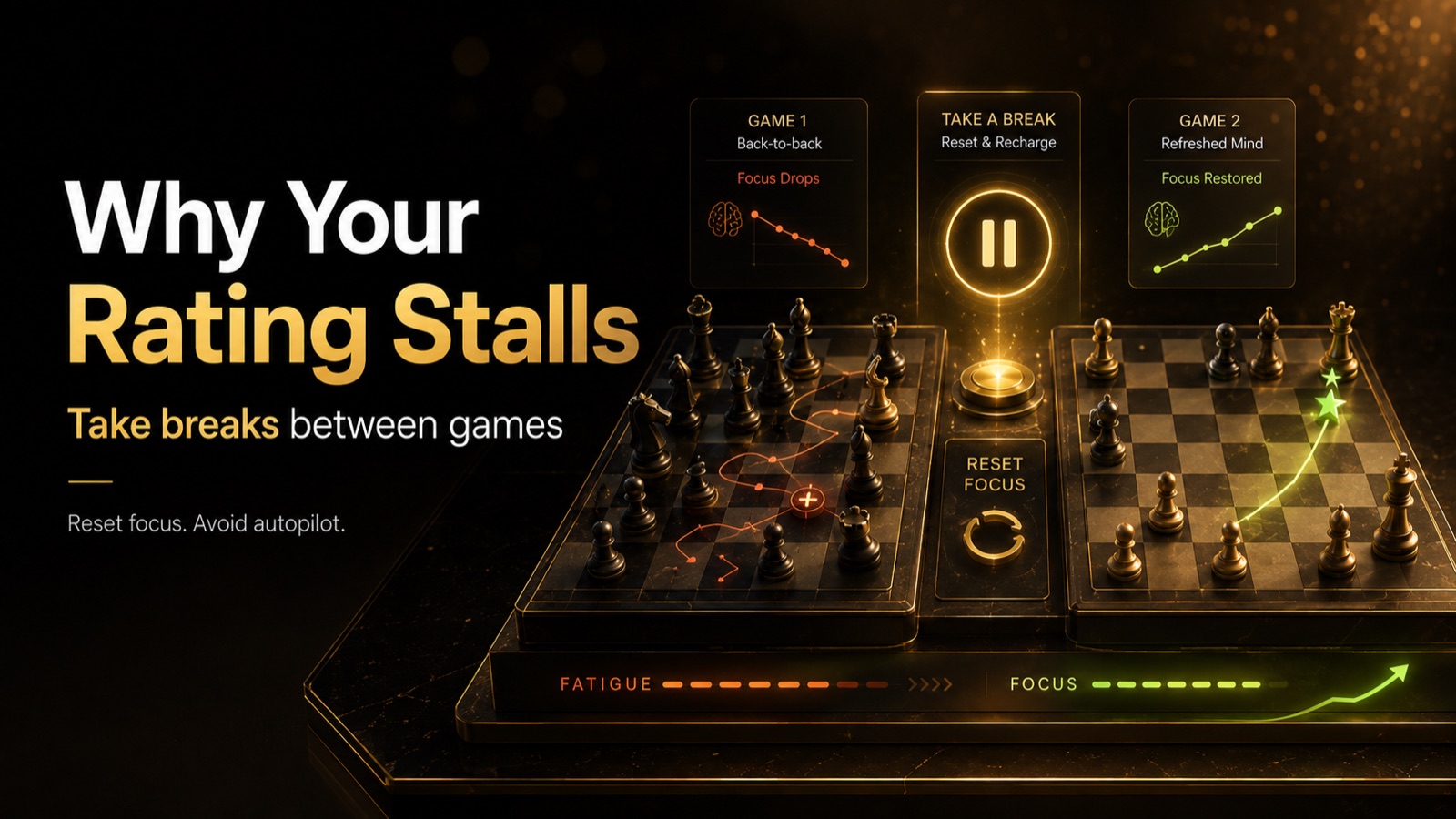 Why your rating stalls: you don't take breaks between gamesGame after game with no pause — and the rating melts even if you play better than your opponents. Tilt, fading attention and memory that never got to file the lesson: three mechanisms and three rules against them.Русский · Bahasa Indonesia · Português
 Your mistakes are the best puzzle book: games become trainingA thousand of other people's puzzles make you better at other people's games. Now the coach builds puzzles from your own mistakes — each explains why, and comes back on schedule.Русский · Bahasa Indonesia · Português
 One fixed habit beats forty found mistakesThe analysis counted forty mistakes in your game, and not one of them will make you stronger. Ratings aren't moved by lists — they're moved by one recurring habit disappearing.Русский · Bahasa Indonesia · Português
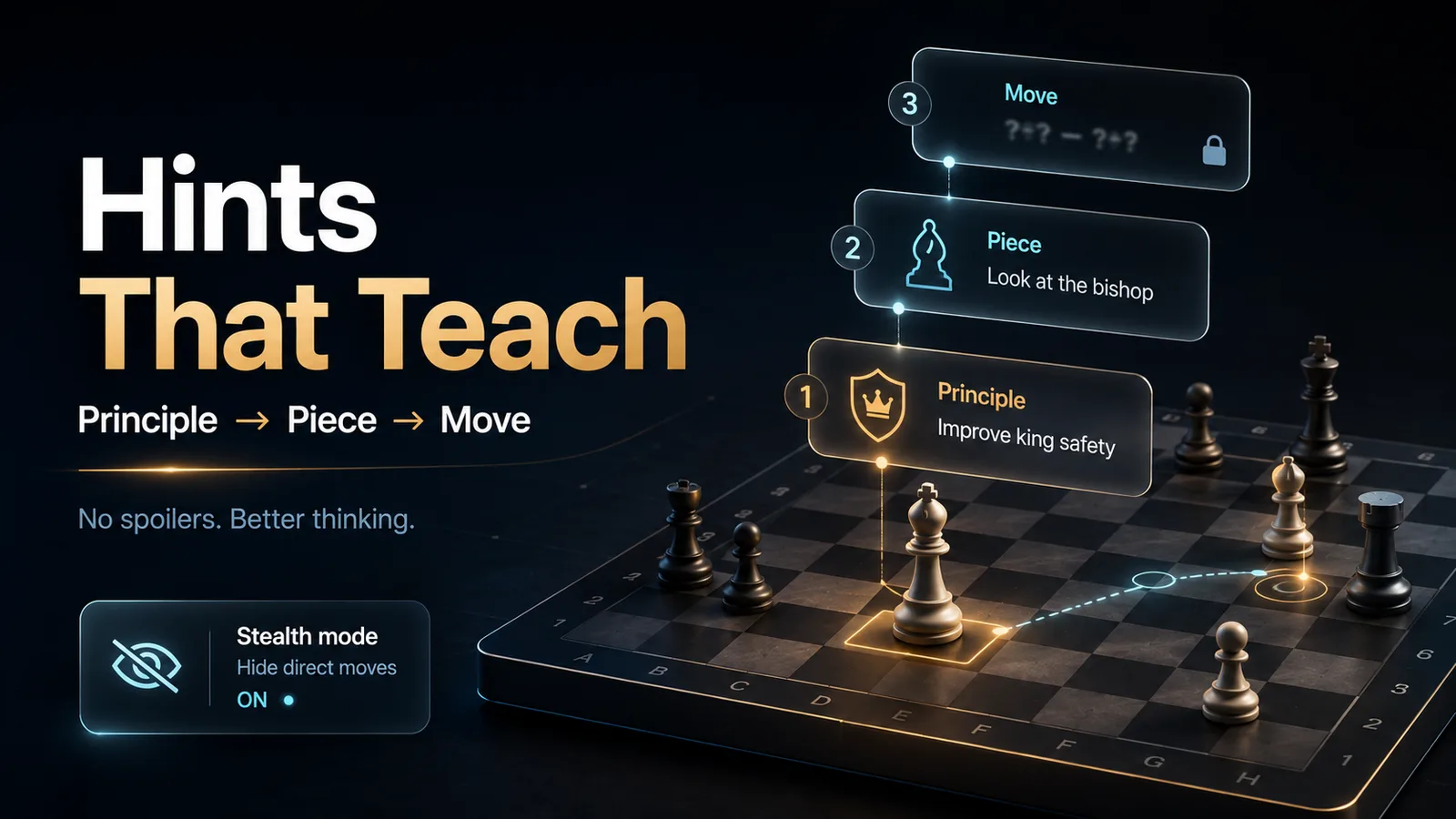 A hint that keeps the answer to itselfAn arrow with the best move helps the game and hurts the player: an answer without a question never sticks. How the principle-piece-move ladder works, and why it makes you improve faster.Русский · Bahasa Indonesia · Português
 The coach speaks now: move-by-move game reviews are liveOpen any of your games and the coach walks through it with you: praising your defence, explaining mistakes, and removing the fear behind the move you did not dare to play.Русский · Bahasa Indonesia · Português
 Why you are stuck — and what a coach actually doesAn engine tells you a move was bad and stays silent about why. A coach does the opposite — and that is exactly why people grow with one.Русский · Bahasa Indonesia · Português
 Bulk import: your whole history from Chess.com and Lichess by nicknameType your nickname and the trainer pulls up to 300 of your recent games, analyses them on the server and shows where you keep losing the thread.Русский · Bahasa Indonesia · Português
 What to do when you have no idea what to do: making a plan in plain wordsA plan is not fifteen moves of calculation but an answer to one question: what is this position a fight about. Seven questions in strict order, from direct threats to the king in the endgame.Русский · Bahasa Indonesia · Português
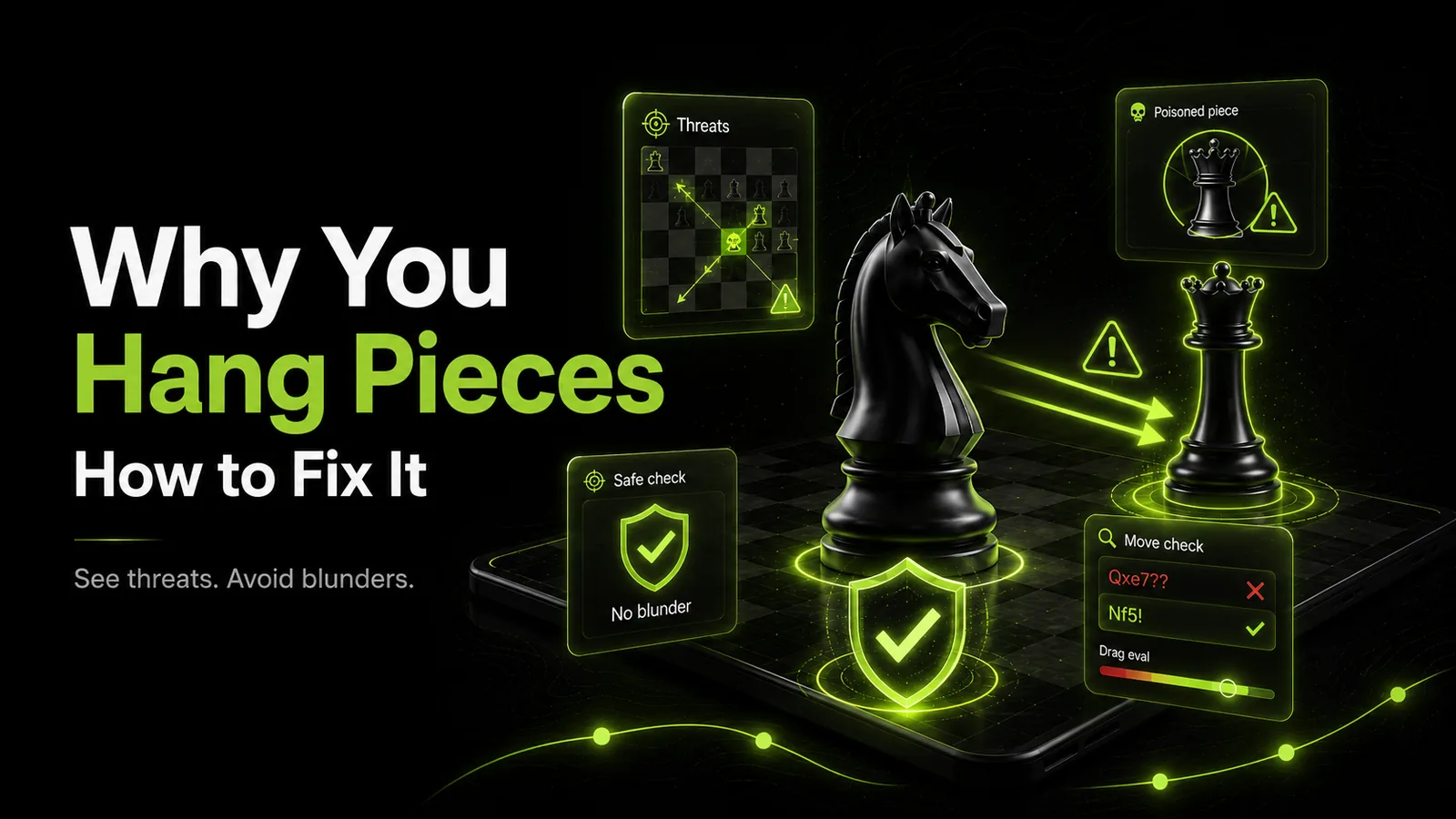 Why you hang pieces — and how to fix itHanging a piece is not a gap in knowledge but a lapse of attention: we calculate our own plan and never look at the replies. The causes, and three questions that catch almost every blunder.Русский · Bahasa Indonesia · Português
 Review your chess.com and lichess games right herePaste a PGN in your account and our coach reviews the game: a red arrow on the move you played, a green one on the move you needed, accuracy and the evaluation graph. Play where you like, review here.Русский · Bahasa Indonesia · Português